Imaginary interview with Patricia Grace
by Charactorium · Patricia Grace (1937 — ?) · Literature · Culture · 5 min read
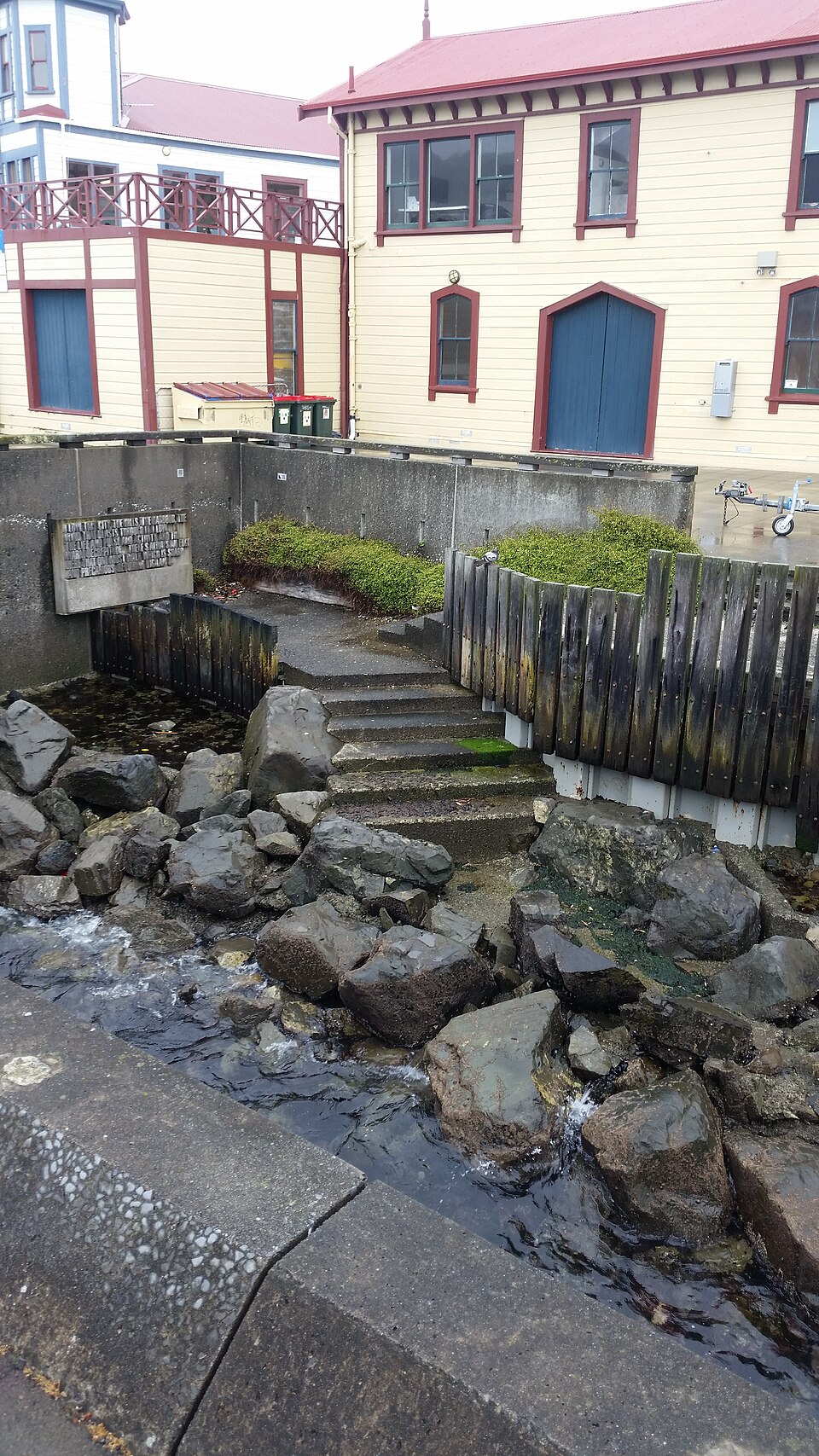
Hongoeka Bay, late afternoon. The tide is receding behind the windows, and in the distance, you can hear the children from the marae heading home. Patricia Grace welcomes us into a house where notebooks full of words heard the day before are lying around; she speaks softly, like someone who has spent her life listening before writing.
—Do you remember the moment when you realized that the book you were holding had never existed before you?
It was 1975, and the collection was called Waiariki. I remember thinking, almost naively: here, until now, no woman like me had ever put those stories down in English, on a page, for real. I had been a primary school teacher for years, and I could see what was missing: Māori children opened books where their grandmother, their marae, their bay never appeared. So you grow up believing your life isn't worth telling. I was writing as much against that silence as for it. It wasn't a glorious conquest, rather a lack that I filled with my own hands.
Māori children opened books where their grandmother never appeared.
—What did your time in schools teach you about the stories a child needs to read?
In front of a class, you can immediately see which child feels at home in a book and which child feels invited out of politeness, like a stranger. I taught for a long time before devoting myself to writing, and that experience never left me. A child must be able to turn a page and say: this is my aunt, this is the way we speak at home, this is the te reo Māori I hear on Sundays. Dignity comes through that, through that little shock of recognition. I wasn't writing to educate strangers about Māori; I was writing so that our own people could see themselves standing tall in a sentence.
Dignity comes through that little shock of recognition.
—In Potiki, why did you leave entire passages in te reo Māori without ever translating them for the reader?
Because translating is sometimes apologizing. In Potiki, in 1986, I decided that the Māori language would be present without a crutch, without a footnote reaching out to the reader who doesn't understand. Let them accept, for once, not grasping everything. All my life, it was we who had to make the effort to understand the other's language; colonialism worked that way, imposing its grammar as the only measure of the world. So leaving te reo intact, untranslated, was gently reversing that power dynamic. The language is not an exotic ornament: it is the ground on which the characters stand.
Translating is sometimes apologizing — and I no longer wanted to apologize.
—Some readers complain that they don't understand everything. What do you say to them?
I tell them that not understanding everything is an experience, not a punishment. A word in te reo Māori left bare in Potiki acts like a half-open door: you guess a room behind it, you know it's inhabited, even without entering. The Pākehā reader then discovers what we felt for generations, when our own world was translated, explained, corrected by others. That slight discomfort, I consider it precious. The Māori language was recognized as an official language in 1987, a year after this novel, after decades when it had almost been stifled; writing it as is in a book was restoring its right to exist without permission.
—How did this bay where we are sitting shape your way of writing?
Hongoeka Bay is not a setting for me, it's a material. I grew up here, near Plimmerton, in a tight-knit community by the water, with the marae a few steps away and the sea setting the rhythm of meals. We ate what the bay gave: pāua, kina, fish caught in the morning, kūmara from the gardens. My Māori readers often close one of my books and tell me they recognized their own kitchen, their own aunt, their own family quarrel. That's the greatest compliment. I drew so close to home that place and fiction have ended up blending.
Hongoeka Bay is not a setting, it's a material.
—Where do the stories you tell come from?
They come through the ear long before the pen. I have always kept notebooks where I wrote down what I heard on the marae: a turn of phrase, an expression in te reo, an old man's memory, a quarrel over a funeral. Our culture is first oral; stories circulate in the evening, at hui, in kitchens. My work was only to listen patiently enough, then to report it all without betraying it. A matau, an old fishhook hanging somewhere, can contain a whole genealogy. I write less inventions than things deposited in me by the voices of my people.
Stories come through the ear long before the pen.
—In your books, the land seems much more than property. How do you conceive it?
The whenua is not an asset you own, it's an asset that owns you. In our conception, the land belongs to the ancestors and to the children not yet born; we are only its guardians, and that duty of guardianship we call kaitiakitanga. Selling your land, in the sense a developer understands it, is almost a contradiction, a desecration. That's why, in Potiki, a family stands up to those who want to turn their ancestral soil into a housing project. It's not stubbornness: it's the refusal to cut a thread that links the dead, the living, and those to come. You don't put a price on a lineage.
The whenua is not an asset you own, it's an asset that owns you.
—You wrote Potiki at a time of great mobilizations for Māori land. Did those struggles feed your novel?
How could it have been otherwise? In 1975, Dame Whina Cooper led the great Land March from Northland to Wellington, and two years later activists occupied Bastion Point for over five hundred days to prevent the sale of their ancestral lands. All that was in the air I breathed. Potiki, in 1986, invents nothing: it gathers that anger, that dignity, that way our people have of sitting on their soil and simply saying, we will not leave. I wanted the novel to keep the memory of those acts, so that we wouldn't forget what it cost to stay.
—What drove you, in Tu, to revisit the 28th Māori Battalion?
A debt, I think. Between 1939 and 1945, the 28th Māori Battalion fought in North Africa and Italy, with a courage still spoken of, yet these men returned to a country that continued to treat their people as second-class citizens. In Tu, published in 2004, I wanted to hold together two voices: that of the soldier far away, in the mud and noise, and that of the families here, waiting for letters. What I was looking for was that thin thread between the man fighting under a foreign sky and the homeland he carries within him like a second country.
—What difference does it make to tell war from home, not just from the front?
It restores a truth that war stories forget: a battle is also fought in the kitchens that have fallen silent. In Tu, the worries of New Zealand families weigh as much as the fighting in Italy. In our culture, a man is never an isolated individual; he is a link in an iwi, connected to his people by whakapapa, that genealogy linking him to his ancestors and his land. When he falls far away, a whole community wavers. By giving voice to those who wait, I wanted to remind that war is measured not only in medals, but in absences around the fire.
A battle is also fought in the kitchens that have fallen silent.
—After so many years, what do you still hope to leave to those who will read you?
The feeling that our ordinary lives were worth writing. If one day a child from Hongoeka Bay, or elsewhere, opens one of my books and tells himself that he too has the right to take up the pen and tell his own people, then I will have done my job. I never thought of myself as a builder of monuments; rather as someone who carefully stores tāonga, treasures that are as much objects as words, songs, knowledge. Māori literature was a nearly bare garden when I started. I simply wanted to plant enough so that others, after me, would have something to harvest.
I simply wanted to plant enough so that others would have something to harvest.
This imaginary interview was generated by artificial intelligence from sources documented in Patricia Grace's profile. It dramatises what the figure might have said based on what we know about them, but does not constitute attested historical testimony. For primary sources and factual documentation, refer to the full profile.