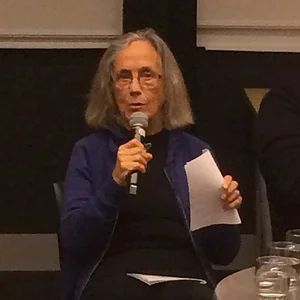

Patricia Grace (1937–) is a New Zealand Māori novelist and short story writer, a pioneer of Māori literature in English. She is the first Māori woman to publish a short story collection in English. Her work explores identity, culture, and the struggles of the Māori community.
Patricia Grace(1937 — ?)
Patricia Grace
Nouvelle-Zélande
8 min read
Frequently asked questions
Key Facts
- Born in 1937 in Wellington, New Zealand, of Māori descent (iwi Ngāti Toa, Ngāti Raukawa, Te Āti Awa)
- 1975: publication of Waiariki, the first short story collection by a Māori woman in English
- 1978: first novel Mutuwhenua — The Moon Sleeps, exploring Māori identity
- 1986: publication of Potiki, a landmark novel about Māori cultural resistance
- 2008: recipient of the Neustadt International Prize for Literature
Works & Achievements
The first short story collection in English published by a Māori woman, a landmark text exploring the daily life of Māori communities caught between tradition and modernity.
Grace's debut novel, telling the story of a young Māori woman torn between two cultural worlds. It is one of the first novels in English written by a Māori author.
Grace's masterpiece, this novel depicts the resistance of a Māori family against developers seeking to seize their ancestral land. It incorporates passages in te reo Māori left untranslated.
A novel following three Māori cousins whose fates diverge according to how far each has integrated into Pākehā society, questioning the price of cultural assimilation.
A novel exploring grief, identity, and Māori rights across several generations of a family confronted with loss and collective memory.
Winner of the Kiriyama Pacific Rim Book Prize, this novel narrates the life of an island Māori community and the question of cultural belonging passed down from generation to generation.
A novel dedicated to the 28th Māori Battalion during the Second World War, paying tribute to the Māori soldiers who fought in North Africa and Italy while remaining bound to their homeland.
Anecdotes
In 1975, Patricia Grace published *Waiariki*, the first collection of short stories in English written by a Māori woman. This landmark book marked a historic turning point: for the first time, a Māori female voice established itself in the English-speaking literary world with its own stories, its own characters, and its own worldview.
In her novel *Potiki* (1986), considered her masterpiece, Patricia Grace deliberately includes passages in te reo Māori (the Māori language) without translating them into English. This bold choice means that non-Māori readers must accept not understanding everything — a way of symbolically reversing the cultural dominance inherited from colonization.
Raised in Hongoeka Bay, near Plimmerton (Wellington), Patricia Grace grew up within a close-knit Māori community living by the sea. This place — its people, its landscapes, its marae — deeply inspired her work, to the point that her Māori readers often recognize their own everyday lives within its pages.
In 2008, Patricia Grace received the Neustadt International Prize for Literature, often nicknamed the 'American Nobel', awarded by the University of Oklahoma. She is one of the first Pacific authors to receive this distinction, helping to bring Māori literature to the world stage.
A former primary school teacher in New Zealand before becoming a full-time writer, Patricia Grace has always stressed the importance of cultural transmission: she wanted Māori children to be able to see themselves in books, to find their families and their culture represented with dignity in literature.
Primary Sources
In this pioneering collection, Grace explores the daily lives of Māori families confronting the tensions between cultural heritage and mainstream New Zealand society. The stories depict the marae, family bonds, and silent resistance to assimilation.
The novel centers on a Māori community resisting real estate developers seeking to seize its ancestral lands. Grace articulates the Māori conception of land as a collective inheritance passed between generations — inalienable in the Western sense of the word.
Grace reconstructs the experience of the 28th Māori Battalion during World War II, interweaving the voices of Māori soldiers fighting in North Africa and Italy with the anxieties of their families back home in New Zealand.
Grace reflects on the importance of the Māori language and oral tradition in her literary practice, affirming that her cultural roots and the community of Hongoeka Bay are the primary source of her narrative imagination.
Key Places
Capital of New Zealand and birthplace of Patricia Grace (1937). It is in this urban, coastal environment that she studied and began her career as a teacher.
A coastal bay where the Grace family's Māori community lives. This place directly inspires the setting of many of her novels and short stories: its people, its marae, and its landscapes are at the heart of her literary world.
The historic site where the Treaty of Waitangi was signed in 1840 between the British Crown and Māori chiefs. This founding treaty — whose violations have fuelled Māori grievances — forms an essential backdrop to Grace's work.
New Zealand's largest city and an important hub of the urban Māori community. The setting for several major events in the struggle for Māori rights referenced in her works, including the occupation of Bastion Point.
Typical Objects

Patricia Grace's daily writing tool for drafting her texts. She began writing her first short stories on a typewriter in the 1960s–1970s before switching to a computer.

An iconic plant used by Māori for weaving and plaiting. In Grace's work, the harakeke symbolizes family and community: each strand is bound to the others, just as the members of an iwi are.

Patricia Grace collected stories heard on the marae, expressions in te reo Māori, and family memories in notebooks that fed into her novels and short stories.

A ceremonial Māori garment symbolizing status, dignity, and the cultural transmission between generations. It appears in Grace's narratives as a sign of ancestral heritage.

A Māori genealogical record, both oral and written, connecting an individual to their ancestors and to the land. Grace draws on whakapapa to build her characters' identities and their deep ties to their community.

A handcrafted object symbolizing the Māori connection to the sea and natural resources. In coastal communities such as Hongoeka Bay, where Grace grew up, fishing was a central activity of daily life.
School Curriculum
Vocabulary & Tags
Key Vocabulary
Tags
Daily Life
Morning
Patricia Grace begins her mornings shaped by the family and community responsibilities that are central to Māori life. A mother of several children, she long had to balance writing with domestic life. During her teaching years, she would rise early to prepare lessons for New Zealand primary schools before eventually devoting herself to writing full time.
Afternoon
Afternoons are often devoted to writing, reading, and gathering literary material. Grace draws inspiration from stories heard on the marae, family narratives passed down orally, and events from community life. She takes part in marae activities — the marae being the central place of decision-making and collective memory.
Evening
Evenings are defined by family and community life, a cornerstone of Māori culture. Gatherings (hui), discussions about land and the community's future, and the passing on of oral stories are all part of daily life. The extended family plays a structuring role in Māori society, meaning evenings are rarely spent alone.
Food
The diet of the Hongoeka Bay community is closely tied to sea and land: fish and shellfish (pāua — abalone, kina — sea urchin, fish caught in the bay), vegetables from family gardens, and kūmara (sweet potato of Polynesian origin). These traditional food practices coexist with New Zealand cuisine shaped by British influence.
Clothing
Patricia Grace dresses simply, in the manner of New Zealand women of the mid-twentieth century. At ceremonies on the marae, she may wear the korowai, a traditional woven cloak adorned with feathers, as a sign of respect toward the ancestors. Everyday dress reflects the blend of Māori and Western culture characteristic of contemporary New Zealand.
Housing
Grace lives in a house in Hongoeka Bay, a coastal Māori community near Plimmerton. Like many Māori families, she lives in a European-style house, but the neighbouring marae remains the symbolic and communal heart of the neighbourhood. The immediate proximity to the sea, gardens, and the marae is characteristic of this Māori communal way of life.
Historical Timeline
Period Vocabulary
Liens externes & ressources
Références
Œuvres
Waiariki
1975
Mutuwhenua: The Moon Sleeps
1978
Baby No-Eyes
1998
Dogside Story
2001