Imaginary interview with Sei Shōnagon
by Charactorium · Sei Shōnagon (966 — 1025) · Literature · Philosophy · 6 min read
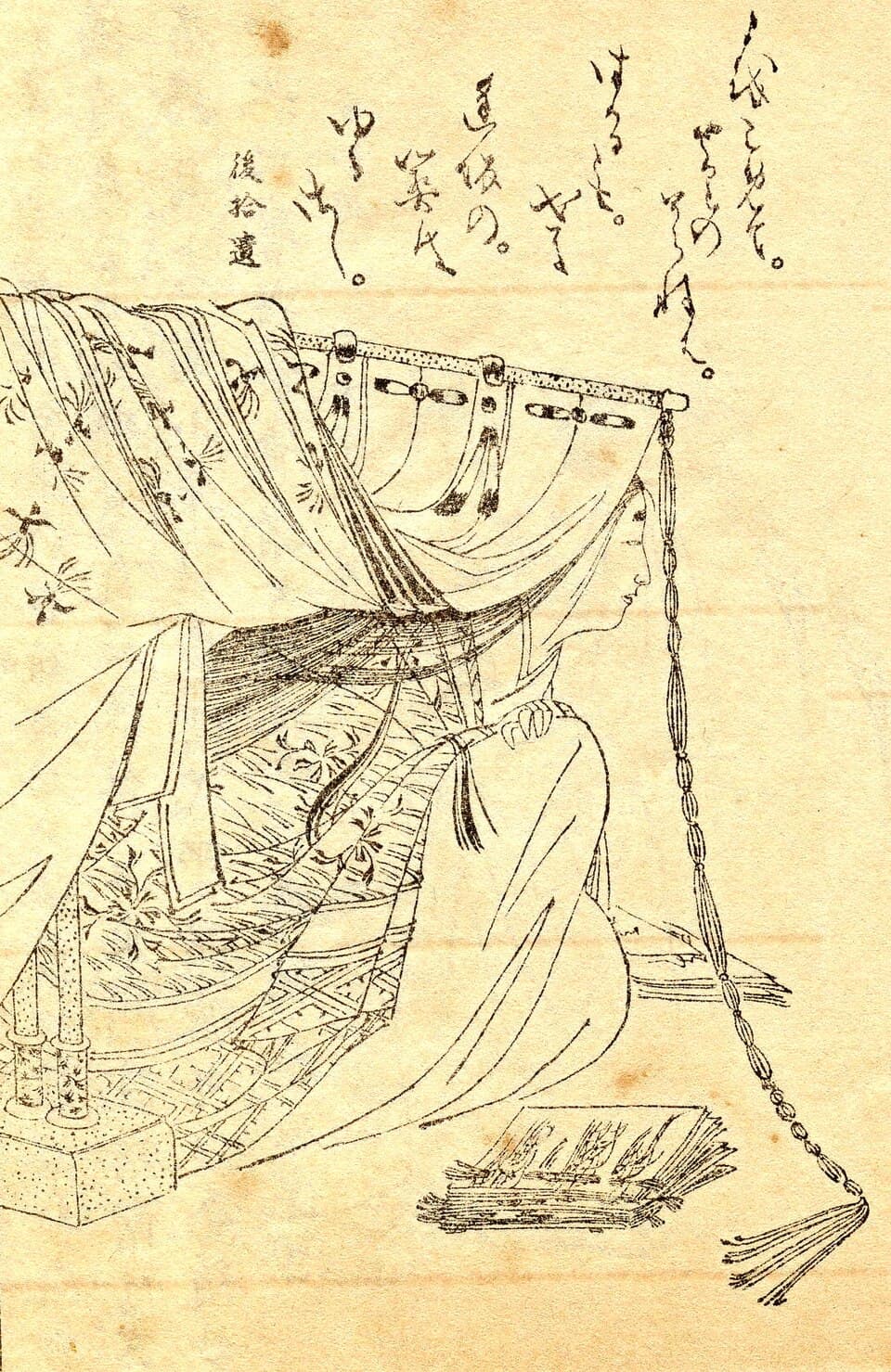
One winter evening in Heian-kyō, behind the bamboo blinds of the imperial apartments, a brazier glows and incense still lingers in the room. Sei Shōnagon, fan half-open and a roll of paper beside her, agrees to speak of her brush and her century. Outside, snow falls on the garden; she asks for the blind to be raised so she can watch it whiten.
—How did these famous Pillow Notes begin to take shape under your brush?
I was given a bundle of paper—fine, thick paper that Empress Teishi had no use for. I said to myself: I'll make it a pillow of notes. Since then, whenever something strikes me, I take up my fude and set it down on the roll, without order, as the brush moves. As I wrote myself, "At this moment, what pleases me is to observe things carefully. When I see something beautiful or interesting, I cannot help but note it. That is how I began to write these notes without any particular order." It is not a doctrine, mark you. It is a gesture: the hand that does not want to let slip a snowy morning or the rustle of silk.
—Why this habit of making lists of liked or disliked things?
You mean my enumerations. I like to arrange the world by affinities, not by logic. "Pleasant things: finding notes you wrote long ago; reading an essay or poem you had forgotten; beautiful calligraphy on tinted paper." That is how I think. There are also things that make the heart beat faster, unpleasant things, things that lose their charm when painted. To name is already to cherish or dismiss. On my washi I draw up these inventories as others string pearls, and I believe this manner—this zuihitsu, this following of the brush—did not exist before I tried it.
—What, in your eyes, makes a thing truly beautiful?
Beauty does not last, and that is why it grips the heart. A kōro, this incense burner, lets rise a fragrance that already dissolves in the air: that is what I love. I have my favorite hours—dawn in summer, when the moon pales; autumn evening, when crows return in threes and fours against the reddened sky. They call it mono no aware, that touch of melancholy before passing things. I do not make a lesson of it; I note it. A sensu snapped open, a silk sleeve peeking from a blind, a snowflake on a black fence: these trifles are my material. Refinement, miyabi, is not riches—it is the eye that knows to pause at the right moment.
Beauty does not last, and that is why it grips the heart.
—Do you remember your first days in the empress's service?
It was around my twenty-fifth year, at the court of Heian-kyō. I entered as a nyōbō in the service of Empress Teishi, and I recall my awkwardness in those first days: I hid my face behind my fan, I dared not lift my eyes to the paintings on the screens. Teishi was young, lively; she laughed at my shyness and set verbal traps to make me speak. Serving in these apartments of the Imperial Palace was like living in a jewel box: bamboo blinds, incense burners, the rustle of juni-hitoe in twelve layers. There I was given to observe what few saw. Everything I later wrote was born behind those blinds, in the filtered light of her service.
—What remains of Empress Teishi in your pages?
One does not willingly speak of such things. Empress Teishi passed away while still in the flower of youth, and the court changed face. I had known her radiant years; I did not wish to paint her years of shadow. You will notice that my notes keep from her the laughter, the poetry contests, the snowy nights when she asked us to raise the blind to see the whitened garden—never the decline. That is my way of still serving her. After her, favor passed to other houses, other apartments. They say I retired to Ishiyama-dera, in the quiet of temples. Perhaps. A court lady without her lady is nothing but a closed fan.
A court lady without her lady is nothing but a closed fan.
—You are said to have a sharp, sometimes impertinent wit. How do you take that?
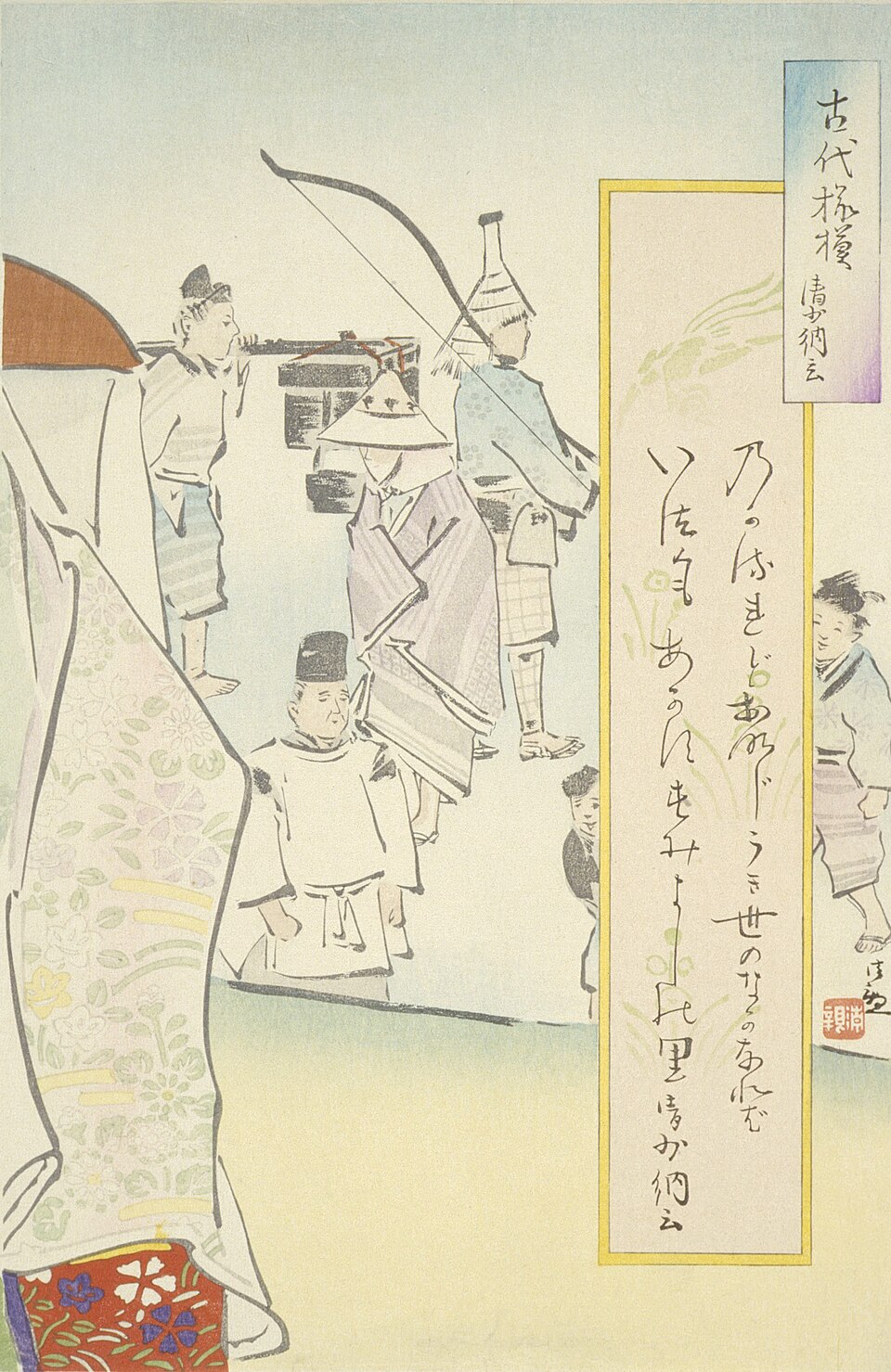
They call me impertinent. I am, no doubt. At court, wit is as sure a weapon as a pretty face, and I never consented to seem foolish in order to please. When a gallant misquoted a Chinese verse, I corrected him; when a lady dressed without taste, my brush remembered it. That earned me admirers and jealous ones in equal number. I own it: better a sharp tongue than a lukewarm heart. My father, Kiyohara no Motosuke, had given me a taste for texts and verbal jousts; by it I gained the ability to hold my own against scholars. Some saw vanity in that. I see the only pride allowed to a woman whose sole kingdom is a roll of washi and the keenness of her gaze.
—What would you say of the other women writers active at the same time as you?
The court has never lacked women's pens, and every imperial house has its salon. In the apartments of a rival house, they whisper that a lady is composing a long tale, the Genji monogatari, all delicacy and sighs—an art quite different from mine. I do not draw up inventories of princes' hearts; I note what I see, without embroidering long plots. Each has her way. They pit us against each other, and perhaps will still. I think a discerning reader will read us together: one for woven melancholy, the other—me—for the vivid flash of the captured moment. Rivalry sets the blinds whispering; it takes nothing from what each of us truly saw.
—How could a woman receive learning ordinarily reserved for men?
Through my father, Kiyohara no Motosuke, a renowned poet, and through the books he did not hide from me. Girls are taught kana, that supple script made for us, and they are allowed waka poetry, the thirty-one syllables. But Chinese characters, the high literature of the continent, are ordinarily reserved for men. My father opened them to me. So when a dignitary dropped an allusion to a Chinese verse, thinking to confuse me, I answered—and they marveled that a nyōbō had read those texts. I learned early that knowledge kept hidden is worth more than knowledge flaunted: I let it appear at the right moment, like a sleeve shown just enough. That, I think, is my rarest ornament.
—Why write in everyday language rather than in the Chinese of scholars?
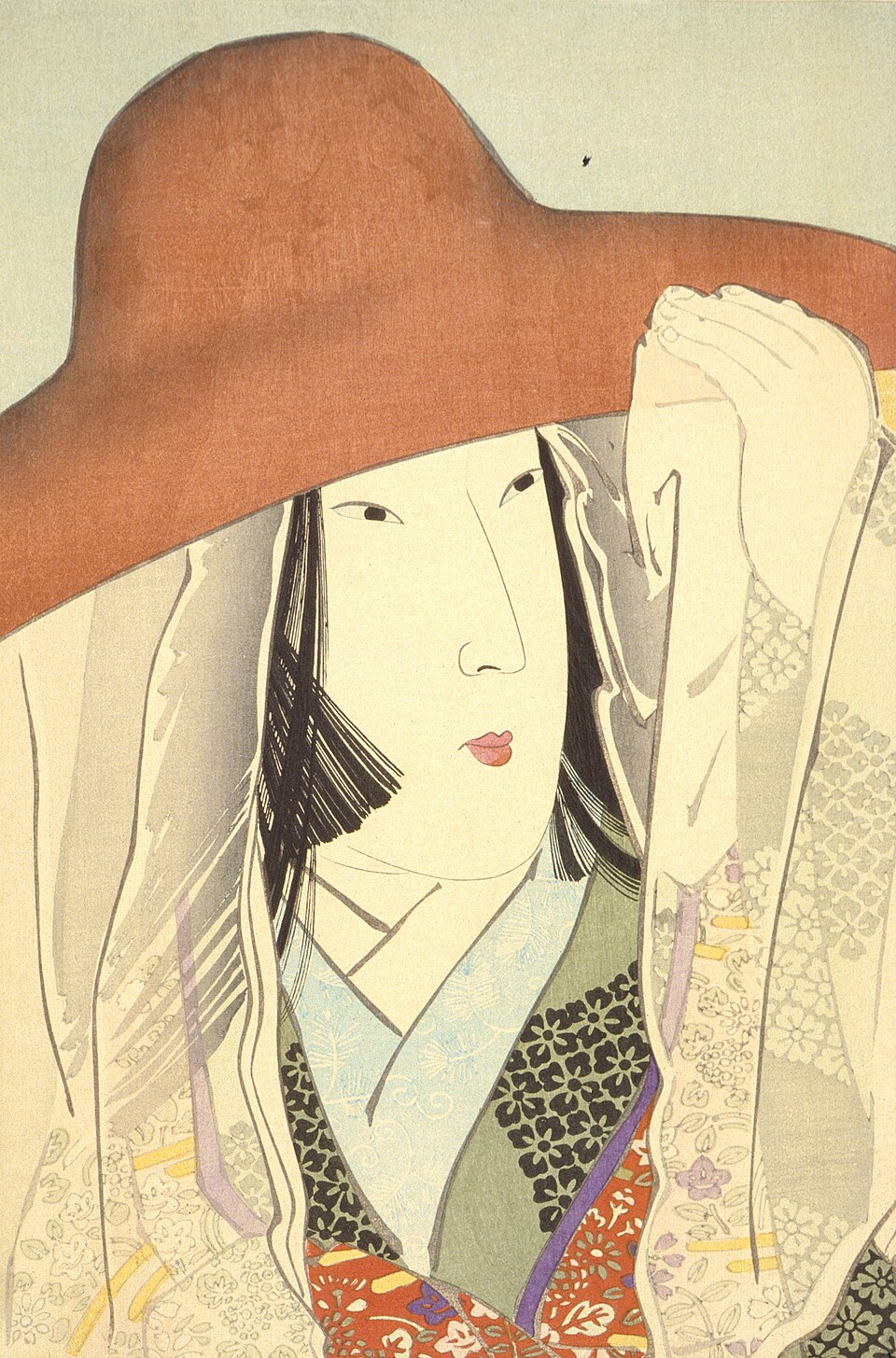
Because kana is our voice. Chinese is the language of edicts, treatises, men of counsel; it has its gravity. But to convey a shiver, the color of a blind at dawn, the pique of waiting for a letter that does not come, one needs a script that follows the Japanese breath. We women of the apartments have made this syllabary a silk on which anything can be embroidered. On my washi, with sumi and fude, I write as I speak, lively and without court Latin. Some may judge this lightweight. I reply that this so-called lightness has captured what the weighty chronicles let slip: the grain of a day, the tremor of a season.
Kana is our voice.
—What do the objects around you daily tell?
Look around me. This kōro from which incense rises—I know each fragrance, and I know which suits the rain, which the moon. This painted sensu, which I open to hide a laugh or emphasize a word. The scroll, the makimono, where my brush runs. The twelve layers of the juni-hitoe, whose art is not richness but the harmony of colors: a mauve under a pale green, like wisteria on moss. These objects are not empty ornaments; they are my language before language. A lady is judged by how her sleeves overlap at the edge of a blind, by the incense she leaves in a room she has just left. I have spent my life reading people by such signs.
—If you could imagine being read in a century, what would you hope would be remembered?
That is a thought that troubles and flatters me. I wrote these notes for myself, on this paper pillow, never imagining that an eye would rest on them—I would have blushed. If, by some impossibility, I am read in a hundred years, I do not want them to remember dates or reigns; the annals take care of that. Rather, let them remember that a snowy morning was worth a poetry contest, that a clumsy kitten deserved its line, that the rustle of silk said more than a speech. That it was a woman, behind her blinds in Heian-kyō, who dared to judge the world by the measure of her taste. If that survives the washi and the sumi, then my brush will not have run in vain.
That a snowy morning was worth a poetry contest.



This imaginary interview was generated by artificial intelligence from sources documented in Sei Shōnagon's profile. It dramatises what the figure might have said based on what we know about them, but does not constitute attested historical testimony. For primary sources and factual documentation, refer to the full profile.