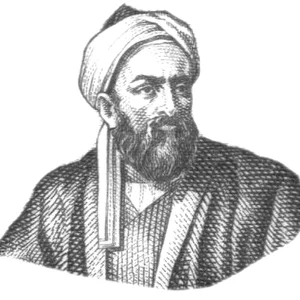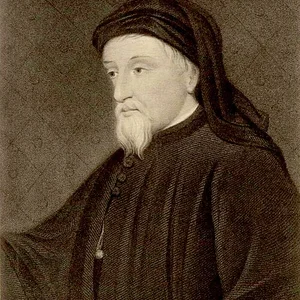

A Muslim theologian, philosopher, and mystic of Persian origin, Al-Ghazali is one of the most influential intellectual figures of medieval Islam. He synthesized Sunni theology, philosophy, and Sufism in his masterwork, The Revival of the Religious Sciences.
Frequently asked questions
Famous Quotes
« Knowledge without action is folly, and action without knowledge is void.»
« Trust in God, but tie your camel.»
Key Facts
- Born around 1058 in Tus, Persia (present-day Iran)
- Taught at the prestigious Nizamiyya madrasa in Baghdad from 1091
- Wrote Tahafut al-Falasifa (The Incoherence of the Philosophers) around 1095, a critique of Aristotle and Avicenna
- Underwent a spiritual crisis around 1095 and abandoned teaching to devote himself to Sufism
- Composed the Ihya Ulum al-Din (Revival of the Religious Sciences), his major summa, around 1097–1105
- Died in 1111 in Tus
Works & Achievements
His forty-volume masterpiece, written during his retreat in Damascus, synthesizing theology, jurisprudence, ethics, and Sufi mysticism. Considered one of the five most important works in Islamic literature, it is still studied in religious universities around the world.
A radical critique of Aristotelian philosophers (Ibn Sina, al-Farabi) who, according to Al-Ghazali, fell into heresy on twenty points, including the eternity of the world. The work proved so decisive that Ibn Rushd (Averroes) wrote a point-by-point refutation of it.
A spiritual autobiography in which Al-Ghazali traces his intellectual and mystical journey, from radical doubt to renewed certainty found through the Sufi path. This text is often compared to the Confessions of Saint Augustine for its depth of introspection.
A neutral, systematic exposition of Ibn Sina's philosophy, written as preparation for his critique in the Tahafut. Ironically, when translated into Latin in the 12th century without its critical companion piece, the text led medieval Scholastics to believe that Al-Ghazali was himself an Aristotelian philosopher.
An abridged version of the Ihya written in Persian, the vernacular language, to make his spiritual teachings accessible to a wider audience. This linguistic choice — rare for a scholar of his standing — reflects his desire to reach beyond learned circles.
A testament in letter form addressed to a disciple, distilling the master's essential guidance on the relationship between knowledge and spiritual practice. Brief but widely read, this text was used as an introductory manual in Sufi circles.
Anecdotes
Around 1095, at the height of his fame, Al-Ghazali was teaching before three hundred students at the prestigious Nizamiyya madrasa in Baghdad when he was suddenly struck by a profound mystical crisis: he lost his voice, unable to utter a single word from the pulpit. He interpreted this silence as a divine sign enjoining him to abandon worldly glory and seek inner truth.
Al-Ghazali recounts in his spiritual autobiography, Deliverance from Error, that he passed through a period of radical doubt comparable to Cartesian doubt, questioning even the reliability of his senses and his reason. This crisis lasted two months, during which he lived in a state close to intellectual paralysis, before being 'cured' by a divine light.
After secretly leaving Baghdad in 1095 — letting it be believed he was making a pilgrimage to Mecca in order to avoid pressure from his patrons — he spent ten years traveling incognito between Damascus, Jerusalem, Mecca, and Medina, living as a Sufi ascetic in a rough woolen cloak and practicing spiritual retreat in the minaret of the Great Mosque of Damascus.
His masterwork, The Revival of the Religious Sciences, proved so controversial in the Maghreb that the Almoravid sultan Ali ibn Yusuf ordered it publicly burned in Córdoba and Marrakesh around 1109, on the grounds that it gave too much weight to Sufism. Paradoxically, that same book is today considered one of the foundational texts of Sunni Islamic spirituality.
Al-Ghazali wrote the Tahafut al-Falasifa ('The Incoherence of the Philosophers') to demonstrate that great philosophers such as Ibn Sina and al-Farabi made serious errors — notably in asserting the eternity of the world and denying bodily resurrection. The work provoked a celebrated rebuttal from Ibn Rushd (Averroes), the Tahafut al-Tahafut, illustrating the great intellectual debate that ran through medieval Islamic civilization.
Primary Sources
"I understood that in order to know the truth of things, I first had to know the truth of knowledge itself. It then became clear to me that certain knowledge is that in which the thing known is revealed without any possibility of doubt, unaccompanied by error or conjecture."
"Knowledge is of two kinds: knowledge of religious practice, which is an individual obligation, and knowledge of the heart's states, which is the most important obligation of all. For the healing of the heart, the uprooting of its vices, and the cultivation of its virtues form the foundation of all religion."
"The philosophers take pride in their views on mathematics and logic, and ordinary people admire them; but when one examines their metaphysical opinions, one finds manifest contradictions. I therefore intend to expose the incoherence of their philosophy."
"Knowledge without action is madness, and action without knowledge is worthless. Know that knowledge alone will not save you from the fire of hell — it is action that will save you, provided it is accompanied by knowledge."
Key Places
Al-Ghazali's birthplace, now near Mashhad. It was here that he was born, received his first education, and died in 1111, having returned to his hometown to spend his final days in contemplation.
A major intellectual center where Al-Ghazali studied under al-Juwayni, the foremost Ash'arite theologian of his time. He briefly returned there to teach in 1106.
Capital of the Abbasid Caliphate, where Al-Ghazali taught at the prestigious Nizamiyya from 1091 to 1095, at the height of his fame. It was here that he wrote his Tahafut al-Falasifa and underwent his spiritual crisis.
The city where Al-Ghazali withdrew to the Umayyad Mosque for an ascetic retreat lasting several years after leaving Baghdad. There he began writing the Revival of the Religious Sciences.
Al-Ghazali performed the Hajj pilgrimage and stayed in both holy cities, deepening his Sufi spiritual practice. These stays informed the ritual sections of the Ihya.
Liens externes & ressources
Références
Œuvres
Ihya 'Ulum al-Din (Revivification des sciences religieuses)
vers 1096-1097
Tahafut al-Falasifa (L'incohérence des philosophes)
vers 1095
Al-Munqidh min al-Dalal (Délivrance de l'erreur)
vers 1108
Maqasid al-Falasifa (Les intentions des philosophes)
vers 1094
Kimiya-yi Sa'adat (L'alchimie du bonheur)
vers 1105
Ayyuha al-Walad (Ô jeune homme !)
vers 1105-1110