Imaginary interview with Sinan
by Charactorium · Sinan (1490 — 1588) · Visual Arts · 6 min read
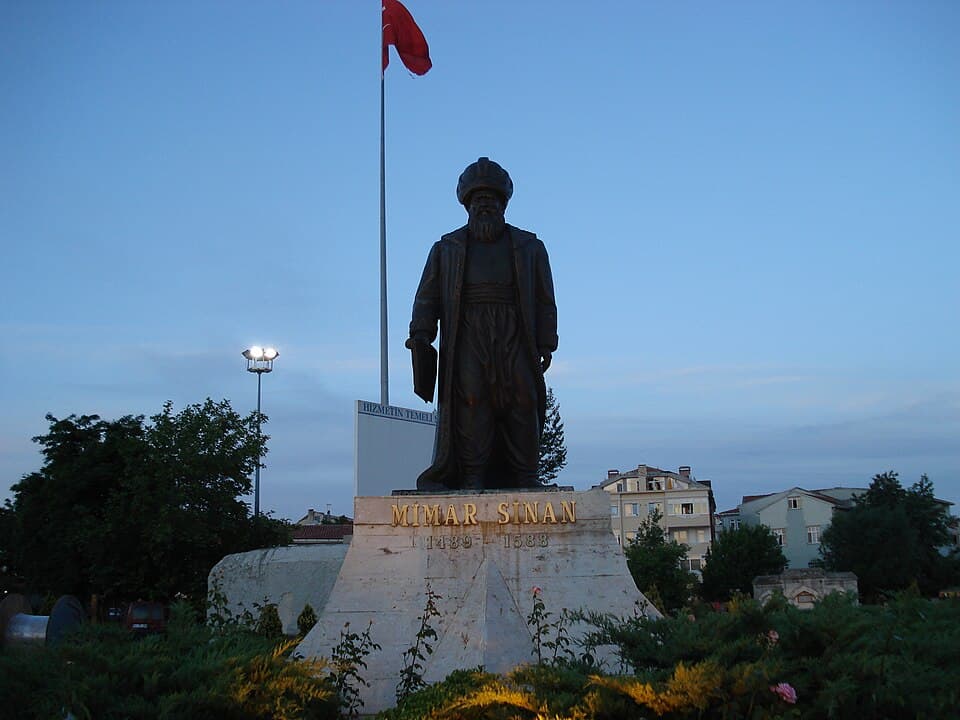
Edirne, a late afternoon in 1575. In the cool shadow of the just-completed Selimiye, an old man of over eighty lifts his head toward its dome. The mimar başı Sinan agrees to speak of his life, from the Anatolian village where he was born to the vast construction sites that reshaped Istanbul.
—How did a child born far from the court end up in the service of the sultan?
I came into the world around 1490 in Ağırnas, a stone village near Kayseri, in a family where the palace language was not spoken and prayers were not yet turned toward Mecca. One day, the men of the devşirme came: they collected young Christian boys to train them for the service of the Empire. I was taken to Istanbul, educated, converted, and asked what my hands could do. They could do nothing yet. But I told myself that a man is not condemned by the roof under which he was born. I rose through the ranks of the army before stone revealed me to myself. Few children from Anatolia end up as the architect of a sultan; I was one of them.
A man is not condemned by the roof under which he was born.
—Do you remember the moment you learned to build?
It was not in a workshop, but on the roads of war. I followed Suleiman as far as Hungary; at Mohács, in 1526, a whole army had to cross swollen rivers, and I was entrusted with the bridges. One does not think about it like a scholar: you look at the water, listen to the wood creak, calculate the weight of horses and cannons. Before Vienna, in 1529, I understood that building is first of all overcoming the fear of collapse. My saddle and field gear taught me more geometry than many books. When the sultan made me mimar başı, I merely transferred into stone what I had learned in the mud.
Building is first of all overcoming the fear of collapse.
—Many admire your mosques, but you, what do you see first in such a monument?
I never see a mosque alone. When I raised the Süleymaniye for Suleiman, between 1550 and 1557, I did not plant a dome atop the Golden Horn as one sets a crown. I designed an entire külliye: the medrese where teaching is done, the hospital where healing is done, the hammam where the people wash, the caravanserai where travelers sleep. A great mosque is only worthwhile if it makes a neighborhood live around it. For the sultan's favorite, Haseki Hürrem, I built a bath near Hagia Sophia; for the vizier Rüstem Pasha, a mosque that I had clad in Iznik tiles, red as tomatoes. The monument feeds the city; otherwise it is just stone pride.
A great mosque is only worthwhile if it makes a neighborhood live around it.
—How do you keep such a vast dome in the air without it crashing down?
The secret is not to build heavy, but to build light. Many believe a large dome requires great mass; it is the opposite. I use porous bricks, lighter than stone, fired to breathe, so that the weight pressing on the walls remains bearable and the span can be extended ever further. For the rest, I choose my materials one by one: marble from the island of Marmara, that Proconnesus from which the ancients already drew their columns. And before a stone is laid, I have a wooden model carved. That is how I showed Sultan Selim II what the Selimiye would be, long before it existed. One does not play with emptiness without first holding it in one's hand.
The secret is not to build heavy, but to build light.
—It is said you wanted to surpass Hagia Sophia. Was that a personal challenge?
For a thousand years, the Greeks built Hagia Sophia, and for a thousand years no one dared aim higher than its dome. The builders of Byzantium themselves never attempted the feat again. I, in Edirne, wanted to cross that limit that everyone believed sacred. The dome of the Selimiye measures more than thirty-one meters, and it exceeds that of Hagia Sophia by a little more than a cubit — a hand's breadth, if you will. That is not much, you will say. But that hand, no one had won it before me. It was not vanity: it was proving that our art had caught up with, then surpassed, the masters of old.
For a thousand years, no one dared aim higher; I crossed that limit.
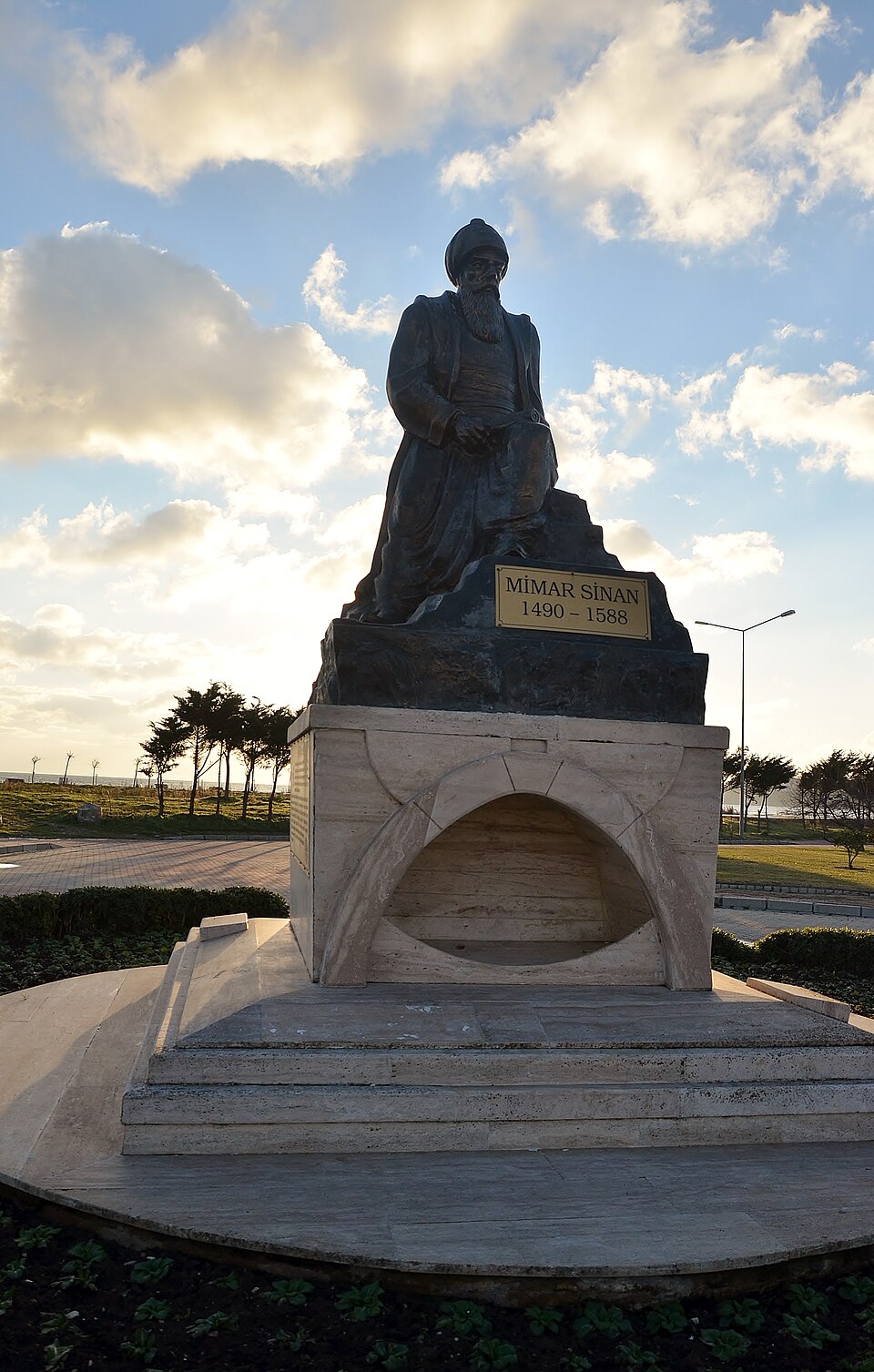
—You completed the Selimiye past eighty. What does it represent in your life?
I like to say that I built three edifices as one passes through three ages of man. The Şehzade Mosque, my first major commission, was my apprentice work. The Süleymaniye was that of the journeyman who has proven himself. But the Selimiye, completed in 1575 when my hands already trembled, is the master's work. I began it at an age when most men expect only the grave, and I believe I was never so sure of my craft. When one enters under that dome, one no longer feels the weight of stone: it seems suspended by the sole will of God. If only one name is to be remembered of me, let it be that one.
Şehzade was the apprentice's work, the Süleymaniye the journeyman's, the Selimiye the master's.
—What would you say to those who see only places of prayer in your construction sites?
Let them look more carefully. Istanbul was thirsty, and I spent years bringing it water. Around 1563, I threw across the valleys the Mağlova aqueduct, a work of arches and channels to bring fresh water to the city's fountains. I launched the great stone bridge of Büyükçekmece, to the west, on the road that leads the army toward Europe. An architect of the sultan is not only a man of domes: he is an engineer of roads, bridges, and springs. A city that prays but has no water dies just the same. I wanted mine to pray and to drink.
A city that prays but has no water dies just the same.
—Your minarets are renowned for their extreme slenderness. Is that a builder's or an artist's choice?
The two are never separated. They say of my minarets that they are as thin as pencils planted in the sky, so slender that one marvels they stand. That is precisely where the art lies: making appear fragile what is solid. A minaret too thick crushes the mosque; one too thin collapses at the first wind. One must know the weight of each stone, the thrust of each course, as a rider knows the breath of his mount. The silhouette of Istanbul, its spires against the dawn, is not a chance of beauty: it is the fruit of patient calculation. Grace, believe me, is worked as hard as strength.
Grace is worked as hard as strength.
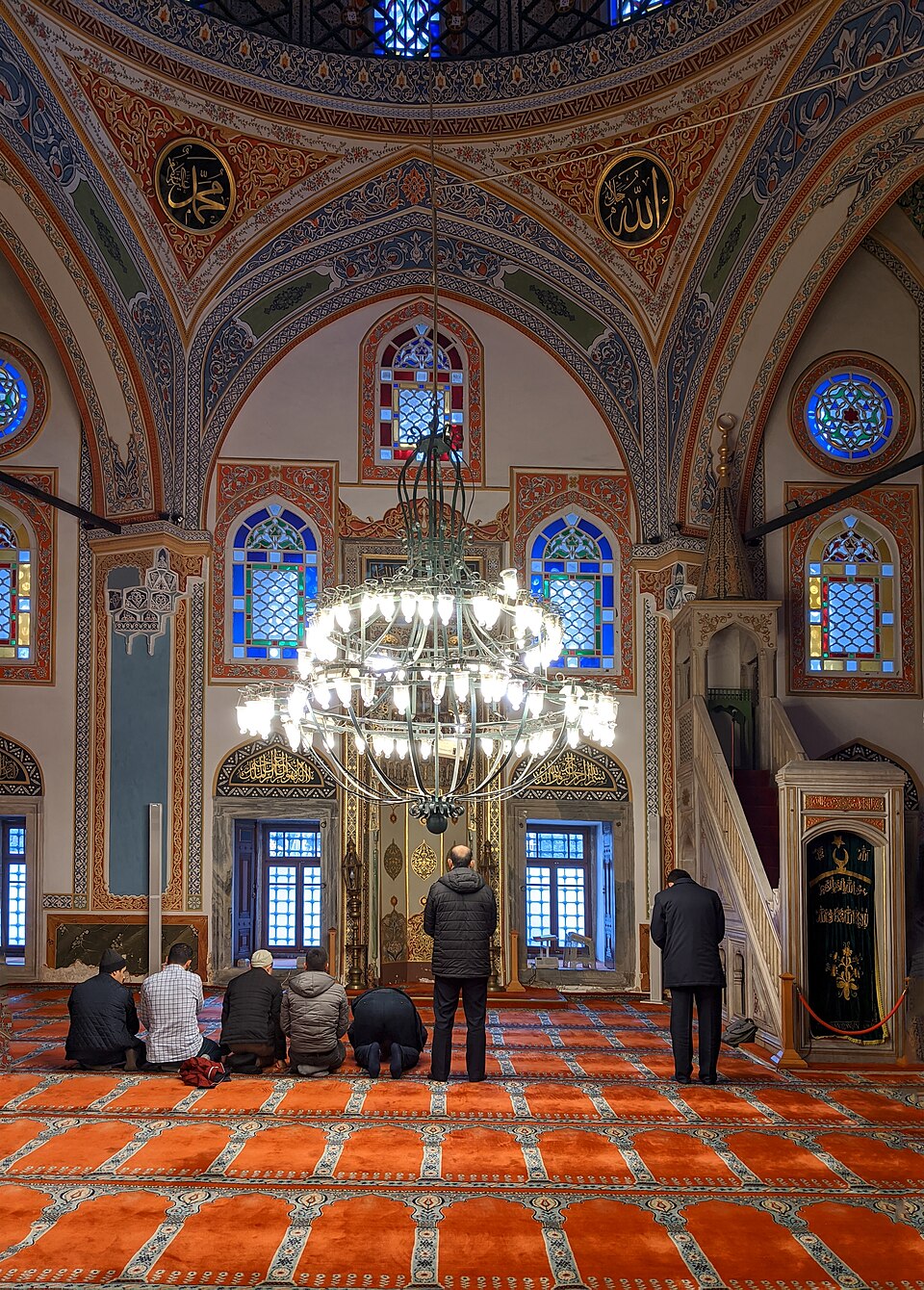
—Why did you insist on recording your life in writing, a rare thing for a builder?
Because a craftsman dies and his stones remain silent. I dictated to a secretary, toward the end of my days, a text called the Tezkiretü'l-Bünyan, the memoir of my constructions. I counted my works — over three hundred, mosques, bridges, schools, baths — and I said why I had placed such a dome thus and not otherwise. A stonecutter does not usually write; he obeys, builds, and fades away. But I thought that whoever would come after me deserved to know not only my walls, but the spirit that raised them. One bequeaths not only domes: one bequeaths a way of thinking stone.
One bequeaths not only domes: one bequeaths a way of thinking stone.
—After so many campaigns and construction sites, what most changed your builder's eye?
The discipline of armies. On the roads of Suleiman, I saw how to move thousands of men, how to feed a camp, how to order chaos. Running a construction site is not so different: my mornings began at dawn, after prayer, receiving foremen and reading reports from ten sites managed simultaneously across the Empire. In the afternoon, I would ride through the streets of Istanbul to lay my own hand on the cut stones, check the plumb of a column, scold a too-hasty stonecutter. An architect who does not know his workers one by one builds on sand. War taught me that before stone: without order, the finest idea collapses.
An architect who does not know his workers one by one builds on sand.
—If you imagined people still speaking of you centuries later, what would you want them to remember?
That is a thought beyond my old man's sight. If I could dream of being read a hundred years from now, I would not ask that they recite the number of my buildings or the measure of my domes. I would want them to enter under the Selimiye on a day of light, look up, and feel that difficult-to-say thing: that stone, if well thought, can cease to weigh. I have already had carved, near the Süleymaniye, the modest türbe where I will rest — I designed it myself, very simple, next to what I built greatest. Let them remember the child of Ağırnas who, starting from nothing, made air visible under vaults of brick.
Stone, if well thought, can cease to weigh.
This imaginary interview was generated by artificial intelligence from sources documented in Sinan's profile. It dramatises what the figure might have said based on what we know about them, but does not constitute attested historical testimony. For primary sources and factual documentation, refer to the full profile.