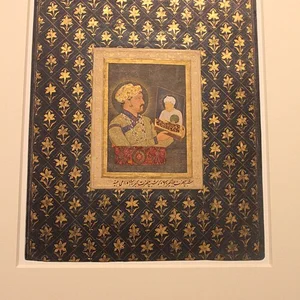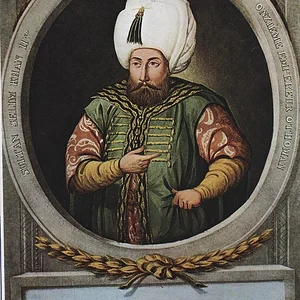

Selim II (1524–1574) was Ottoman sultan and caliph from 1566 to 1574. His reign is marked by the conquest of Cyprus and the naval defeat at Lepanto against the Christian coalition in 1571.
Selim II(1524 — 1574)
Selim II
Empire ottoman
7 min read
Frequently asked questions
Key Facts
- 1524: Born in Constantinople, son of Suleiman the Magnificent
- 1566: Becomes Ottoman sultan upon the death of his father Suleiman the Magnificent
- 1570–1571: Conquest of Cyprus from the Republic of Venice
- 1571: Ottoman naval defeat at the Battle of Lepanto against the Holy League
- 1574: Dies in Constantinople; succeeded by Murad III
Works & Achievements
Selim II ordered and carried out the conquest of Cyprus, a Venetian possession since 1489, securing strategic Ottoman control over this island at the heart of the eastern Mediterranean.
After the destruction of the Ottoman fleet at Lepanto, Selim and Sokollu Mehmed Pasha rebuilt a squadron of more than 200 galleys in under a year, demonstrating the industrial and financial might of the Empire.
Selim II commissioned architect Mimar Sinan to build this exceptional monument, considered by Sinan himself to be his masterpiece and the absolute pinnacle of Ottoman architecture.
Following Lepanto, Selim imposed a treaty on the Republic of Venice formally recognizing Ottoman sovereignty over Cyprus, consolidating the Empire's territorial gains despite the naval defeat.
In the year of his death, Ottoman forces retook Tunis from the Spanish, extending the Empire's influence in the western Mediterranean and strengthening Ottoman control over the Maghreb.
Anecdotes
Selim II was nicknamed “the Blond” or “the Drunkard” by his contemporaries — an irony for a Muslim caliph expected to observe the prohibition on alcohol. His passion for Cypriot wine is attested by numerous Ottoman and Venetian sources, and some historians argue that this obsession was one of the unofficial motivations behind the conquest of the island in 1570.
The Battle of Lepanto (1571) was a crushing naval defeat, but Selim and his grand vizier Sokollu Mehmed Pasha responded with astonishing speed. Within months, they had rebuilt an entire fleet. Sokollu is said to have told the Venetian ambassadors: “You have shaved our beard, but it will grow back. We, by taking Cyprus from you, have cut off an arm — and no arm grows back.”
Selim first had to defeat his own brother Bayezid in 1559 in a fratricidal civil war — a brutal tradition of Ottoman succession. He benefited from the decisive support of his mother Hürrem Sultan (Roxelane), a Slavic-born favourite of Suleiman the Magnificent, who manoeuvred for years to place her son on the throne.
Selim II's death reads like a satirical tale. After a wine-soaked evening in the baths of the Topkapı palace, the sultan slipped on the wet marble and fractured his skull. He died a few days later in 1574, aged just 50 — an inglorious end for a caliph at the head of the world's most powerful empire.
Primary Sources
Selim Bey is a man of great corpulence, fair-complexioned with a ruddy face, very fond of wine and pleasures, readily leaving the conduct of affairs to his Grand Vizier Mehmed Pasha, who governs with remarkable vigour.
In the year 979 of the Hegira, the fleet of the allied infidels engaged our galleys in battle in the Gulf of Lepanto. It pleased God to try us that day, but divine grace allowed our empire to rise again even more powerful.
The Turks having landed in great numbers on the island of Cyprus and besieged Nicosia, the city fell after lengthy fighting. Famagusta still holds out, but its defenses weaken day by day for lack of relief.
I fought at Lepanto under Don John of Austria, where I received three arquebus shots and lost the use of my left hand — an honour I would rather have than not to have fought at all.
Key Places
Ottoman imperial palace where Selim II resided and died accidentally in 1574. The absolute center of power of the Ottoman Empire, it housed the harem, the Imperial Divan, and the state treasuries.
The last Venetian stronghold in Cyprus, besieged and captured by the Ottomans in 1571. Its commander Marcantonio Bragadin, after a heroic resistance, was flayed alive by the Ottomans — an episode that provoked outrage across Christian Europe.
Site of the naval battle of October 7, 1571, where the Christian Holy League crushed the Ottoman fleet. Despite this resounding defeat, the Ottomans kept Cyprus and rebuilt their navy.
City where Selim served as governor (sanjakbey) in his youth, before becoming sultan. Learning to govern a province was a required step for Ottoman princes destined for the throne.
Masterpiece of the architect Mimar Sinan, commissioned by Selim II and completed in 1575 — one year after his death. A UNESCO World Heritage Site, it is regarded as the pinnacle of classical Ottoman architecture.
Liens externes & ressources
Références
Œuvres
Conquête de Chypre
1570-1571
Reconstruction de la flotte après Lépante
1571-1572
Mosquée Sélimiye d'Édirne (commanditée par Selim II)
1568-1575
Traité de paix avec Venise
1573
Reconquête de Tunis
1574