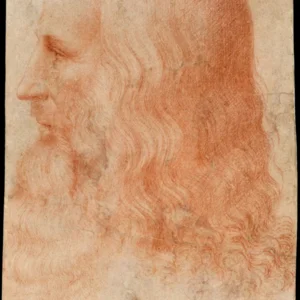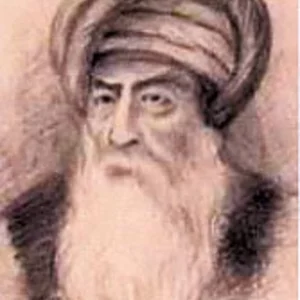

Sinan (c. 1490–1588) was the greatest architect of the Ottoman Empire. Chief of the imperial architects under Suleiman the Magnificent, he designed more than 300 buildings, including the Süleymaniye Mosque in Istanbul and the Selimiye Mosque in Edirne, considered the absolute masterpiece of Ottoman architecture.
Sinan(1490 — 1588)
Sinan
Empire ottoman
8 min read
Frequently asked questions
Key Facts
- c. 1490: born in Anatolia (Ağırnas), likely into a Greek or Armenian Christian family
- 1538: appointed Chief of the Imperial Architects (mimar başı) by Suleiman the Magnificent
- 1557: completion of the Süleymaniye Mosque in Istanbul, commissioned by Suleiman
- 1574: completion of the Selimiye Mosque in Edirne, considered by Sinan himself to be his masterpiece
- 1588: died in Istanbul having built more than 300 structures (mosques, bridges, aqueducts, caravanserais)
Works & Achievements
Sinan's first major imperial commission, built in Istanbul in memory of Prince Mehmed. He experimented here with a central plan featuring four semi-domes, breaking away from the traditional single-nave mosque layout.
The landmark monument of Suleiman the Magnificent's reign in Istanbul, dominating the city's skyline. Sinan incorporated a full complex (külliye) including a madrasa, hospital, hammam, and caravanserai.
Sinan's acknowledged masterpiece in Edirne, whose central dome of 31.28 m in diameter surpasses that of Hagia Sophia. Considered the pinnacle of classical Ottoman architecture.
A remarkable feat of hydraulic engineering designed to supply Istanbul with fresh water. It stands as testament to Sinan's versatile genius as an engineer as much as an architect.
Commissioned by Suleiman the Magnificent's favorite consort, this sophisticated bathhouse is located near Hagia Sophia in Istanbul. It showcases Sinan's mastery of thermal architecture and spaces for everyday life.
An Istanbul mosque commissioned by Grand Vizier Rüstem Pasha, celebrated for its extraordinary covering of Iznik tiles with floral patterns. A masterpiece of collaboration between Ottoman architecture and decorative arts.
A large stone bridge with four arches spanning Lake Büyükçekmece, west of Istanbul. A strategic structure on the road linking Istanbul to Europe, combining military utility with outstanding craftsmanship.
Anecdotes
Sinan was likely born into a Christian family in Anatolia and was recruited young through the devşirme system, which conscripted non-Muslim children to serve the Ottoman Empire. After converting to Islam, he rose through the military ranks before revealing his genius for construction — proof that exceptional talent could lead to social advancement within the Empire.
Before becoming imperial architect, Sinan took part in Suleiman the Magnificent's major military campaigns, including the Battle of Mohács (1526) and the Siege of Vienna (1529). It was during these campaigns that he learned to build bridges and military infrastructure, skills that would become the foundation of his architectural career.
Sinan himself considered the Selimiye Mosque in Edirne, completed in 1575 when he was over 80 years old, to be his absolute masterpiece. He had solved a technical challenge that Byzantine architects had never dared attempt: surpassing the dome diameter of the Hagia Sophia. The dome of the Selimiye indeed exceeds it by 1.30 meters.
Toward the end of his life, Sinan dictated an autobiographical text with the help of a secretary, titled Tezkiretü'l-Bünyan, in which he listed his works and commented on his architectural choices. This exceptional document offers a rare window into his own vision of his work — something extraordinarily uncommon for a craftsman of the 16th century, whether from the East or the West.
Sinan's remarkable longevity — he died around the age of 98 — allowed him to serve three successive sultans and personally oversee more than 300 building projects. Appointed chief architect (mimar başı) in 1538, he held the position for nearly fifty years, profoundly transforming the urban landscape of Istanbul and the Ottoman Empire as a whole.
Primary Sources
I built the Süleymaniye Mosque as an apprentice, the Şehzade Mosque as a journeyman, and the Selimiye Mosque as a master — this is my greatest work, through which I have surpassed the dome of the Greeks.
The chief architect Sinan ibn Abdülmennan erected, during the reign of Sultan Suleiman Khan, three hundred and some buildings, including mosques, medreses, caravanserais, bridges, aqueducts, and palaces, in service of God and the sultan.
Let our chief architect Sinan oversee the construction of the imperial mosque near the Hippodrome, ensuring the quality of materials and the swift progress of the works, in accordance with the plans approved by our august person.
A new mosque is being built in Istanbul of such size and magnificence as I have scarcely seen in Christendom. The chief architect, a man of remarkable intelligence and great experience, directs hundreds of workers with astonishing precision.
Key Places
Commissioned by Suleiman the Magnificent and completed in 1557, this monumental mosque dominates the Golden Horn. Sinan developed an architectural language here that synthesized Byzantine and Islamic traditions.
Sinan's absolute masterpiece, completed in 1575, whose central dome surpasses that of Hagia Sophia in diameter. Listed as a UNESCO World Heritage Site since 2011.
Sinan's first great imperial mosque (1548), built in memory of Prince Mehmed, son of Suleiman. The architect considered it the work of his apprentice years.
The presumed birthplace of Sinan, located in present-day central Turkey. A museum there is dedicated to his memory, bearing witness to his humble Anatolian origins before his rise at the Ottoman court.
Sinan designed his own mausoleum, set in a garden adjacent to the Süleymaniye Mosque. This modest tomb stands in striking contrast to the grandeur of the works he left to the Empire.
An impressive hydraulic system built by Sinan to supply Istanbul with water. This feat of engineering demonstrates the breadth of the architect's achievements, far beyond mosques alone.
Typical Objects
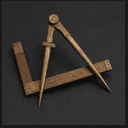
Fundamental tools of the mimar başı, used to draft plans and verify angles on construction sites. Sinan personally used them to check the geometric precision of his buildings.
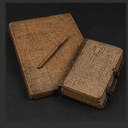
Documents in which Sinan recorded plans, material resistance calculations, and worker lists. Managing over 300 construction sites required a rigorous architectural bureaucracy.
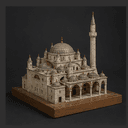
Scale models used to present projects to sultans and verify proportions before construction began. Sinan is said to have presented the Selimiye project to Selim II using a detailed scale model.
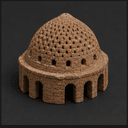
Sinan's technical signature: he used bricks that were lighter and more porous than stone to reduce the weight of domes without reducing their span, achieving unrivaled diameters.
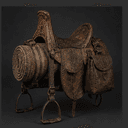
A reminder of Sinan's military origins — he spent decades riding alongside Ottoman armies before becoming an architect. This experience forged his mastery of logistics and the management of large construction projects.
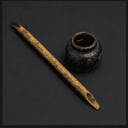
Sinan's mosques incorporated vast Quranic inscriptions in classical Ottoman calligraphy. Sinan worked closely with the finest court calligraphers to ensure the script harmonized with the architecture.
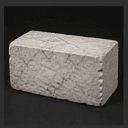
Sinan carefully selected his materials: he made notable use of marble from the island of Marmara (Proconnesus) for its aesthetic and structural qualities, continuing an ancient and Byzantine tradition.
School Curriculum
Vocabulary & Tags
Key Vocabulary
Tags
Daily Life
Morning
Sinan rose at dawn for the fajr prayer, then received foremen and engineers from the various ongoing construction sites at his Istanbul residence. He reviewed progress reports, corrected plans, and signed material purchase orders. As mimar başı, he sometimes managed several dozen construction sites simultaneously across the Empire.
Afternoon
Afternoons were devoted to site visits, often on horseback across Istanbul. Sinan personally inspected the laying of stones, checked the alignment of columns, and conferred with specialized craftsmen — stonemasons, plumbers, and carpenters. He also received envoys from the provinces requesting plans for distant buildings.
Evening
In the evenings, Sinan returned to his desk to work on new projects, drawing by candlelight. He would sometimes dictate descriptions of his works to his secretary and reflect on upcoming technical challenges. Meetings with viziers and imperial officials commissioning buildings also punctuated his evenings.
Food
Like any observant Muslim, Sinan followed Islamic dietary rules: halal meat (lamb, poultry), vegetables, legumes, wheat bread, and rice. Ottoman court cuisine was rich in spices from the East and sweet preparations made with honey and dried fruits. Coffee, introduced to the Ottoman Empire in the 16th century, became a daily ritual for scholars and courtiers.
Clothing
As a high imperial official, Sinan wore a long robe (kaftan) in wool or silk depending on the season, cinched with a leather or embroidered fabric belt. His head was covered with a white turban, a sign of respectability and piety. On construction sites, he likely wore more practical clothing, protected by a leather or heavy canvas apron.
Housing
Sinan lived in a large stone mansion in Istanbul, a testament to his high social standing. His home included reception rooms for clients and foremen, workspaces for drafting plans, and an inner garden (haremlik). He also owned several properties across the Empire, gifts from the sultans in recognition of his services.
Historical Timeline
Period Vocabulary
Visual Style
Esthétique de l'architecture impériale ottomane classique : grandes coupoles blanches, minarets élancés, décors de faïences d'Iznik aux bleus profonds, lumière filtrée et calligraphie dorée.
Sound Ambience
Ambiance sonore d'un grand chantier impérial ottoman au XVIe siècle, mêlant bruits de taille de pierre, appel à la prière lointain et bourdonnement des ateliers d'artisans.
Liens externes & ressources
Références
Œuvres
Mosquée Şehzade
1543-1548
Mosquée Süleymaniye
1550-1557
Mosquée Selimiye
1568-1575
Aqueduc de Mağlova (ou de Büyükçekmece)
vers 1563
Hammam de Haseki Hürrem (Bain de Roxelane)
1556
Complexe de Rüstem Pacha (mosquée)
1561-1563
Pont de Büyükçekmece
1563-1567