Imaginary dialogue between Charles Baudelaire and Théophile Gautier
by Charactorium · Théophile Gautier (1811 — 1872) · Literature · 6 min read
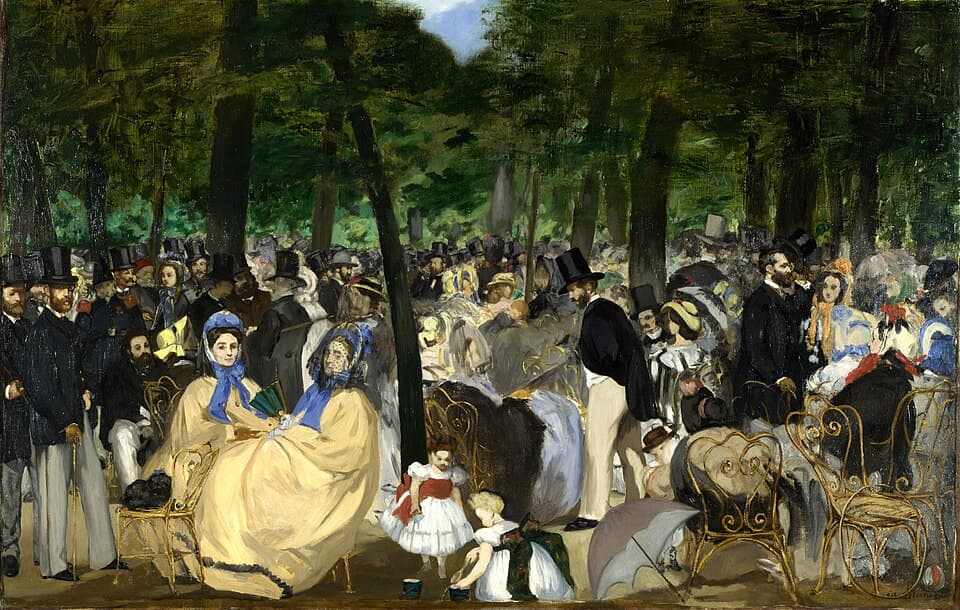
It is in the cluttered study of Théophile Gautier, in the heart of the Latin Quarter, that one autumn evening in 1862 I come to sit among the bronzes, oriental fabrics, and leather-bound volumes. A low lamp gilds the edges of a deluxe edition; outside, Paris still hums with hackney carriages. We have known each other since I dedicated my verses to you, dear master, and since you, almost alone, defended my book when the city condemned it. I come tonight not to flatter you, but to understand the man who taught me to place beauty above all else.
—Dear master, before reading you I imagined you as a young man. That famous pink waistcoat, at the premiere of Hernani in 1830 — was it truly a declaration of war?
A declaration, yes, and you who love insolence understand that better than anyone. I was eighteen, hot-blooded, and Hugo was finally offering us a living theater against the powdered wigs of the classics. My waistcoat was not pink, you see, but a blazing cherry red — I wanted it unbearable to the eyes of the old fogies. When the curtain rose, we were an army of long-haired youths ready to hiss at anyone who hissed at the master. That evening I understood that beauty defends itself like a barricade, with body and costume as much as with the pen. They laughed at us; we laughed at the dead. Youth has its uniforms, and mine proclaimed that art was worth making a fool of oneself for.
Beauty defends itself like a barricade, with body and costume as much as with the pen.
—You know better than anyone what it costs to write a book that morality condemns. In the preface to Mademoiselle de Maupin, you dared to prefer a beautiful statue to virtue. Do you still think so?
I think so even more firmly, and your trial, which I suffered with you, only confirmed me in it. Art has no need of morality, and it is a mistake to seek one in it — I wrote that as a young man and I would sign it tonight. The utilitarians want the verse to serve some purpose, to preach, to vote, to cure a toothache. But beauty has no other end than to be beautiful. Yes, I prefer a beautiful statue to the greatest act of virtue, because virtue passes and form remains. When they dragged you before the judges for your Fleurs, it was not your morality they were judging, it was your genius — and judges understand nothing of genius.
Beauty has no other end than to be beautiful; virtue passes and form remains.
—In Émaux et Camées, you ask the poet to sculpt, file, chisel in the resistant block. Is it a discipline or a suffering, this work on form?
Both, my dear, like any discipline worthy of the name. Feeling is not enough; feeling, everyone has it, even the porter. What distinguishes the poet is that he encloses his floating dream in a hard metal, that he seals it in the resistant block until it no longer moves. I wanted small poems cut like cameos, where not a word floats, where each rhyme rings like a medal thrown on marble. This takes hours for four lines, and one scratches out more than one writes. But marble does not lie: it keeps the exact trace of your effort. Form is the only thing that centuries cannot wear away.
Feeling, everyone has it, even the porter; the poet, for his part, encloses his dream in the hard metal.
—You have been running through salons and studios for forty years, pen always ready for La Presse. Has this job of critic not stolen the poet you are?
I am reproached for it, and you may be right to worry for me. Forty years of reviewing Salons, theaters, dancers — it is a gilded prison from which I hardly escape. But understand me: criticism taught me to see, and seeing is the poet's first duty. Before a painting at the Louvre, I learn how a painter achieves his color, and the next day I steal that secret for my sentence. I am a writer for whom the external world exists; I translate into words what others translate into pigments. Alas, money commands, and the Monday feuilleton does not write itself. If I had been rich, I would have chiseled only cameos — but one must live, and one feeds the poet with the journalist's wages.
I am a writer for whom the external world exists; I translate into words what others translate into pigments.
—You are also the only one, I believe, to take dance seriously. What do you seek at the Opéra, you the poet of motionless marbles?
What a strange question for a man who loves, like you, lines and rhythms! Dance, you see, is sculpture in motion, marble that would have come to life for an instant. I followed romantic ballet as one follows a religion: a dancer who rises is a poem that escapes gravity. I even dreamed of scenarios, fables where sylphs triumph over human heaviness. What I seek at the Opéra is the same thing as in a successful verse: a perfect form that lasts only a second and must be seized before it falls back. Serious people despise these frivolities. I believe that a well-extended leg is worth many dissertations on duty.
Dance is sculpture in motion, marble that would have come to life for an instant.
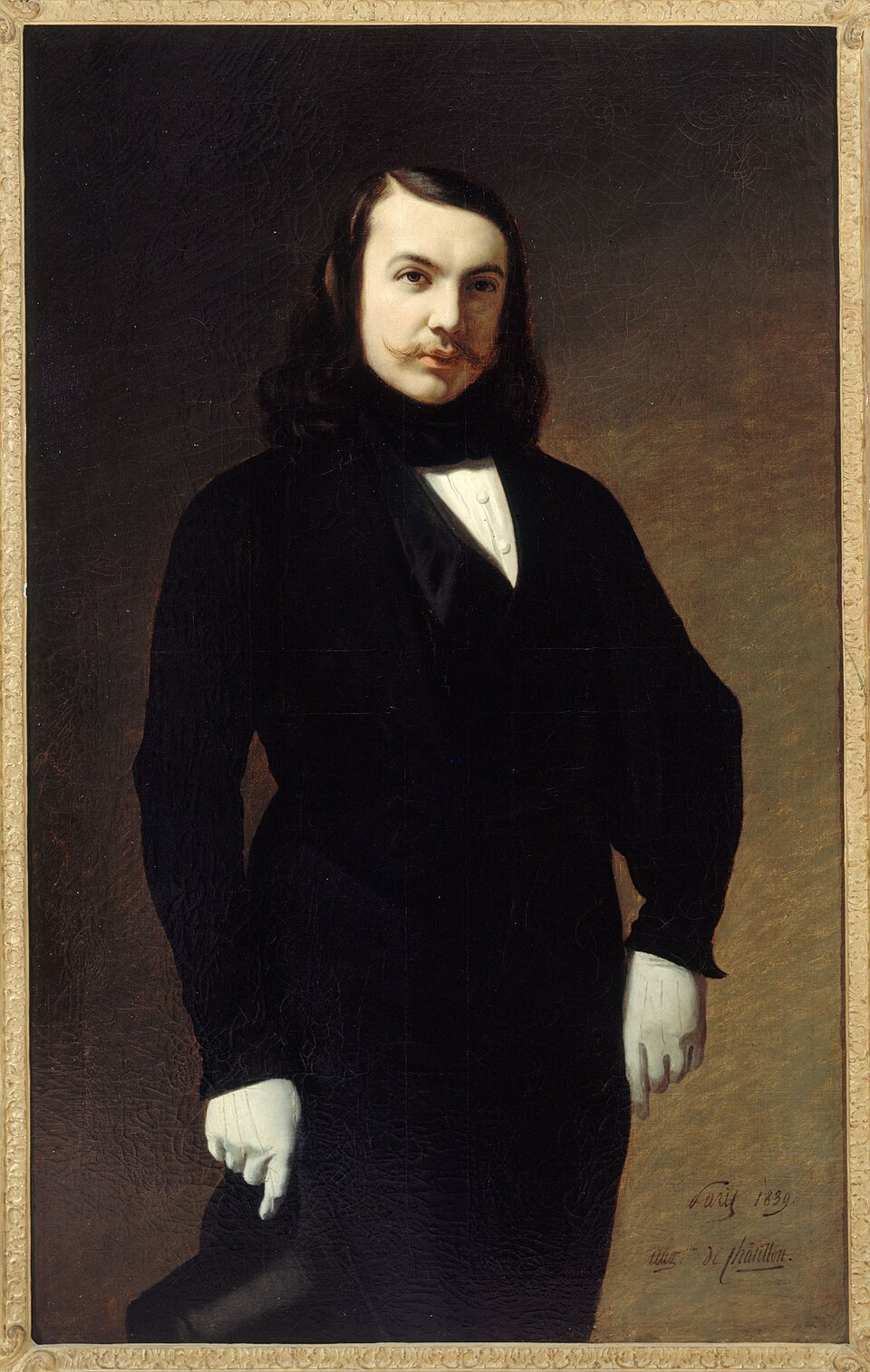
—You are everywhere called the apostle of art for art's sake. Do you recognize yourself in that banner that is waved, sometimes without you, in your name?
A banner is convenient for those who haven't read the book. I once said that the useful is ugly and that nothing beautiful is indispensable to life — they turned this quip into a system. Very well, I accept it, but let me be understood: I do not hate thought, I hate that it is poorly served. Too many poets believe that a noble intention dispenses with work. Yet a bad rhyme in the service of the Republic remains a bad rhyme. I prefer a perfect sonnet about a hummingbird to a limping ode on liberty. That is my art for art's sake: not contempt for ideas, but the refusal that form ever be sacrificed. You who chisel your Mal to perfection know that I speak truly.
A bad rhyme in the service of the Republic remains a bad rhyme.
—Let us speak of your elsewhere. You brought back from your voyage to Egypt a fever that never left you. What did you find there that Paris could not give you?
I found time stopped, my friend, and for a man who dreams of immobility it is a dazzling. Before the colossi and hypogea, I felt a beauty older than ours, indifferent to our morals and our revolutions. Egypt asks nothing, preaches nothing: it endures. From those sands I brought back enough to nourish twenty years of dreams, and later Le Roman de la Momie, where I wanted to resurrect a princess dead for three thousand years. To describe, for me, is to resurrect; my sentence is an embalming that preserves the color and flesh of things. Paris agitates me; the Orient calms me. There, I understood that perfect form is a way to conquer death.
To describe, for me, is to resurrect; my sentence is an embalming that preserves the color and flesh of things.
—In Le Roman de la Momie, one would say you paint more than you narrate. This mania for description, is it not a challenge thrown at the ordinary novelist?
A challenge, and a selfish pleasure, I admit. I am reproached for lingering on a fabric, a jewel, the grain of a stone, as if plot alone mattered. But plot is the thread; description is the pearl. I want the reader to see Egypt as if setting foot there, to feel the heat of granite and the scent of spices. For that one must be at once painter, archaeologist, and poet, and never skimp on color. They say I am cold because I polish form; nonsense. Beneath the smoothest cameo beats very hot blood. You who know how much precision can burn will defend me, I hope, against those who confuse richness with poverty of heart.
Plot is the thread; description is the pearl.
—When I listen to you, I find again the young insurgent of 1830. What remains today of the romanticism of your youth — a victory or a disappointment?
A faded victory, which is almost worse than a defeat. We won, you see: drama overthrew tragedy, color conquered gray, and no one dares defend the three unities anymore. But a victorious cause quickly becomes a fashion, then a bore. Today's young people inherit our audacities like furniture, without having fought the battle. Romanticism was not a school: it was a fever, a system of nature applied to art. Of that fever, I keep the warmth even when others have let it cool. I wore the red waistcoat, I kept vigil at the barricades of rhyme; no one will take my twenty years from me. The rest — glory, academies — is only dust on the cameo.
Romanticism was not a school: it was a fever, a system of nature applied to art.
—One last question, dear master, more intimate. When you supported me alone against everyone, what exactly were you defending — me, or a certain idea of poetry?
The two are one, and you know it well, you who never separated the man from the work. I defended a brother in beauty, that is all. When they condemned your verses, they were not attacking your person: they were attacking the poet's right to descend into the depths to bring back gold. That right, I claimed all my life; to refuse it to you would have been to deny myself. You made mud and drew a flower from it; no moralist will forgive you, and that is precisely why I admire you. Do not ask the crowds to understand — only ask that your form hold. The rest will come, or will not come, but it no longer depends on us.
You made mud and drew a flower from it; no moralist will forgive you.
This imaginary interview was generated by artificial intelligence from sources documented in Théophile Gautier's profile. It dramatises what the figure might have said based on what we know about them, but does not constitute attested historical testimony. For primary sources and factual documentation, refer to the full profile.