Kids interview Théophile Gautier
by Charactorium · Théophile Gautier (1811 — 1872) · Literature · 4 min read
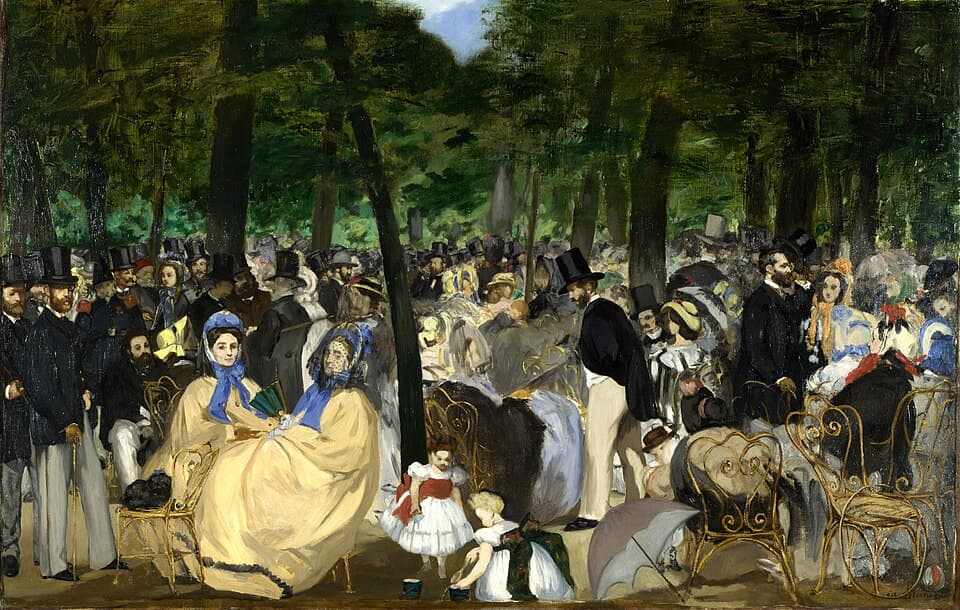
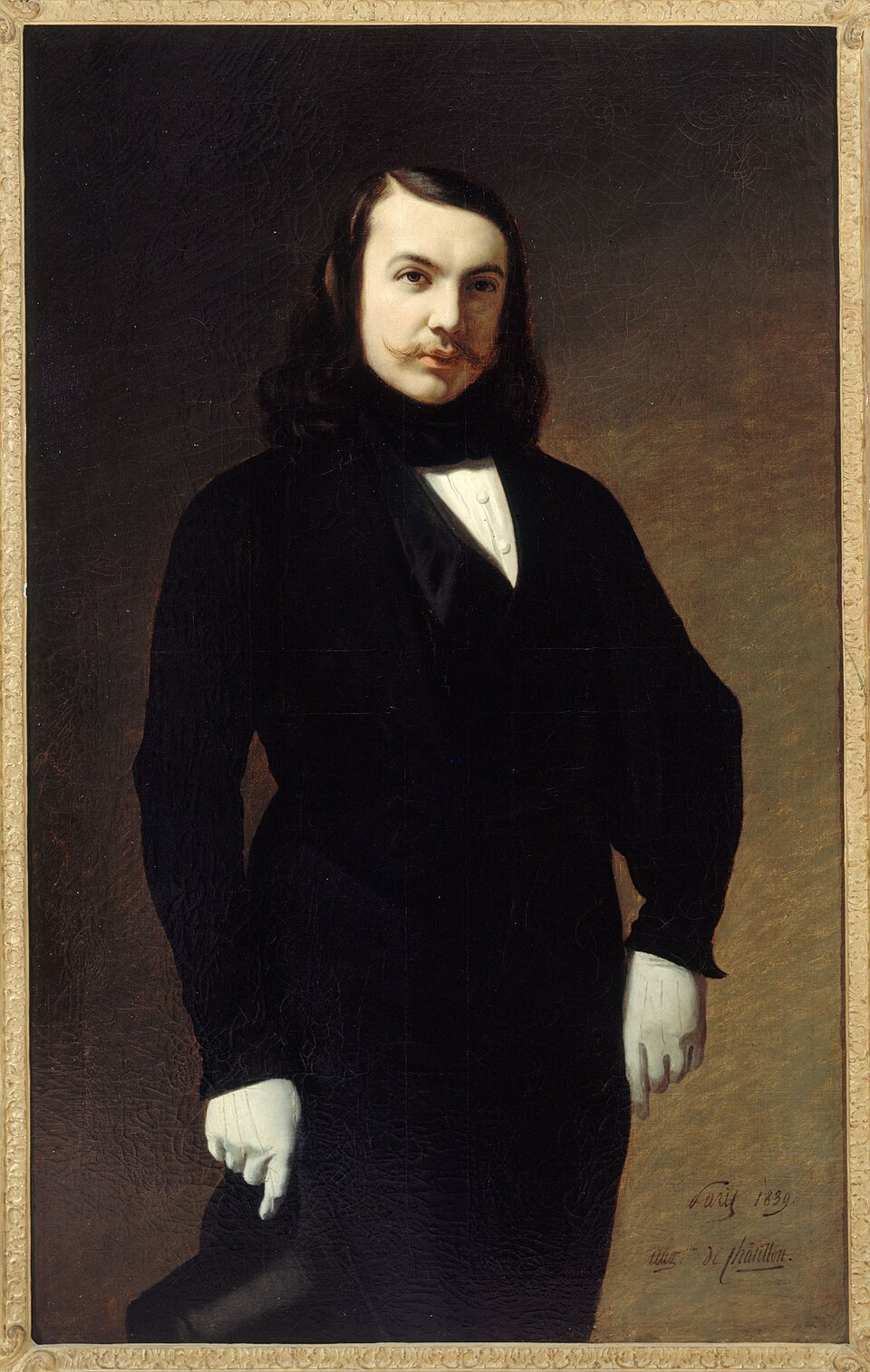
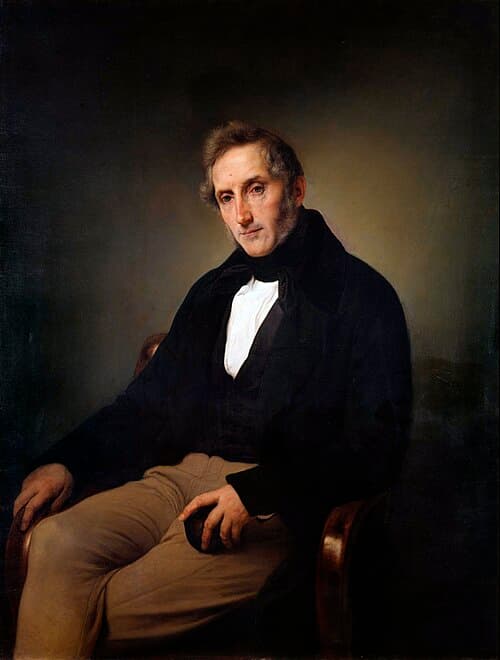
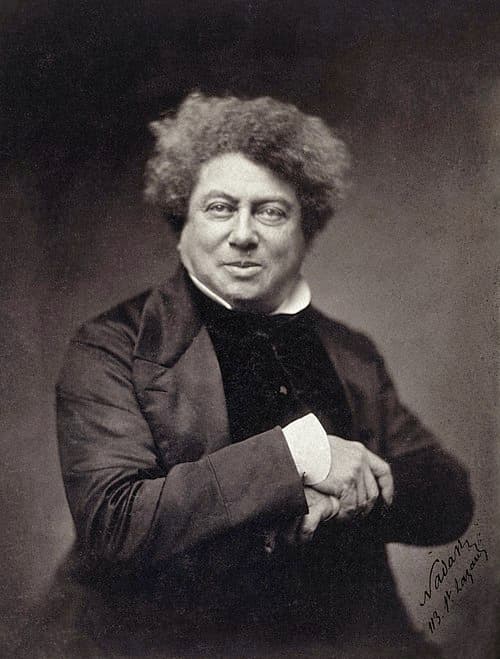
Two fifth-grade students on a school trip push open the door of an old Parisian salon filled with books and paintings. A gentleman, elegant in a flashy waistcoat and long hair, greets them with a smile. This is Théophile Gautier, and he is eager to tell them about his life.
—Is it true you wore a pink waistcoat to the theater to cause a scandal?
Ah, you already know about my waistcoat! Yes, my child, it was in 1830, I was barely 19. Victor Hugo was presenting his play Hernani, and the old gentlemen who liked traditional theater hated it. So my friends and I came to defend it. I put on a bright pink waistcoat, like a flower in the middle of a crowd in black. Imagine a hall full of dark costumes, and suddenly that splash of color! People were shocked. But that was on purpose. I wanted everyone to see, from afar, which side I was on: the side of new beauty.
A pink waistcoat in the midst of a crowd in black was my banner.
—Why was defending a simple play so important?
You're right to ask; it may seem strange. But in my day, theater was the heart of life. People argued over it like they argue over big ideas today. The old guard wanted proper plays with strict rules. We young Romantics wanted freedom, emotion, color! Romanticism is that: an art that listens to the heart rather than old rules. That battle over Hernani was our way of telling the world: let us invent. I was young, I was scared, but I was proud.
We were fighting for the right to invent a new art.
—You wrote that a beautiful statue is worth more than a good deed. Did you really mean it?
You read my preface! Yes, I wrote those words in Mademoiselle de Maupin, in 1835: “I am one of those for whom the beautiful exists, and who place beauty above all. I prefer a beautiful statue to the greatest act of virtue.” It was provocative, I know. I didn’t mean that one should be wicked! I meant something simple: art doesn’t need to preach morality to be great. A song doesn’t have to teach a lesson to be beautiful. That is my doctrine, called art for art’s sake.
Art doesn’t need to preach morality to be beautiful.
—How did you manage to write a perfect poem? Did it come naturally?
Oh no, never naturally! For me, writing a poem is like cutting a precious stone. In my collection Émaux et Camées, in 1852, I even wrote: “Sculpt, file, chisel; let your floating dream be sealed in the resistant block!” You see the image? The poet is a sculptor. The misplaced word, I remove it. The flabby sentence, I harden it. I start over ten times, twenty times. Imagine a jeweler bent over his table, polishing a small cameo for hours. That was me, with my goose quill and my crossed-out drafts.
A beautiful poem is cut like a precious stone.
—What was your actual job to earn money?
Good question; people often forget a writer has to eat! For more than forty years, I was a critic for newspapers like La Presse or Le Moniteur. My job was to go see paintings, plays, ballets, and then write whether they were beautiful or not. I often went to the Louvre to observe paintings. Imagine: no photographs in newspapers back then. So my words had to paint the picture for readers who couldn’t see it. I had to make them feel the color with just sentences. A difficult job, but I loved it.
My words had to paint the pictures for those who couldn’t see them.
—There was a poet everyone hated and you defended him, right?
Yes, and I am very proud of it! His name was Charles Baudelaire. He had written a collection, Les Fleurs du Mal, which caused a scandal all over Paris. People cried that it was immoral, shocking. He was even taken to court! When I read it, I saw something else: a genius. So I said it publicly, when almost everyone was condemning him. You know, my child, it’s easy to like what everyone likes. The hardest thing is to defend someone when the crowd turns its back on them. I preferred to trust my eyes rather than rumors.
The hardest thing is to defend an artist when the crowd turns its back on them.
—Did you travel far? What was it like to go so far in your time?
I traveled everywhere I could! To Italy, Venice and Rome, but above all, in 1845, I went to Egypt. Imagine, my child: no fast trains, no easy roads. We traveled for weeks by boat, by cart, by donkey in the sand. And then, at the end, the burning sun, the giant temples, the pyramids! I always carried my travel notebook to record colors, smells, light. That trip transformed me. Everything I saw there would nourish my books for years.
Traveling, in my day, meant weeks of sand and sun.
—And Egypt gave you the idea for a book?
Exactly! In 1858, I wrote Le Roman de la Momie (The Romance of the Mummy). It’s the story of a princess of ancient Egypt, found asleep in her tomb for thousands of years. Can you imagine the mystery? I had seen the real temples, the real tombs, so I could describe colors and objects as if you were there. In literature, we called that local color: those little true details of a distant land that make you feel you are traveling for real. Writing that book was like bringing a piece of Egypt back to my readers in Paris.
My book was a piece of Egypt brought back to Paris.
—And what was your home like? Did you live like everyone else?
Not quite! At home in Paris, it was full of paintings, books, and pretty objects everywhere. I think I lived according to my ideas: if beauty matters above all, then even my house had to be beautiful. People found me elegant, a bit original, what they called a dandy: someone who cares a lot about their appearance, like a living painting. I got up late, wrote in the morning in peace, and in the evening dined with my artist friends. Imagine whole evenings spent talking about painting and poetry, by candlelight.
If beauty matters above all, even your home must be beautiful.
—Today, what would you like people to remember about you?
What a beautiful question to end with! You know, I didn’t become as famous as my friend Hugo. But I helped many artists to exist, like Baudelaire. And all my life I defended a very simple idea: beauty is worth caring about. Not to teach a lesson, not to be useful. Just because it makes life greater. If someday, before a painting, a song, or a sunset, you stop for a moment just to say “how beautiful”... then, my child, you will have understood everything I wanted to say.
Beauty serves no purpose, and that’s why it is precious.
This imaginary interview was generated by artificial intelligence from sources documented in Théophile Gautier's profile. It dramatises what the figure might have said based on what we know about them, but does not constitute attested historical testimony. For primary sources and factual documentation, refer to the full profile.