Imaginary interview with Théophile Gautier
by Charactorium · Théophile Gautier (1811 — 1872) · Literature · 6 min read
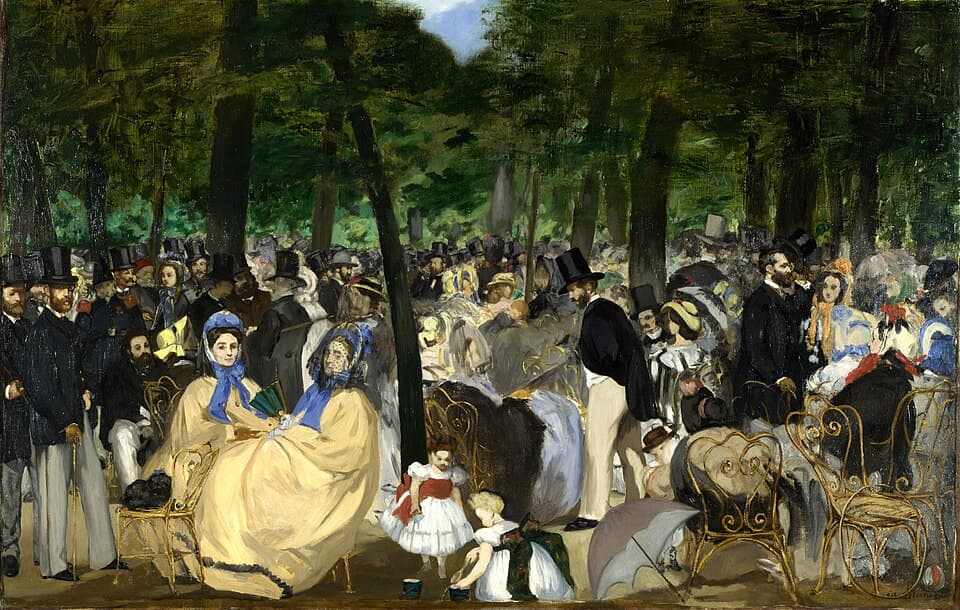
October 1865. The Parisian salon smells of wax and cold tobacco; on the walls, Italian engravings sit alongside a drawing of a mummy brought back from the Orient. Théophile Gautier, waistcoat impeccable and eyes like a well-fed cat, sets down his goose quill and agrees to retrace the thread of forty years spent defending a single cause: beauty.
—How did you come up with that famous pink waistcoat for the opening night of Hernani?
It was in 1830, and we were young enough to die for it. Victor Hugo's play was about to do battle with the classical wigs, and a banner was needed. I chose a dazzling pink waistcoat — not cherry, mind you, but a tender pink that made the old fogies in the pit grind their teeth. It was not coquetry: it was a declaration of war sewn in silk. When you love Hernani, you don't whisper it — you wear it on your chest. The classicists hissed, we clapped till our palms hurt, and my waistcoat blazed like a cockade among their black coats. I've told that story a hundred times, and I'll tell it again: it was the day I understood that the shape of a garment could be an idea.
When you love Hernani, you don't whisper it — you wear it on your chest.
—Why did that theatrical battle matter so much to your entire generation?
Because we weren't watching a play — we were witnessing a change of world. The hall was split in two like an apple: on one side, the champions of regulated tragedy; on the other, a youth thirsty for air and color. We had read the manifestos, we knew about the July Revolution rumbling outside; Hugo's drama was its literary lining. I was a kid drunk on rhymes, and I felt that that night we were burying the stiff alexandrine to give birth to another, living one that enjambed, that breathed. Romanticism, you see, was never for me a school with its desks: it was a new way of looking at nature and rendering it. That night, I stopped being a schoolboy and became a soldier of beauty.
—You often compare writing verse to the work of a sculptor. What do you mean by that?
I mean that the poet is not a tear-shedder, but a worker before a block. In Émaux et Camées, in 1852, I wanted poems as hard and clear as gemstones, filed down, polished until no roughness remained. I put into it this precept that I hold as my law: “Sculpt, file, chisel; Let your floating dream Be sealed In the resistant block!” The dream, you see, is worthless as long as it floats; it must be imprisoned in a form that resists, just as the engraver locks a face in enamel. Feelings pass, fever subsides; only the well-cut facet remains. That is what the young will soon call Parnassian art: marble rather than handkerchief.
The dream is worthless as long as it floats; it must be imprisoned in a form that resists.
—What do you say to those who judge this poetry cold, too concerned with its own perfection?
That they confuse coldness with mastery. A diamond is not cold because it is hard; it concentrates light instead of spilling it in whining. They reproach me for chiseling cameos while others pour rivers of effusion; but emotion that does not find its form dissolves and dies with its century. I work at my Parisian desk in the calm of the morning, my goose quill in hand, and I rework a stanza twenty times until it stands on its own. What I seek is the object that will outlive the feeling that gave it birth. A beautiful statue consoles more than a sincere complaint: it, at least, does not age. Formal perfection is not the enemy of the soul — it is its only worthy reliquary.
—Your preface to Mademoiselle de Maupin scandalized the right-minded. What did you have to say to them?
I was twenty-three in 1835, and I wanted to slap the utilitarians who wanted art to serve some purpose, like a bellows or a chamber pot. So I wrote it plainly: “I am one of those for whom the beautiful exists, and who place beauty above all else. I prefer a beautiful statue to the greatest act of virtue.” Imagine the grimace of the moralists! They wanted novels that taught a lesson; I offered them a work that wanted to prove nothing except that it was beautiful. Morality has its courts, its preachers, its police; art needs none of them. A work is not virtuous or vicious, it is well-made or botched. That preface was my first stone in the pond of moralism — and I confess I loved the splash it made.
A work is not virtuous or vicious, it is well-made or botched.
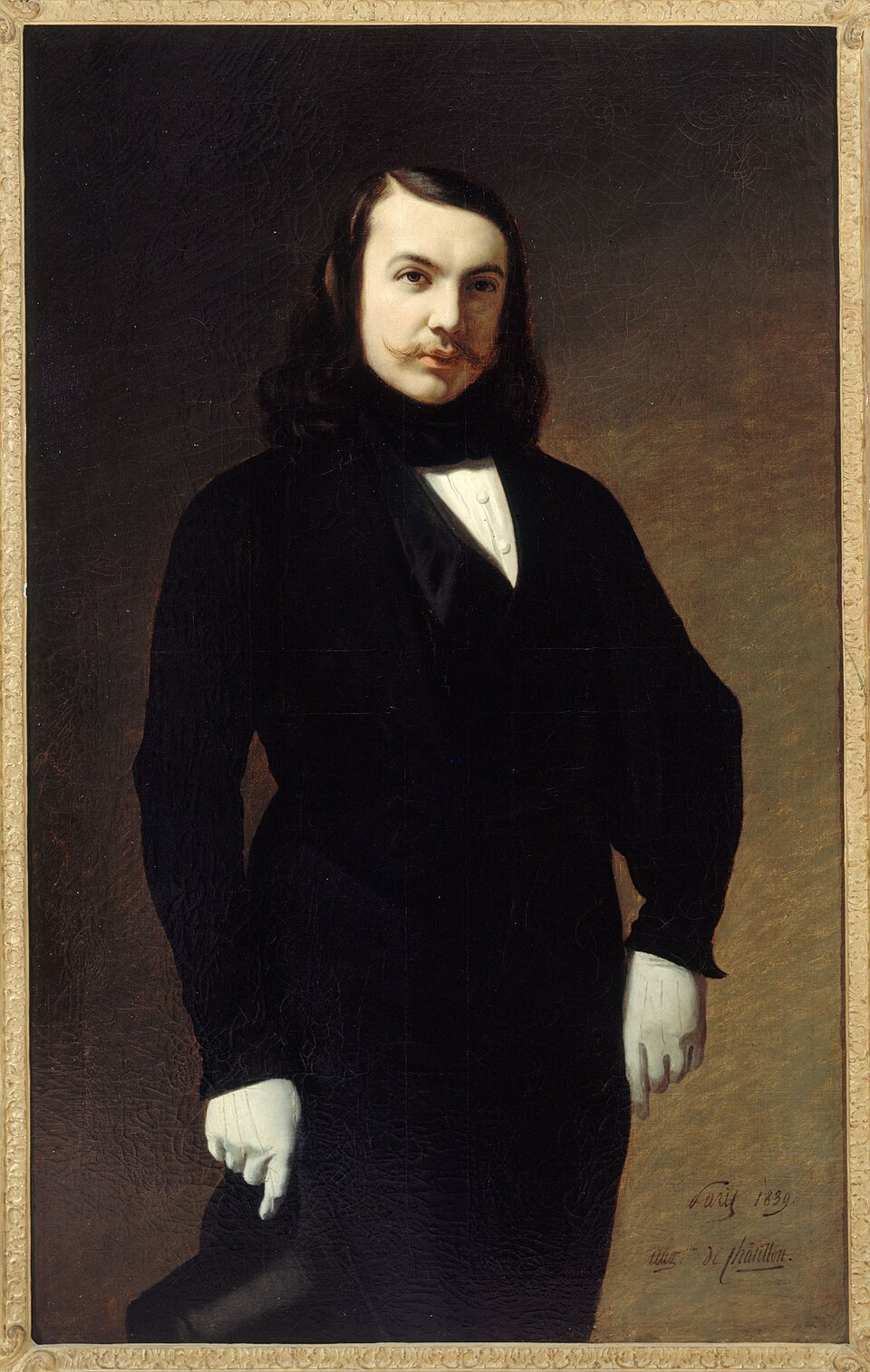
—You held to this doctrine of art for art's sake your whole life. Where does such a complete conviction come from?
It comes from disgust and wonder. Disgust at sermons disguised as novels, those fables where vice is punished on the last page to reassure the shopkeepers. And wonder at a pure form — an antique torso, a verse by Hugo, the enamel of a well-turned object. All my life I have thought that art has no need of morality, and that it is a mistake to seek one; art is beauty, and beauty is self-sufficient. I am accused of despising virtue: I do not despise it, I refuse to let it command the poet like a servant. The beautiful exists by itself, sovereign, useless, and it is precisely its uselessness that makes it precious. Everything useful is ugly, I used to say — for the useful always has a master, while the beautiful serves no one.
—For more than forty years, you were an art critic in the newspapers. What were your days like?
My mornings belong to writing, but my afternoons are given to the painting of others. I leave my desk, head to the studios and galleries, walk through the rooms of the Louvre where I stop for hours before a canvas to translate its color into sentences. For that is my true craft: transposition. I render in words what the painter has done with pigments, I seek in prose the effects of light and texture of the painting. In the evening, sometimes, I dash to the Paris Opera, where I follow the dance with all my eye, for ballet is sculpture in motion. I have blackened entire columns in La Presse and elsewhere, week after week, defending the innovators whom others rejected. The critic is not a bewigged judge: he is a lookout who points to beauty when others do not yet see it.
The critic is not a judge: he is a lookout who points to beauty when others do not yet see it.
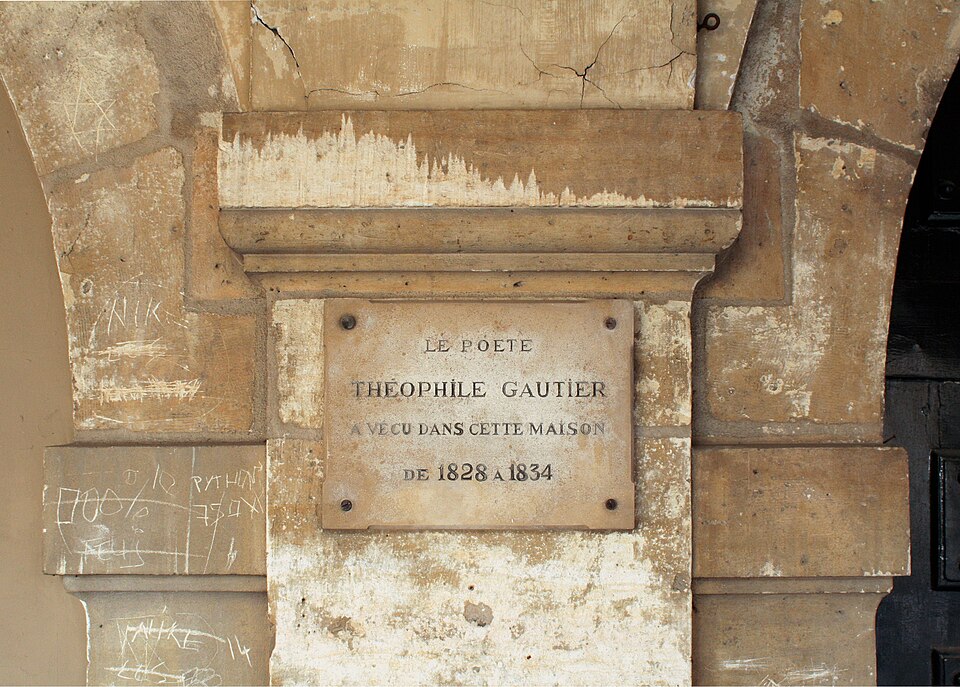
—You defended Baudelaire and his Flowers of Evil when society condemned them. What drove you?
Genius, sir, when you meet it, is not debated — it is saluted. When Charles Baudelaire's collection appeared, all Paris cried out in offended modesty; magistrates saw an outrage, bourgeois a poison. I saw a goldsmith carving pain as I carve my cameos. How could I have disowned him? That would have been to deny my own law. A poem is not judged by its morality but by its craftsmanship, and his was of a cruel perfection, without a single flaw. I said so loudly, in the press, when it was convenient to keep silent. It is precisely at such moments that a critic earns his salt: not when he praises what everyone admires, but when he defends, alone, what everyone stones. Baudelaire felt it well, he who did me the honor of dedicating his book to me.
—Your trip to Egypt left lasting traces. What remains of that Oriental experience?
What remains is an intoxication of colors and heat from which I have never quite recovered. In 1845, I carried my travel journal under the Oriental sun, and I filled it with notes, sketches, splinters of light that the Seine will never know. Egypt is the country where stone conquered time, where ancient forms stand intact after millennia — exactly the dream of eternity I pursue in my verses. What I saw there was not picturesque, it was sacred: proof that a civilization can build for beauty alone, beyond death. I brought back enough to nourish my imagination for years. That local color, those sands, those tombs, I kept them in reserve like a painter keeps his rare pigments, for the day I would make a book of them.
—What did you seek to revive by writing The Romance of the Mummy?
I wanted to resurrect an entire world from a single bandage. In The Romance of the Mummy, published in 1858, I put all my amateur antiquarian erudition and all my art critic's eye to the service of one thing: making the ancient Egypt visible as if the reader were setting foot there. Every palace, every ornament, every hypogeum, I described with the meticulousness of a painter who omits no reflection. For ancient beauty, perfection of forms, harmony of proportions — that is what should occupy all our thoughts and all our efforts. A mummy is not for me a macabre object: it is a preserved form, a victory over corruption, the very triumph of what I have devoted my pen to. Writing that novel was like embalming in my turn — not a body, but a vanished splendor.
A mummy is not a macabre object: it is a preserved form, a victory over corruption.
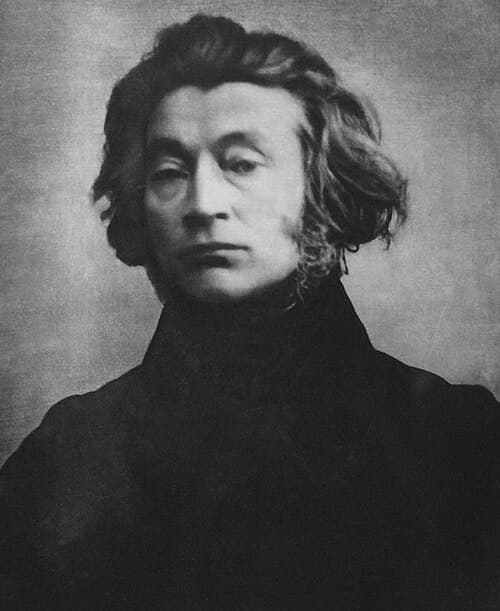
This imaginary interview was generated by artificial intelligence from sources documented in Théophile Gautier's profile. It dramatises what the figure might have said based on what we know about them, but does not constitute attested historical testimony. For primary sources and factual documentation, refer to the full profile.