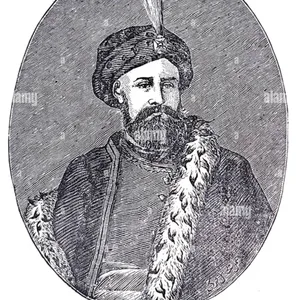

Marinid sultan of Morocco (1348–1358), Abou Inan Faris is known for welcoming Ibn Battuta at his court and commissioning the writing of his famous travel account. A great patron of the arts, he had the Bou Inania madrasa built in Fez.
Abou Inan
Abou Inan Faris
9 min read
Frequently asked questions
Key Facts
- Reigned as Marinid sultan of Morocco from 1348 to 1358
- Commissioned Ibn Battuta to write the Rihla, an account of his travels across the Islamic world
- Had the Bou Inania madrasa built in Fez, a masterpiece of Marinid architecture
- Temporarily extended Marinid rule over part of Ifriqiya (present-day Tunisia)
- Was assassinated in 1358 at around the age of 26
Works & Achievements
A Quranic school and masterpiece of Marinid architecture, commissioned and funded by Abou Inan in Fez. Considered the finest madrasa in Morocco, it stands as a testament to the sultan's exceptional architectural patronage and still stands today.
A second madrasa of the same name built by Abou Inan in Meknes, demonstrating his policy of beautifying the cities of his empire and promoting Islamic education throughout the Maghreb.
Abou Inan ordered Ibn Battuta to dictate his travel memoirs to his secretary Ibn Juzayy al-Kalbi. Without this royal decision, the account of the greatest traveler of the Middle Ages would likely never have been committed to writing.
Abou Inan led several victorious campaigns that allowed him to dominate an empire stretching from Morocco to Tunisia, bringing Marinid power to its greatest territorial reach in several decades.
Integrated into the Bou Inania Madrasa of Fez, this mosque — open to the public — is the only madrasa in Morocco to hold the status of a Friday mosque, an exceptional distinction that reflects Abou Inan's religious and political ambitions.
Anecdotes
In 1353, the great traveler Ibn Battuta, exhausted after thirty years of journeys across Asia and Africa, arrived at the court of Abu Inan in Fez. The sultan, captivated by his extraordinary accounts, ordered him to dictate all of his adventures to his secretary Ibn Juzayy al-Kalbi. This is how the Rihla was born — one of the most important travel narratives of the medieval Islamic world.
Abu Inan had the Bou Inania madrasa built in Fez, a masterpiece of Marinid architecture completed around 1357. According to tradition, when presented with the staggering bill for the works, he threw it into the river, declaring that “what is beautiful has no price.” The building, with its zelliges, arabesques, and carved woodwork, remains to this day one of the best-preserved monuments in Morocco.
In 1348, the very year Abu Inan seized power by rebelling against his father Abu al-Hasan, the terrible Black Death was devastating the Maghreb. This epidemic killed millions across Europe and the Arab-Muslim world; it greatly weakened the dynasties of the region and, paradoxically, gave Abu Inan the opportunity to consolidate his power amid the general chaos.
Despite his culturally brilliant reign, Abu Inan met a tragic end in 1358: he was strangled on the orders of his own vizier, who wished to place a more pliable prince on the throne. This grim fate illustrates the fragility of power in medieval dynasties, where sultans were sometimes prisoners of their own ministers.
Abu Inan was an ambitious conqueror: he took Tlemcen in 1352 and extended his empire as far as Ifriqiya (present-day Tunisia), reaching Tunis in 1357. These conquests allowed him to briefly control a vast territory stretching from present-day Morocco to Tunisia, momentarily restoring Marinid power at its height.
Primary Sources
Our master the sultan [...] commanded me to dictate what I could recall of my travels and the curiosities of the countries I had visited, and to mention those I had met among kings, scholars, and pious men.
Ibn Marzuq, preacher at the Marinid court, draws a laudatory portrait of the dynasty's sultans, citing the pious constructions and patronage of Abu Inan among the most remarkable acts of governance of his time.
Abu Inan was the most powerful of the Marinid sultans after Abu Yusuf; he united under his authority the far Maghreb, the central Maghreb, and part of Ifriqiya, but his reign was cut short by the treachery of his viziers.
A chronicle of the Marinid sultans describing the splendor of Abu Inan's court, his generosity toward scholars and poets, and the construction of his great religious buildings in Fez and Meknes.
Key Places
Capital of the Marinid sultans and the main residence of Abu Inan, Fez was in the 14th century one of the largest cities in the Islamic world — a center of trade, religion, and the arts. It was here that Abu Inan received Ibn Battuta and commissioned the construction of the Bou Inania madrasa.
A masterpiece of Marinid architecture commissioned by Abu Inan between 1350 and 1357, this Quranic school is adorned with zellige tilework, carved stucco, and engraved cedarwood. The only madrasa in Morocco to hold the status of a Friday mosque, it is regarded as one of the finest monuments of Western Islamic art.
The second major city of the Marinid empire, Meknes is home to a second Bou Inania madrasa built on the orders of Abu Inan. The city served as an important administrative and military center during his reign.
A city conquered by Abu Inan in 1352 during his eastward military campaigns, Tlemcen was at the time the capital of the Zianid sultanate. Its capture allowed the Marinid sultan to extend his empire deep into the central Maghreb.
The easternmost point of Abu Inan's conquests, Tunis was briefly under his control in 1357, marking the territorial peak of his reign. This advance into Ifriqiya illustrates the sultan's ambitions to unite the entire Maghreb under his rule.
Typical Objects

The walls of the Bou Inania madrasa, built by Abu Inan, are entirely covered in multicolored zellige representing the pinnacle of this Moroccan decorative art. These small glazed tiles, hand-cut and assembled into complex geometric patterns, were a mark of the refinement and wealth of a sultanic court.

The Marinid sultans commissioned magnificently calligraphed and gold-leaf illuminated Qurans for their libraries and madrasas. Abu Inan, known for his piety and patronage of the arts, had such manuscripts produced to adorn the Bou Inania and other religious foundations.

The reed pen — a quill cut from a reed stalk — and the bronze inkwell were the everyday tools of the secretary Ibn Juzayy, tasked by Abu Inan with setting down Ibn Battuta's accounts in writing to compose the Rihla. Without these instruments of knowledge, this great text might have remained an oral tradition.

At official ceremonies, the Marinid sultan wore gold-embroidered silk garments and an immaculate white turban, in keeping with the protocol of medieval Maghreb courts. These sumptuous robes proclaimed the sovereign's legitimacy and power before his subjects and foreign ambassadors alike.

A precision scientific instrument used to measure the position of celestial bodies, the astrolabe was a fixture in the courts of learned Muslim rulers. In Abu Inan's circle, astronomers and scholars used it to draw up religious calendars, determine prayer times, and orient new buildings.

Dinanderie — the art of hammered and chiseled copperwork — was highly prized in Marinid courts; these imposing trays were used at royal banquets to carry dishes presented to distinguished guests, such as Ibn Battuta during his evenings at the court of Fez.
School Curriculum
Vocabulary & Tags
Key Vocabulary
Daily Life
Morning
The sultan rises at dawn for the fajr prayer, accompanied by his guards and close attendants. After prayer, he receives his viziers and secretaries in audience to handle affairs of state: diplomatic correspondence, military reports, and petitions from his subjects are reviewed in the throne room of the Fès palace.
Afternoon
In the afternoon, Abou Inan sometimes presides over reading sessions or theological debates with the scholars he welcomes at his court. He may also review his troops or visit the construction sites of madrasas being built to supervise the work. Poets and men of letters perform before him on a regular basis.
Evening
In the evening, after the maghrib prayer, the sultan shares a meal with his close entourage, served on large chiseled metal platters. Travelers or passing ambassadors are sometimes presented to him; it was in this way that Ibn Battuta was able to recount his adventures during memorable evenings at the court of Fès.
Food
Abou Inan's table reflects the opulence of the Marinid courts: lamb mechoui with spices, vegetable couscous, slow-cooked tajines, dates, and fresh fruit. The meal is accompanied by rosewater and honey-based preparations, wine being prohibited by Islam. Fine wheat bread and almond pastries round out the royal feasts.
Clothing
During official audiences, Abou Inan wears a silk caftan embroidered with gold and a fine wool burnous, symbols of sultanate power. On his head, he sports an immaculate white turban, a sign of his religious and political dignity. For prayer or more discreet outings, he dons garments of quality but simpler cut, in keeping with Islamic prescriptions.
Housing
Abou Inan resides in the royal palace of Fès, a vast complex of inner courtyards adorned with fountains, gardens, and colonnaded galleries. The sultan's private apartments are decorated with zelliges, sculpted stucco, and carved cedar woodwork — in the same refined style as the Bou Inania madrasa he is having built a few streets away.
Historical Timeline
Period Vocabulary
Liens externes & ressources
Références
Œuvres
Médersa Bou Inania de Fès
1350-1357
Médersa Bou Inania de Meknès
vers 1350-1358
Commande de la Rihla d'Ibn Battuta
1353-1355
Conquêtes militaires au Maghreb central et en Ifriqiya
1352-1357
Grande Mosquée de la médersa Bou Inania
vers 1356