Al-ma'ida al-sultaniyya (the Marinid Sultan's Table)
At the court of Fez, the royal meal is not divided into starter-main-dessert but unfolds as a succession of abundance placed on large copper trays, all shared with the right hand around a single cloth. It opens with bread and slow-cooked sweet-savory dishes; couscous sits at the center as a nourishing base; festive meats (méchoui, mrouzia) mark days of ceremony; sweets (honey, almonds, fritters) and rose- and mint-scented drinks punctuate and close the meal, wine being forbidden. Travel preserves and road provisions accompany the court's movements between Fez, Meknès and Tlemcen.
Signature : Ras el-hanout and smen, married with honey and saffron
Marinid cuisine is recognizable by the union of savory and sweet: meats bound with honey, perfumed with a blend of spices ("the best of the shop", ras el-hanout: cinnamon, ginger, long pepper, mace, lavender), greased with smen (fermented clarified butter) and gilded with saffron. This is the hallmark of the opulence of medieval Maghreb courts, already recorded in the Andalusian-Maghrebi cookbooks of the 13th century.
Abou Inan at the table
5 period recipes
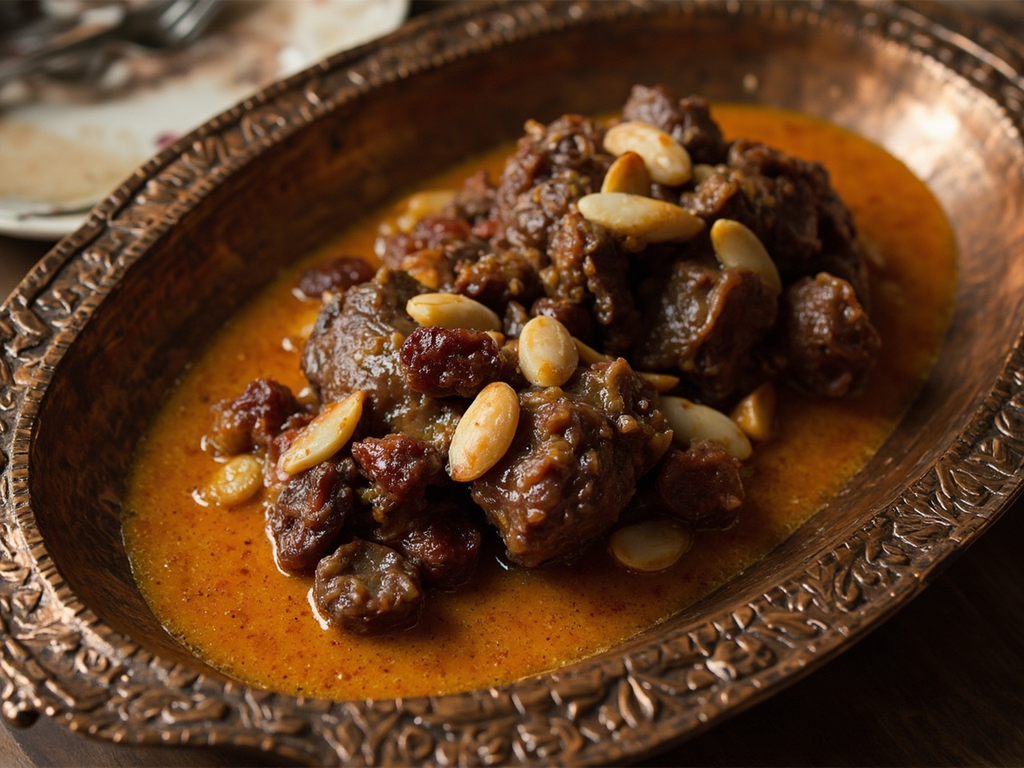 Festive
Mrouzia of Lamb with Honey, Raisins and Almonds
Ceremonial dish of the great platter (tabsil al-‘urs), honey-bound meat
🍯 🧂 🌶️· 2 h
View the recipe
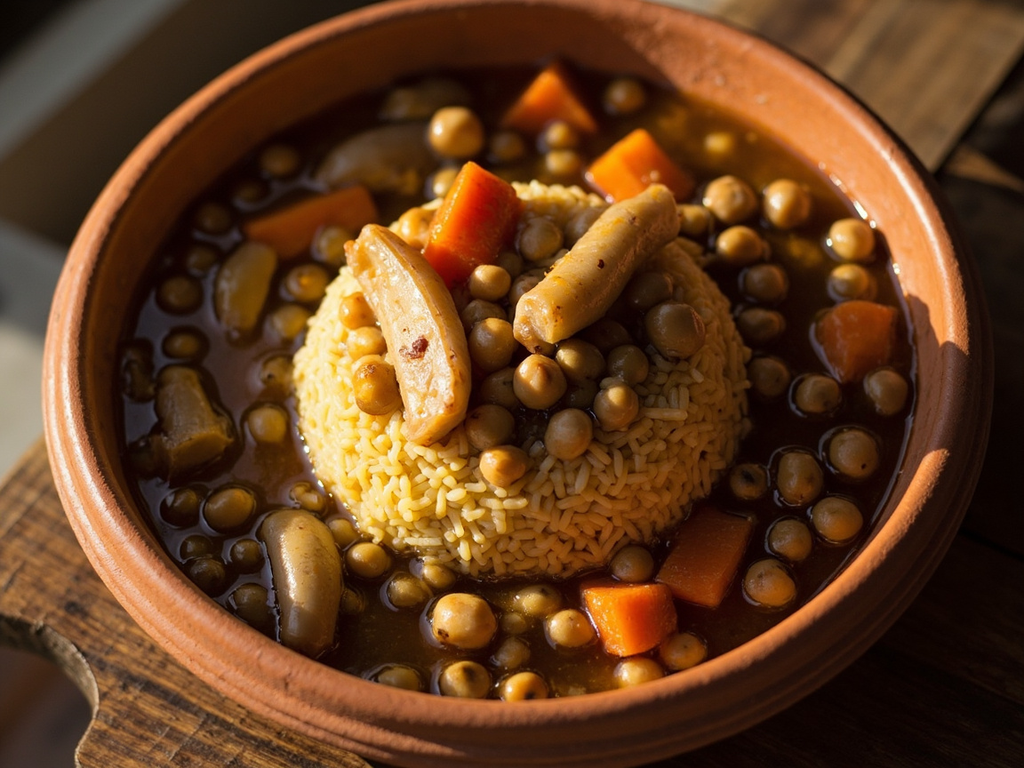 Everyday
Couscous with Vegetables from the Gardens of Fez
Nourishing base of the shared great dish (ta'am, couscous as the heart of the meal)
🧂 🍄· 1 h 30
View the recipe
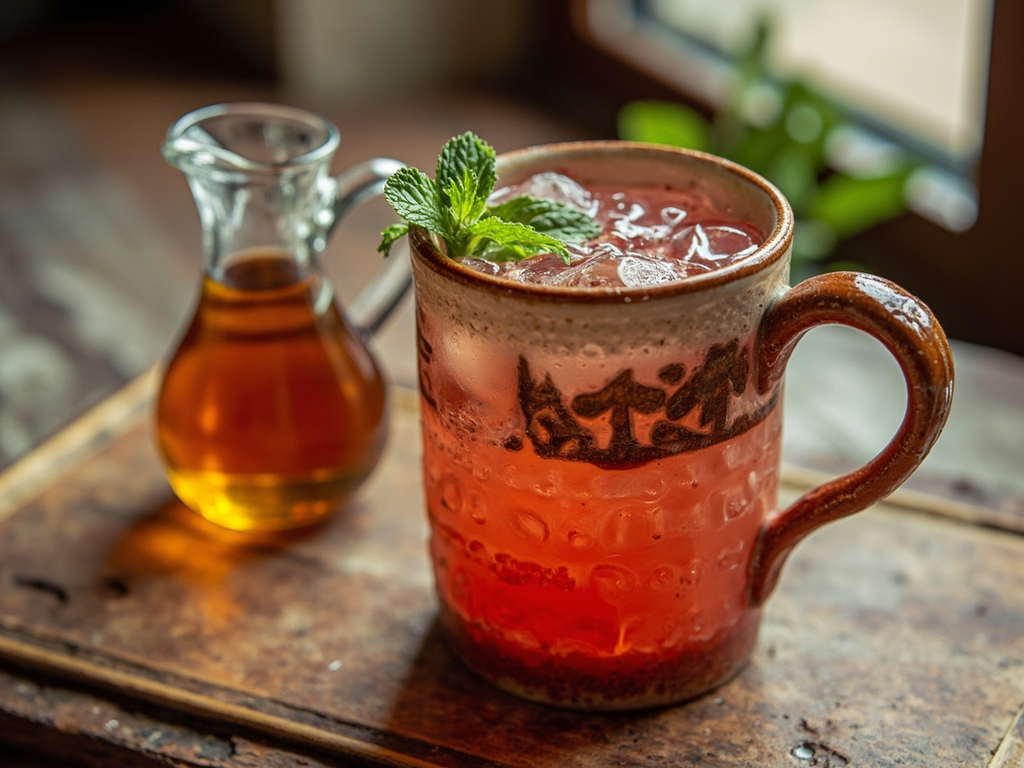 Drink
DrinkSekanjabin with Rose (Honey and Vinegar Syrup, Scented)
Refreshing and medicinal drink (sharab, served diluted in cold water)
🍋 🍯· 30 min
View the recipe
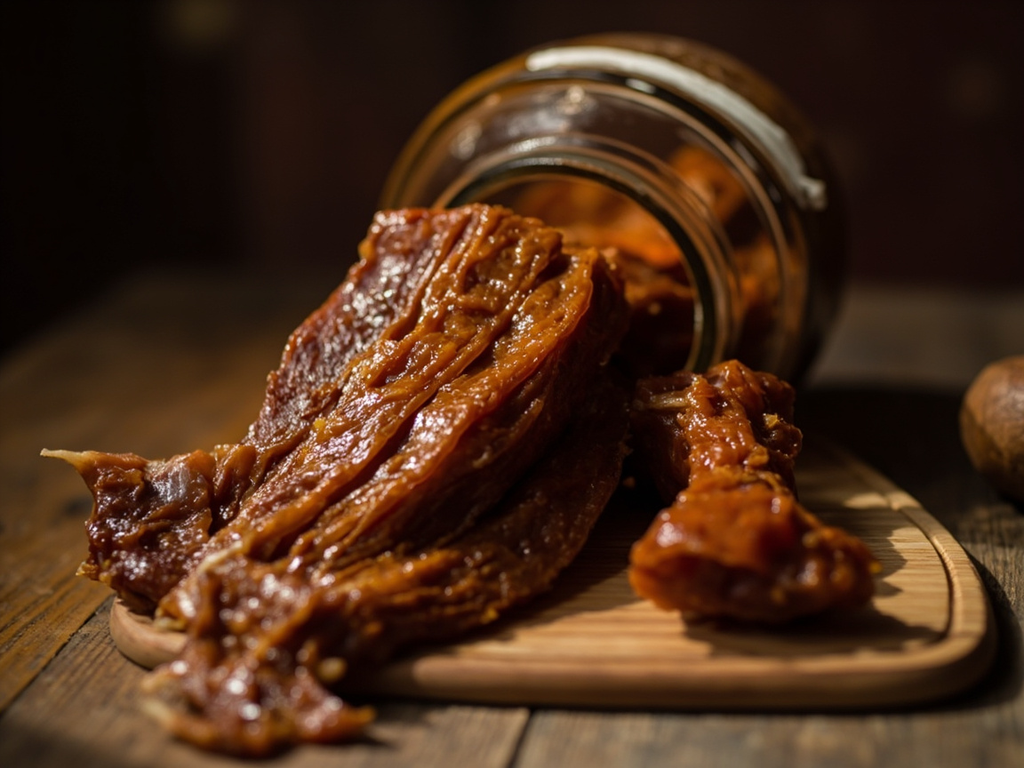 Preserving
Khlii — Dried and Preserved Meat for the Road
Travel and storage provision (preserved in smen, mûnat al-safar)
🧂 🫙 🌶️· Marination + drying 1-2 days, confit 2 h
View the recipe
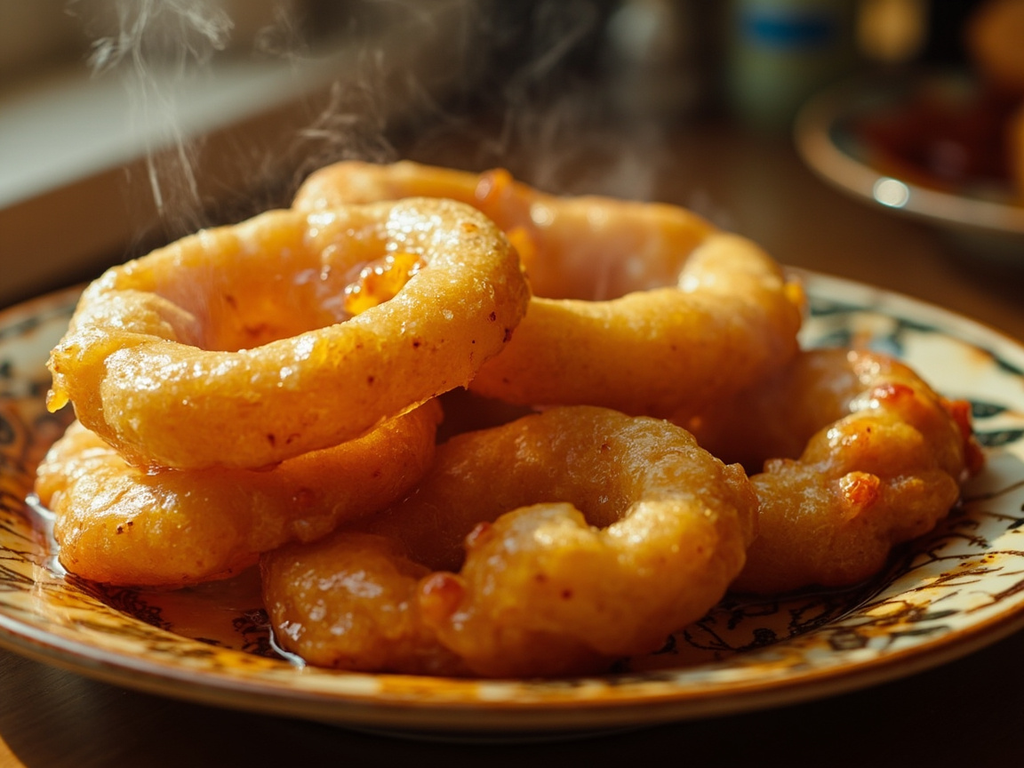 Street food
Sfenj with Honey — Golden Fritters from the Alleys of Fez
Morning street snack (sold hot by sfanji at souk corners)
🍯· 2 h (including rising)
View the recipe