 flip
flipSekanjabin with Rose (Honey and Vinegar Syrup, Scented)
Sekanjabin with Rose (Honey and Vinegar Syrup, Scented)
Why this dish? Wine being forbidden by Islam, the court of Abu Inan quenched its thirst with scented waters; sekanjabin, an oxymel inherited from Greco-Arab medicine, was both a table drink and a refreshing remedy prized by the scholars and physicians of Fez.
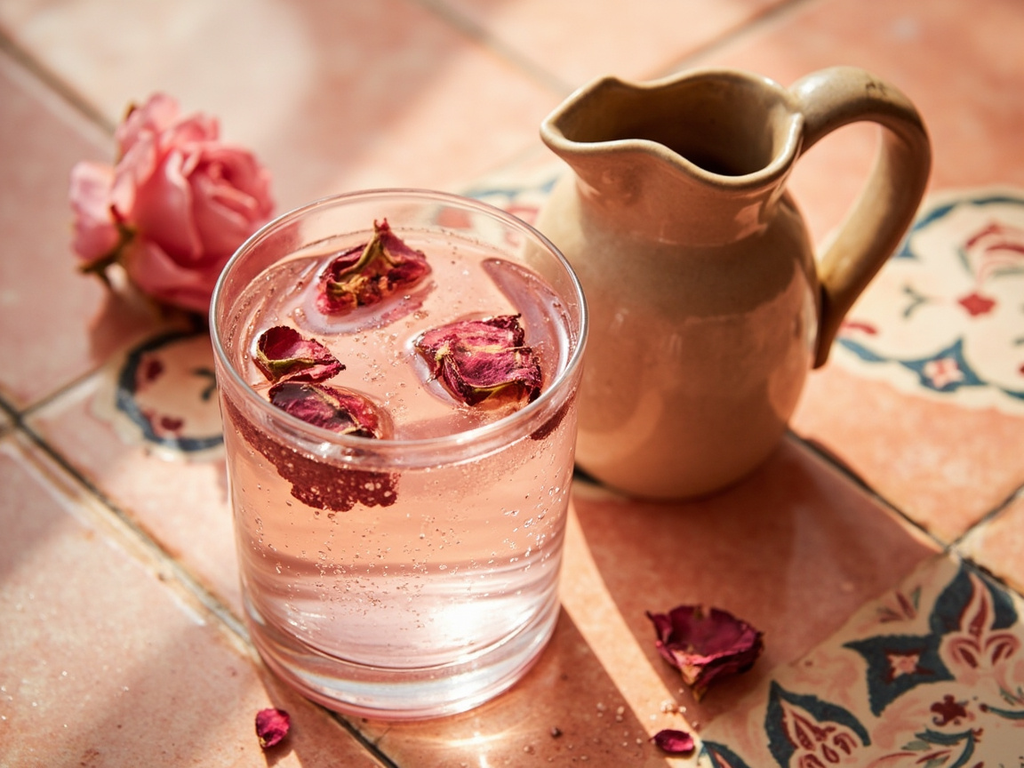
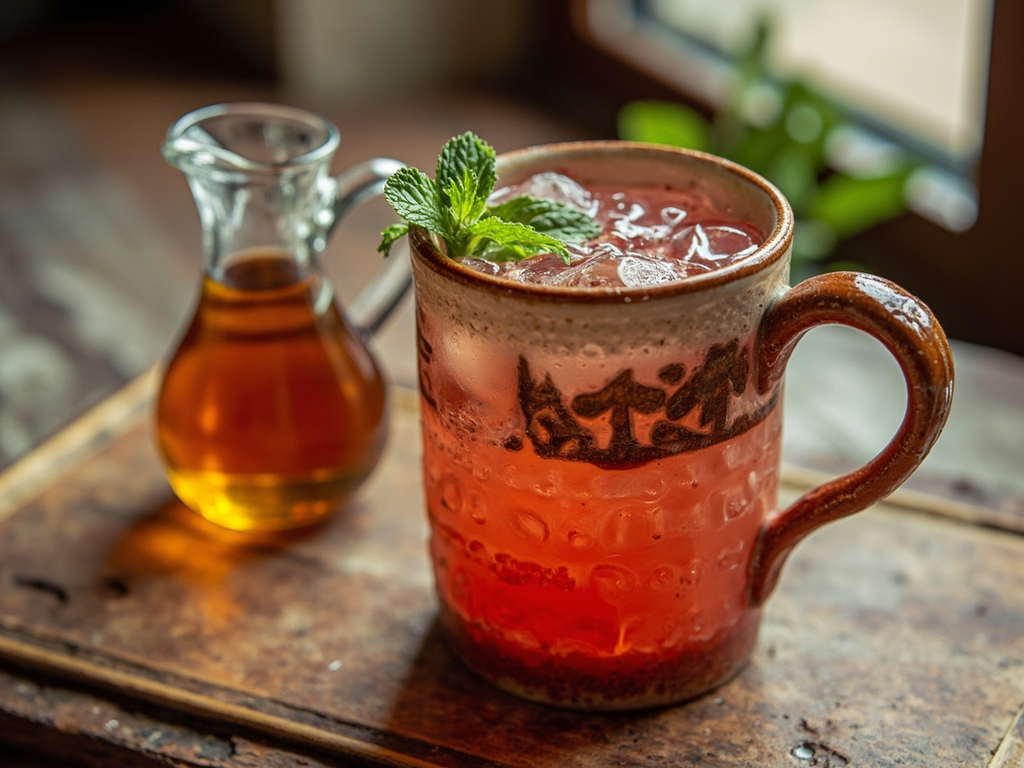
A thick syrup of honey and vinegar, slowly reduced then perfumed with rose water and mint, diluted with cold water. Sharp, tangy and sweet at once, it cuts thirst and cleanses the palate between rich dishes.
Drink: God's pure water is worth all the wines of the infidels. This is called sekanjabin: honey and vinegar married on the fire until thickened, then softened with rose water from our gardens. The physicians of my court deem it good against the summer heat and the heaviness after a festive meal. Pour a finger into a cup, drown it in cool well water, and you will feel your breath lighten.
- •Honey — a good measure (sweetness and body)
- •Vinegar — half the honey (sharp acidity)
- •Rose water — a dash (perfume)
- •Fresh mint — a bunch (freshness)
- •Fresh spring water — for diluting (dilution)
Sekanjabin with Rose (Honey and Vinegar Syrup, Scented)
A thick syrup of honey and vinegar, slowly reduced then perfumed with rose water and mint, diluted with cold water. Sharp, tangy and sweet at once, it cuts thirst and cleanses the palate between rich dishes.
Why this dish? Wine being forbidden by Islam, the court of Abu Inan quenched its thirst with scented waters; sekanjabin, an oxymel inherited from Greco-Arab medicine, was both a table drink and a refreshing remedy prized by the scholars and physicians of Fez.
Drink: God's pure water is worth all the wines of the infidels. This is called sekanjabin: honey and vinegar married on the fire until thickened, then softened with rose water from our gardens. The physicians of my court deem it good against the summer heat and the heaviness after a festive meal. Pour a finger into a cup, drown it in cool well water, and you will feel your breath lighten.
Ingredients (period version)
- Honey — a good measure (sweetness and body)
- Vinegar — half the honey (sharp acidity)
- Rose water — a dash (perfume)
- Fresh mint — a bunch (freshness)
- Fresh spring water — for diluting (dilution)
Ingredients
- Honey — 300 g (sweetness)
- White wine vinegar — 120 ml (acidity)
- Water — 150 ml (for syrup) (dissolution)
- Rose water — 1 tbsp (perfume)
- Fresh mint — 1 generous handful (freshness)
- Cold or iced water — as needed (serving)
Method
- Dissolve honey in water and bring to a simmer, skimming off foam.
- Add vinegar and let reduce 15-20 min until a coating syrup forms.
- Off the heat, steep mint for a few minutes then remove; perfume with rose water and let cool.
- Store the syrup in a bottle in the fridge.
- To serve, pour a little syrup into a glass and dilute generously with cold water, with a mint leaf.
How it was made : Sekanjabin (from Arabic sikanjabin, itself from Persian, "oxymel") appears in medieval Arab medical and culinary treatises as a healthy, digestive drink. Its flavors varied by season: rose, mint, quince. Served diluted, it was the quintessential civilized beverage of an alcohol-free world.
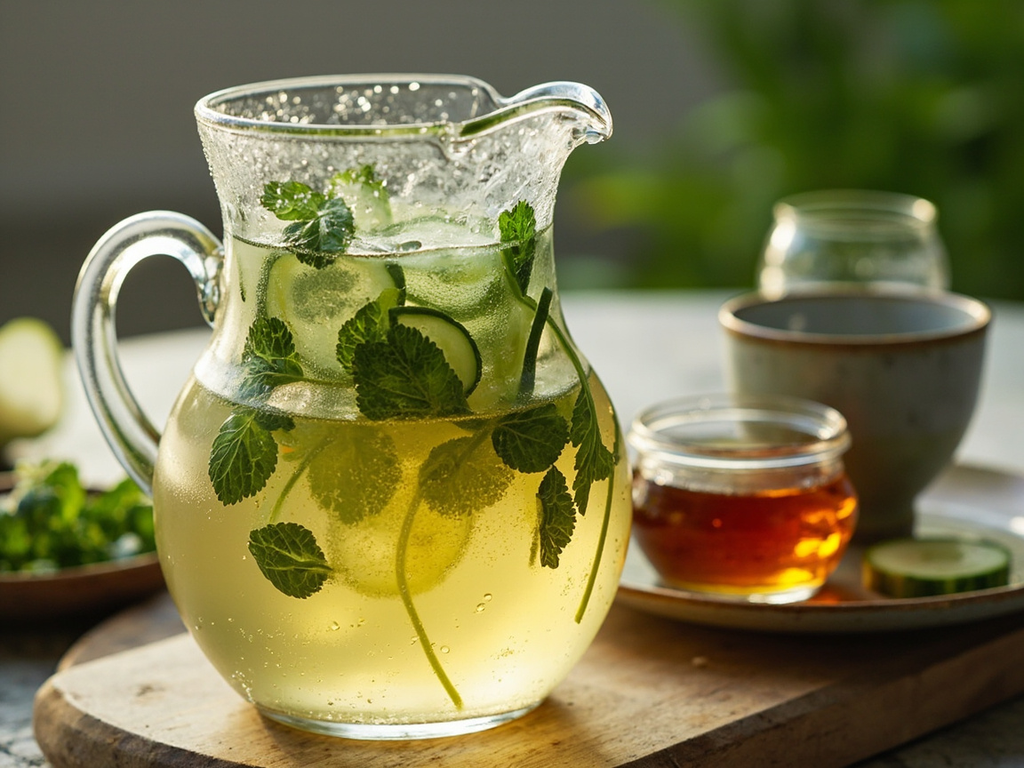
The contemporary twist : Served very cold over crushed ice with a thin slice of cucumber: a medieval mocktail perfect for a summer table.
Sources : Medieval Arab medico-culinary treatises (oxymel / sikanjabin) · Anonymous Andalusian, Kitab al-tabikh (13th c.)
Abou Inan · Charactorium