 flip
flipMrouzia of Lamb with Honey, Raisins and Almonds
Mrouzia of Lamb with Honey, Raisins and Almonds
Why this dish? When Abu Inan received Ibn Battuta back from his travels, a table worthy of a sultan-patron was needed: mrouzia, meat slowly candied with honey and spices, is the pinnacle of Marinid festive cuisine, also kept for long religious holidays when the court of Fez displayed its splendor.
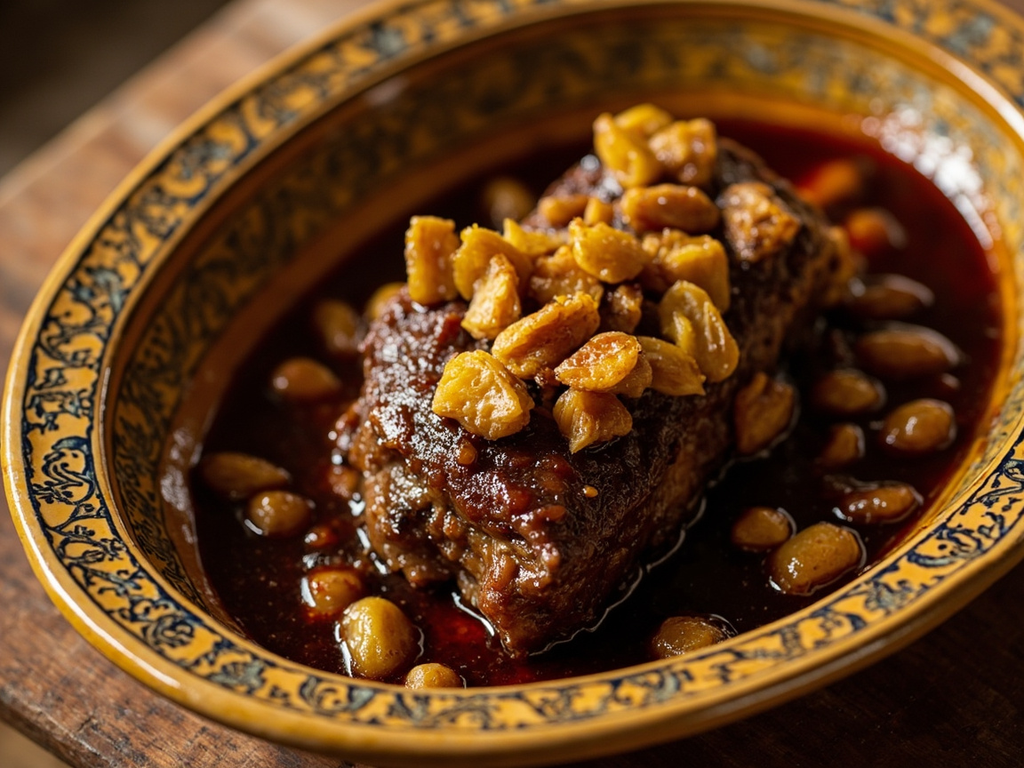
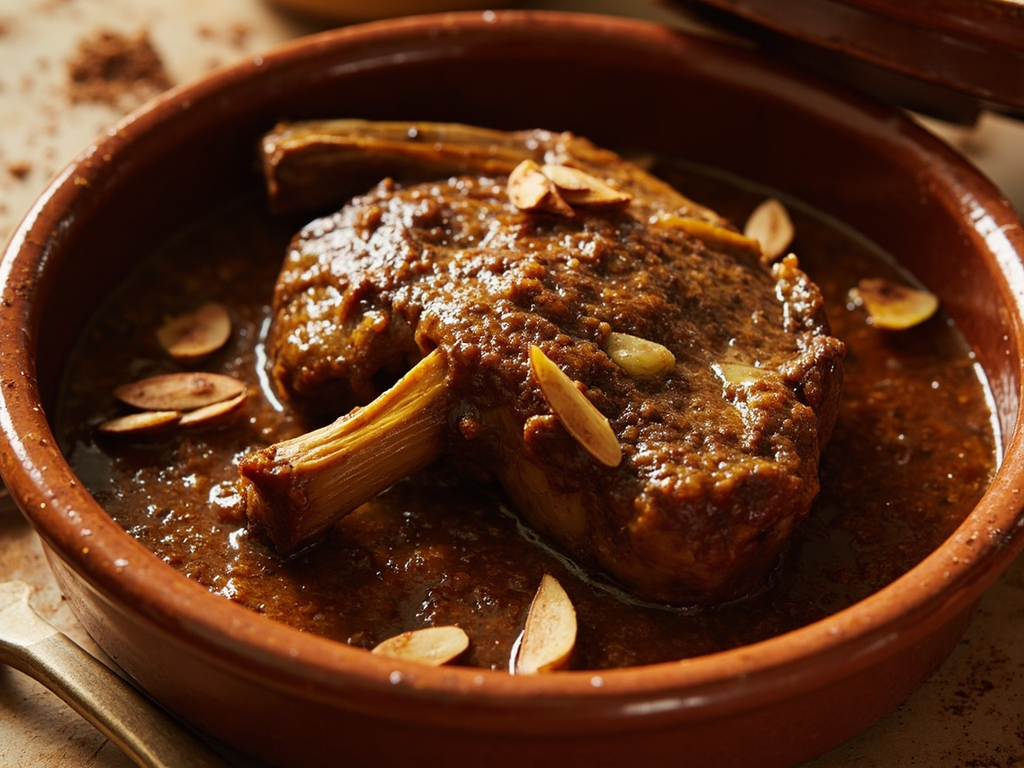
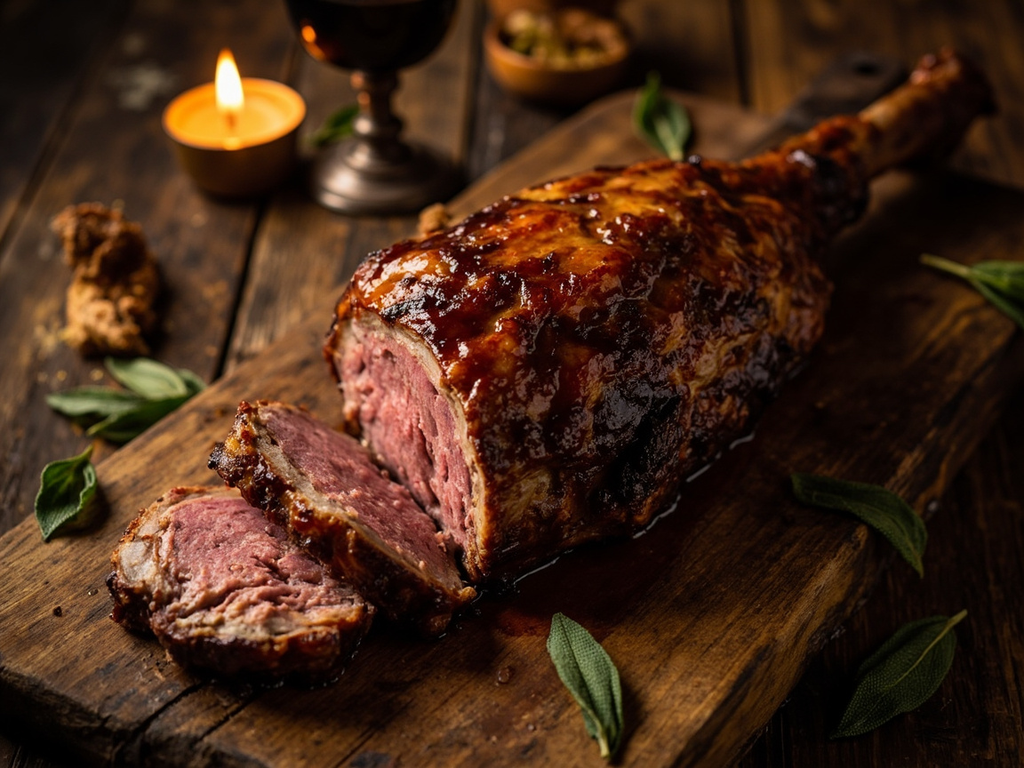
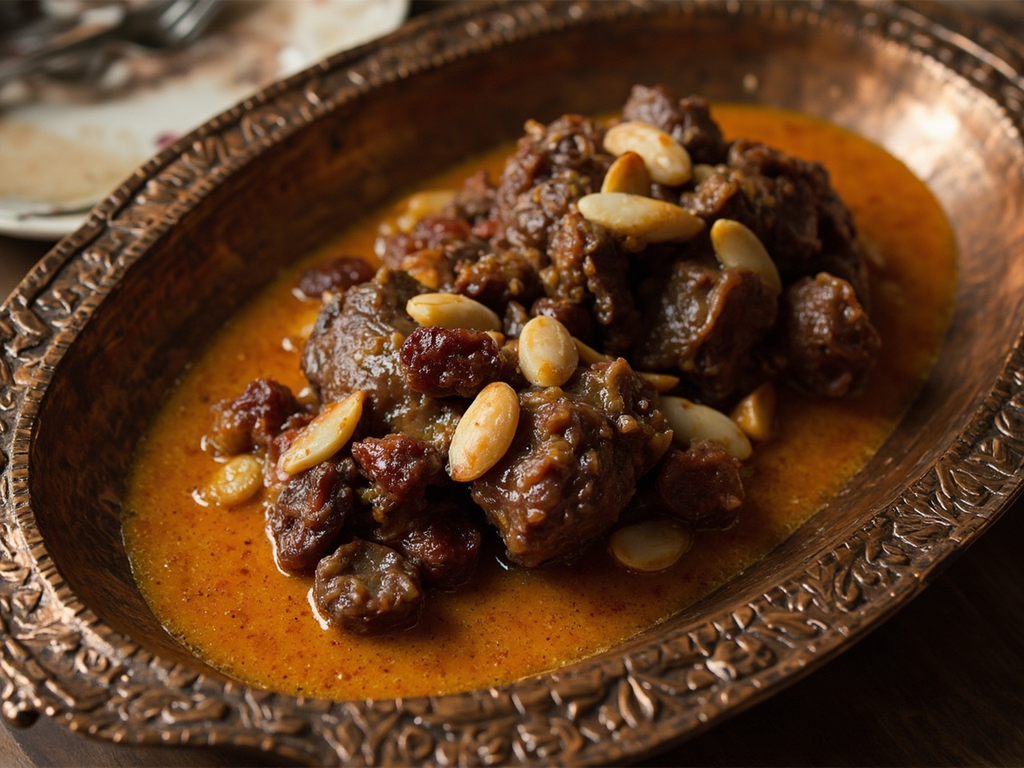
Melting lamb shoulder simmered for hours in a syrup of spices and honey, studded with plumped raisins and golden almonds. The dish oscillates between the saltiness of the meat, the deep sweetness of honey and the warmth of ras el-hanout: a dish of pure prestige.
Know, O guest, that by the grace of God no one leaves my table with an empty belly. See this meat: it was laid in the honey of our mountains and the best from the spice merchant's shop, then abandoned on low embers for the time it takes a pious man to recite his daily prayers. In Fez, I had it prepared for my friend the traveler Ibn Battuta, so that he might know that the delights of the Maghreb equal those of the East. Eat with your right hand, and praise the Provider.
- •Lamb shoulder and ribs — a fine piece (festive meat)
- •Mountain honey — a generous measure (sweet binder and preservative)
- •Smen (fermented clarified butter) — a large knob (perfumed fat)
- •Ras el-hanout (cinnamon, ginger, long pepper, mace, clove, lavender) — a full palm (aromatic soul)
- •Saffron — a few threads (golden color and perfume)
- •Raisins — two handfuls (melting sweetness)
- •Blanched almonds — a handful (crunch)
- •Orange blossom water — a dash (final perfume)
Mrouzia of Lamb with Honey, Raisins and Almonds
Melting lamb shoulder simmered for hours in a syrup of spices and honey, studded with plumped raisins and golden almonds. The dish oscillates between the saltiness of the meat, the deep sweetness of honey and the warmth of ras el-hanout: a dish of pure prestige.
Why this dish? When Abu Inan received Ibn Battuta back from his travels, a table worthy of a sultan-patron was needed: mrouzia, meat slowly candied with honey and spices, is the pinnacle of Marinid festive cuisine, also kept for long religious holidays when the court of Fez displayed its splendor.
Know, O guest, that by the grace of God no one leaves my table with an empty belly. See this meat: it was laid in the honey of our mountains and the best from the spice merchant's shop, then abandoned on low embers for the time it takes a pious man to recite his daily prayers. In Fez, I had it prepared for my friend the traveler Ibn Battuta, so that he might know that the delights of the Maghreb equal those of the East. Eat with your right hand, and praise the Provider.
Ingredients (period version)
- Lamb shoulder and ribs — a fine piece (festive meat)
- Mountain honey — a generous measure (sweet binder and preservative)
- Smen (fermented clarified butter) — a large knob (perfumed fat)
- Ras el-hanout (cinnamon, ginger, long pepper, mace, clove, lavender) — a full palm (aromatic soul)
- Saffron — a few threads (golden color and perfume)
- Raisins — two handfuls (melting sweetness)
- Blanched almonds — a handful (crunch)
- Orange blossom water — a dash (final perfume)
Ingredients
- Lamb shoulder, cut into pieces — 1.2 kg (meat)
- Liquid honey — 120 g (sweet binder)
- Smen or butter — 40 g (fat)
- Ras el-hanout — 2 tbsp (spices)
- Cinnamon stick — 1 (spice)
- Saffron — 1 pinch (color and perfume)
- Raisins — 150 g (sweetness)
- Blanched almonds — 80 g (crunch)
- Large onion — 1, grated (base)
- Orange blossom water — 1 tbsp (perfume)
Method
- Sear the meat in smen with the grated onion, ras el-hanout, cinnamon and saffron until well coated and fragrant.
- Cover with water, season lightly with salt, and simmer covered for 1h30 on low heat until the meat falls apart.
- Meanwhile, plump the raisins in a little warm water and toast the almonds dry or in a drizzle of butter.
- Uncover, add honey and raisins, then let reduce gently until a glossy syrup coats the meat.
- Perfume with orange blossom water, sprinkle with toasted almonds and serve warm on a large platter.
How it was made : The Andalusian-Maghrebi cookbooks of the 13th century (such as Ibn Razin al-Tujibi's Fadalat al-khiwan) already describe these meats long candied with honey and spices. Honey also served as a preservative: a well-made mrouzia could keep for several days, making it a dish for great feasts and provisions.
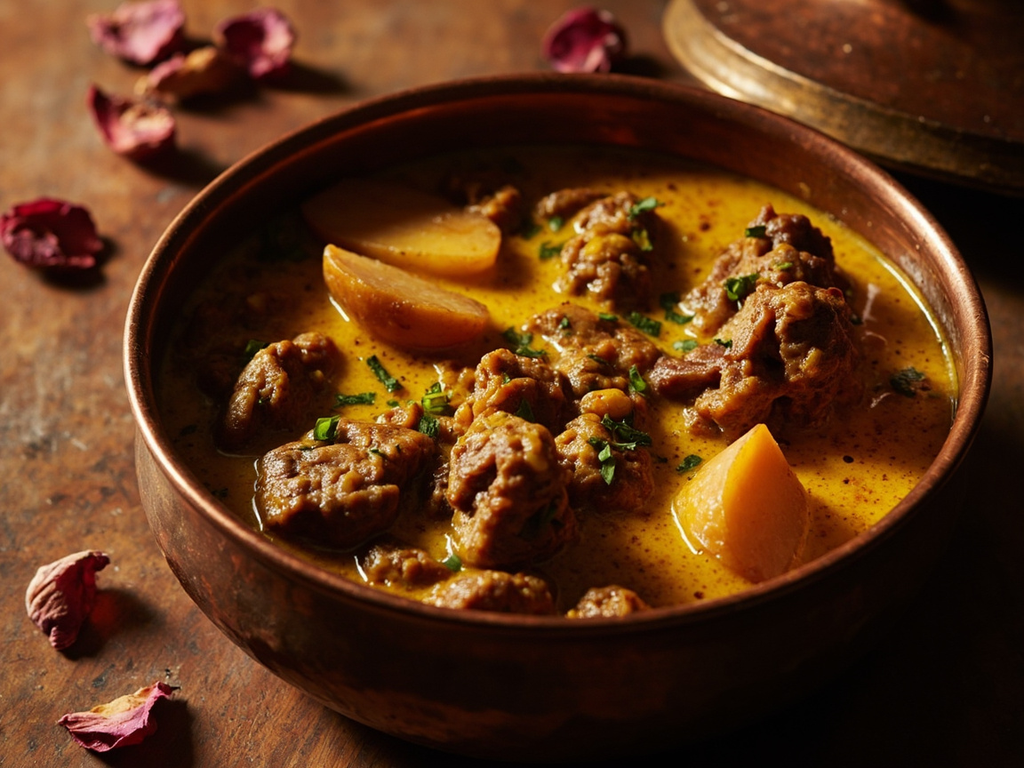
The contemporary twist : Served in a dome, shredded meat at the center, raisins and almonds in a crown, a veil of saffron and a few dried rose petals to evoke the zellij mosaics of the Bou Inania Madrasa.
Sources : Ibn Razin al-Tujibi, Fadalat al-khiwan fi tayyibat al-ta'am wa-l-alwan (13th c., Andalusian-Maghrebi cuisine) · Ibn Battuta, Rihla (travelogue commissioned by Abu Inan Faris)
Abou Inan · Charactorium