 flip
flipKahwa
Kahwa
Why this dish? Kahwa — green tea infused with cardamom — is the daily drink of Afghans and the primary gesture of hospitality. Ahmad Shah, whose court in Kandahar welcomed Persian ambassadors, Indian envoys, and tribal chiefs, offered kahwa as the first sign of welcome. To refuse this cup would have been a grave insult to the Pashtun code of melmastia (hospitality).
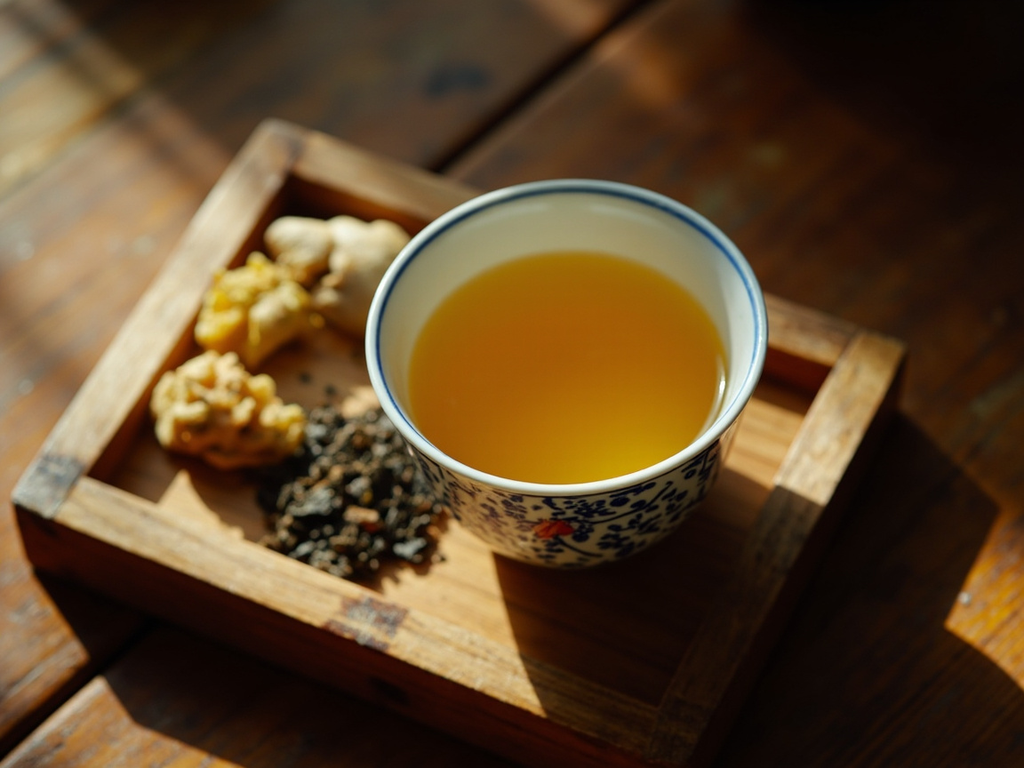
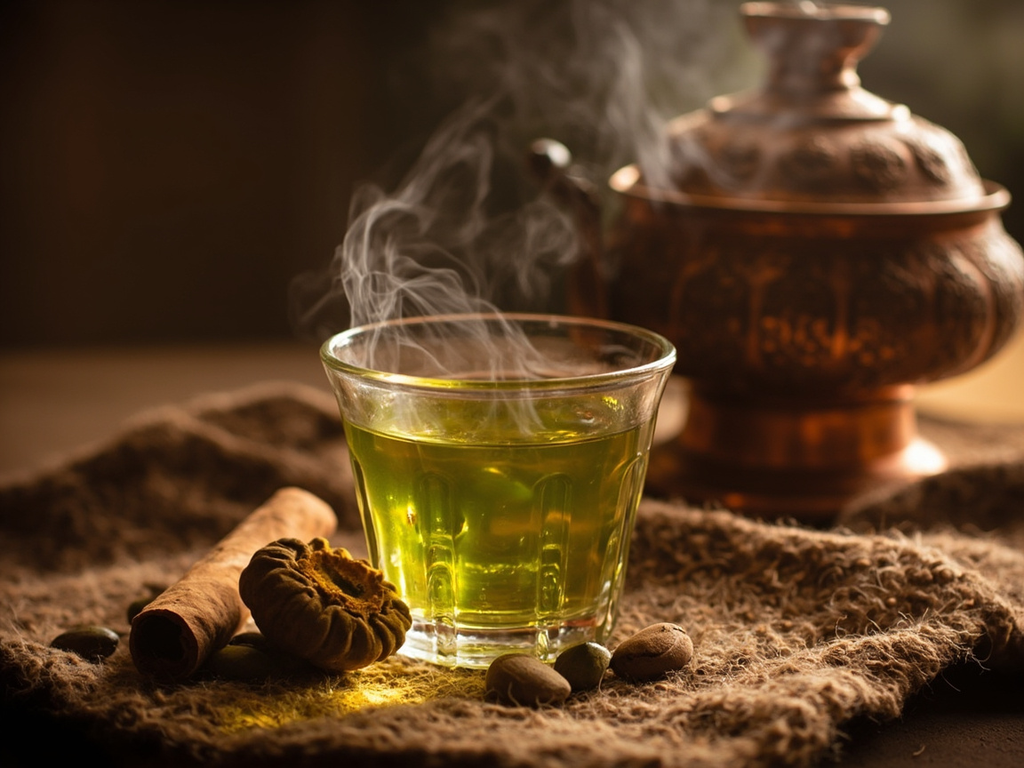
Green tea long-infused with whole cardamom pods, lightly sweetened, served in small cups without milk. Sometimes enhanced with cinnamon or saffron for honored guests. The everyday Afghan drink, from waking to war council.
Before any word, before any counsel, there is kahwa. It is the law of our people: the guest who enters your tent receives a cup before you even ask his name. My servants boil the water in the copper samovar I brought from Herat, and they throw in the green tea with cardamom — not that powdered cardamom of lazy merchants, no, whole pods crushed between the fingers. When the aroma rises, the council can begin. A man does not think straight if he has not drunk his kahwa.
- •Green tea leaves — a good pinch per cup (base)
- •Green cardamom — two or three crushed pods (main aroma)
- •Water — one cup per guest (base)
- •Sugar (optional) — to taste (sweetener)
- •Cinnamon (for honored guests) — a small stick (prestige aroma)
Kahwa
Green tea long-infused with whole cardamom pods, lightly sweetened, served in small cups without milk. Sometimes enhanced with cinnamon or saffron for honored guests. The everyday Afghan drink, from waking to war council.
Why this dish? Kahwa — green tea infused with cardamom — is the daily drink of Afghans and the primary gesture of hospitality. Ahmad Shah, whose court in Kandahar welcomed Persian ambassadors, Indian envoys, and tribal chiefs, offered kahwa as the first sign of welcome. To refuse this cup would have been a grave insult to the Pashtun code of melmastia (hospitality).
Before any word, before any counsel, there is kahwa. It is the law of our people: the guest who enters your tent receives a cup before you even ask his name. My servants boil the water in the copper samovar I brought from Herat, and they throw in the green tea with cardamom — not that powdered cardamom of lazy merchants, no, whole pods crushed between the fingers. When the aroma rises, the council can begin. A man does not think straight if he has not drunk his kahwa.
Ingredients (period version)
- Green tea leaves — a good pinch per cup (base)
- Green cardamom — two or three crushed pods (main aroma)
- Water — one cup per guest (base)
- Sugar (optional) — to taste (sweetener)
- Cinnamon (for honored guests) — a small stick (prestige aroma)
Ingredients
- Green tea leaves (gunpowder or Afghan green tea) — 2 tsp (base)
- Green cardamom pods — 3, lightly crushed (aroma)
- Water — 500 ml (base)
- Sugar or honey — to taste (sweetener)
- Cinnamon stick — 1 small (optional) (complementary aroma)
Method
- Bring the water to a boil in a small saucepan or kettle.
- Lightly crush the cardamom pods to release the seeds, without reducing to powder.
- Put the green tea and cardamom (and cinnamon if desired) into a teapot. Pour the boiling water over.
- Steep for 3 to 5 minutes — no longer, to avoid excessive bitterness.
- Serve in small cups, straining the leaves. Kahwa is drunk without milk. Sweeten lightly if desired.
- Tradition: always serve at least three cups to a guest. The first for politeness, the second for pleasure, the third for friendship.
How it was made : Green tea arrived in Afghanistan via Chinese trade routes well before the 18th century. Afghan kahwa is distinguished from its Kashmiri counterpart by its simplicity: green tea and cardamom, without the complex spice mix or systematic saffron of the Kashmiri version. The copper samovar, adopted under Persian and Central Asian influence, was the central object of hospitality in Afghan homes and camps.
The contemporary twist : Prepare an iced version for summer: brew normally, let cool, serve over crushed ice with a drop of rose water.
Sources : Mountstuart Elphinstone, An Account of the Kingdom of Caubul, 1815 — description of Afghan tea ritual · Helen Saberi, Noshe Djan: Afghan Food and Cookery, Prospect Books, 2000
Ahmad Shah Durrani · Charactorium