 Flip the card
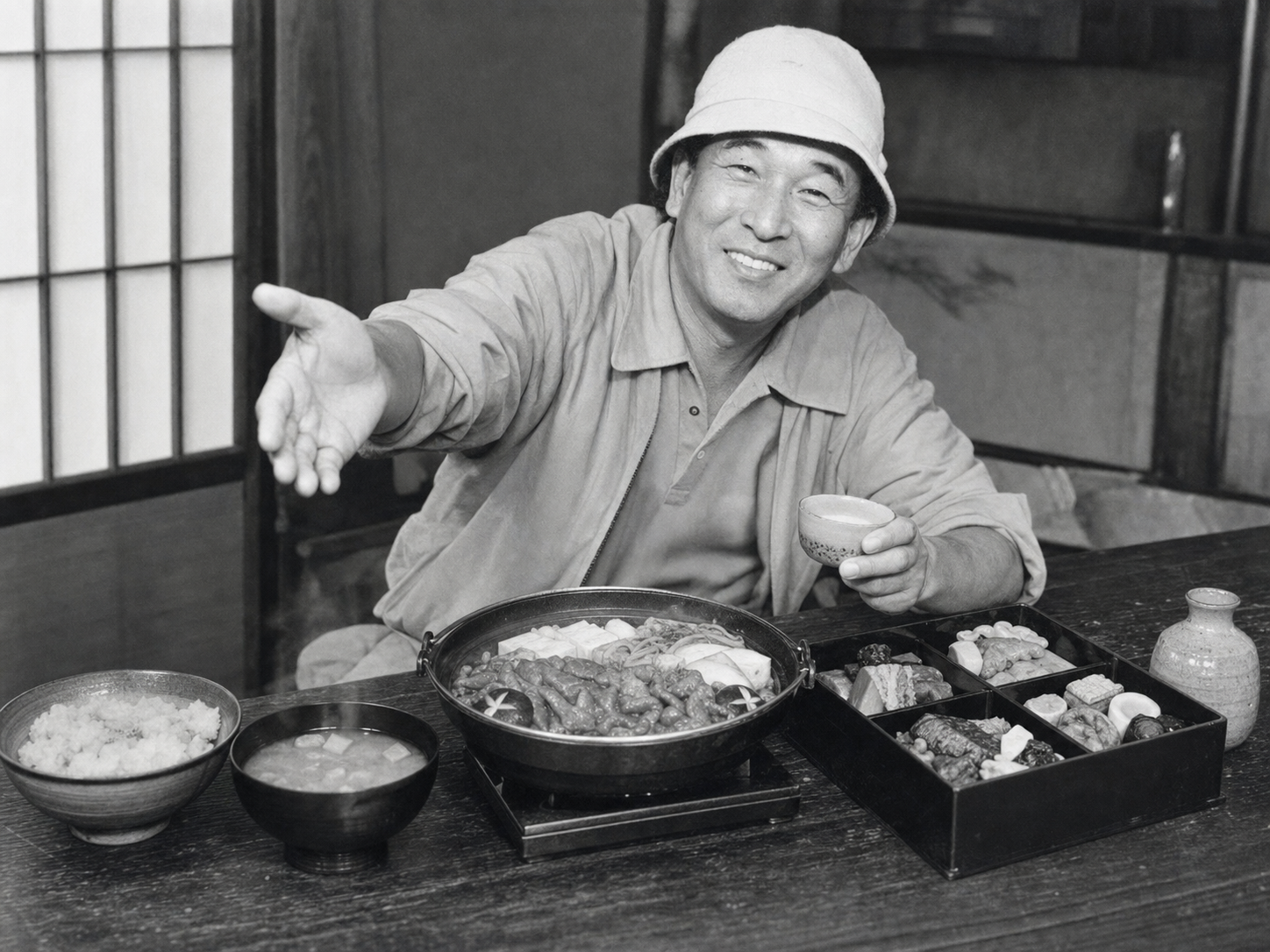
Akira Kurosawa at the table
1910 — 1998
On the menu
Ichijū-sansai (一汁三菜)
The classic structure of a Japanese meal: a bowl of white rice (gohan) at the center, a soup (usually miso), and three side dishes (okazu)—one main protein, two small vegetable or pickle dishes. No starter/main/dessert: everything arrives at once, in small bowls arranged with precise geometry, and you nibble from dish to dish, alternating with rice. The balance of five colors and five flavors takes precedence over quantity.
Signature : Dashi (出汁)
Basic broth made by steeping kombu (kelp) and katsuobushi (dried, smoked bonito shaved into flakes). It is the umami backbone of all Japanese cuisine—invisible but present everywhere, from miso soup to sukiyaki broth. A bit like Kurosawa's editing: you don't see it, but without it, nothing holds together.
click to flip back
Akira Kurosawa at the table
1910 — 1998
5 period recipes
 Everyday
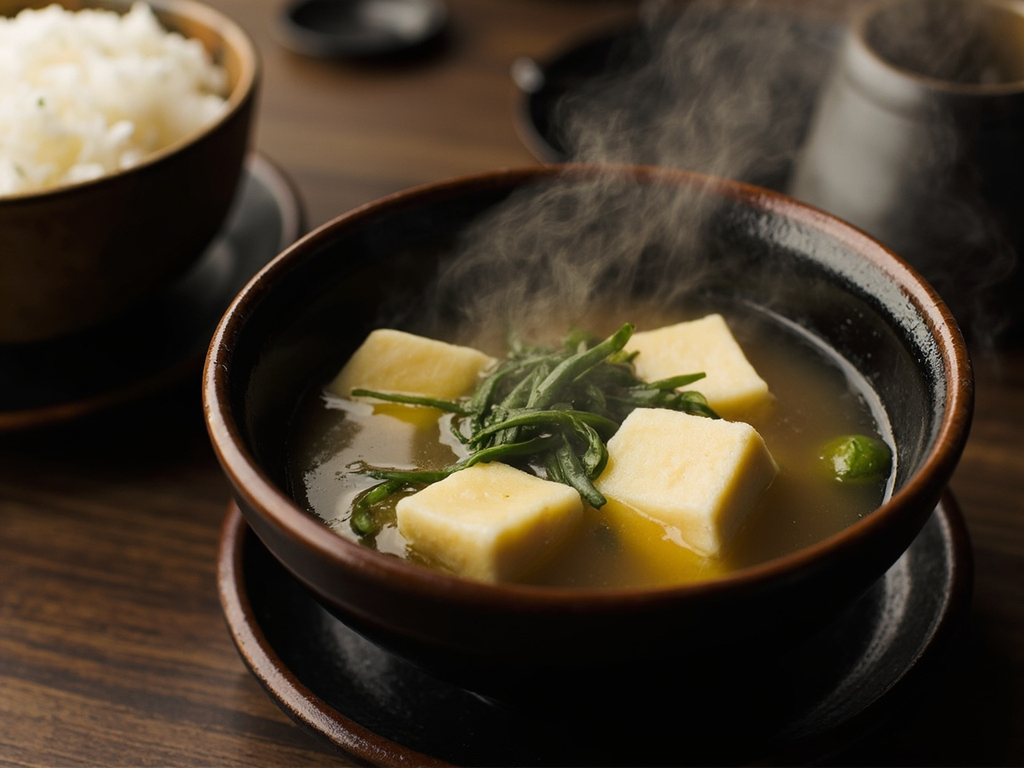
Gohan to misoshiru — Rice and Morning Miso Soup
Everyday Ichijū-sansai (the basics: a bowl of rice, a soup)
🍄 🧂 🫙· 40 min
View the recipe
 Festive
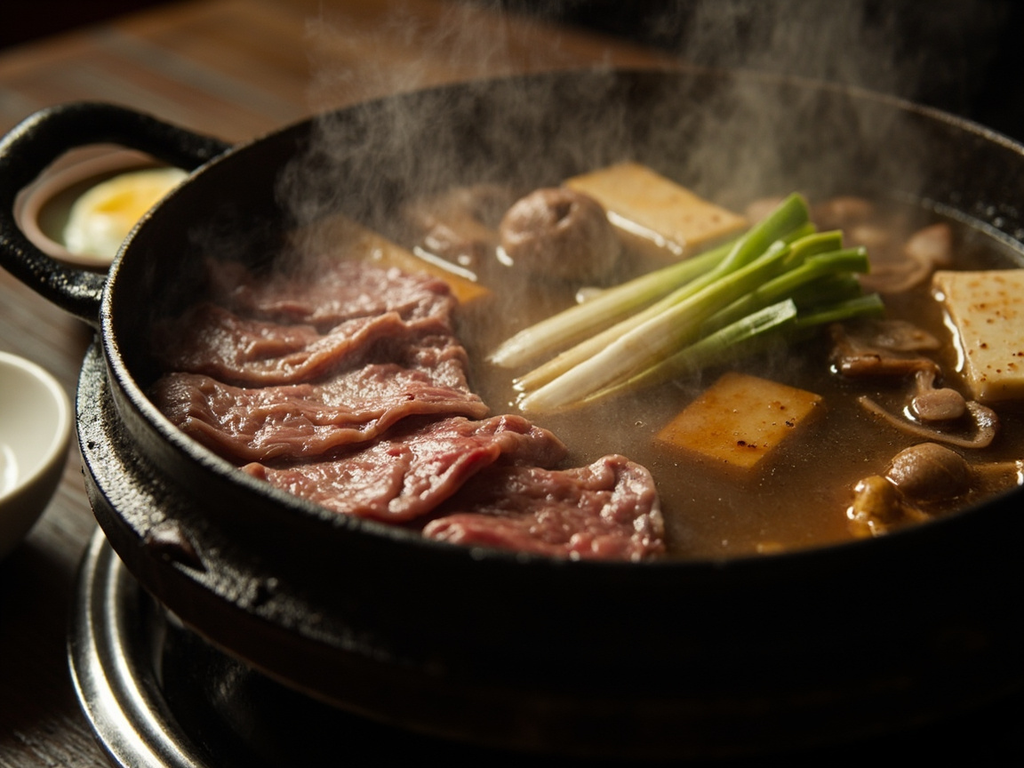
Sukiyaki — The Team's Festive Hot Pot
Nabemono (鍋物) — shared hot pot at the center of the table
🍯 🧂 🍄· 50 min
View the recipe
 Travel
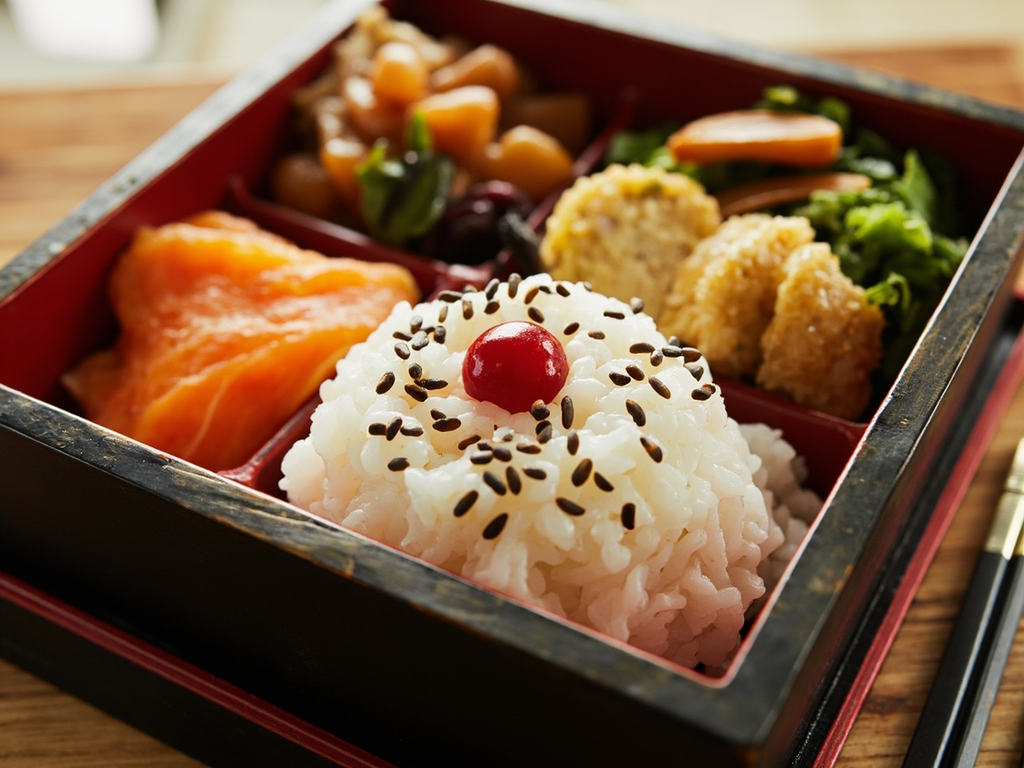
Makunouchi Bentō — The Long-Shoot Lunchbox
Bentō (弁当) — complete compartmentalized meal, portable
🧂 🍄 🍋· 1 h
View the recipe
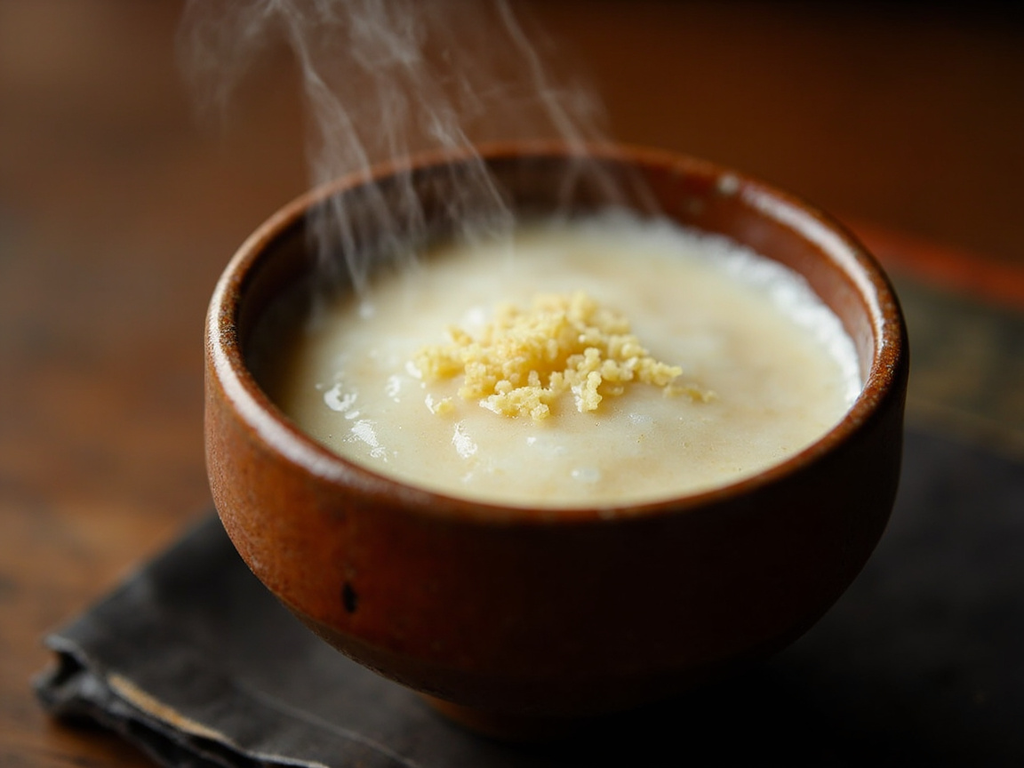 Drink
DrinkAmazake — The Warming Fermented Rice Drink
Seasonal beverage (kisetsu no nomimono) served hot
🍯 🫙· 8 h (including fermentation)
View the recipe
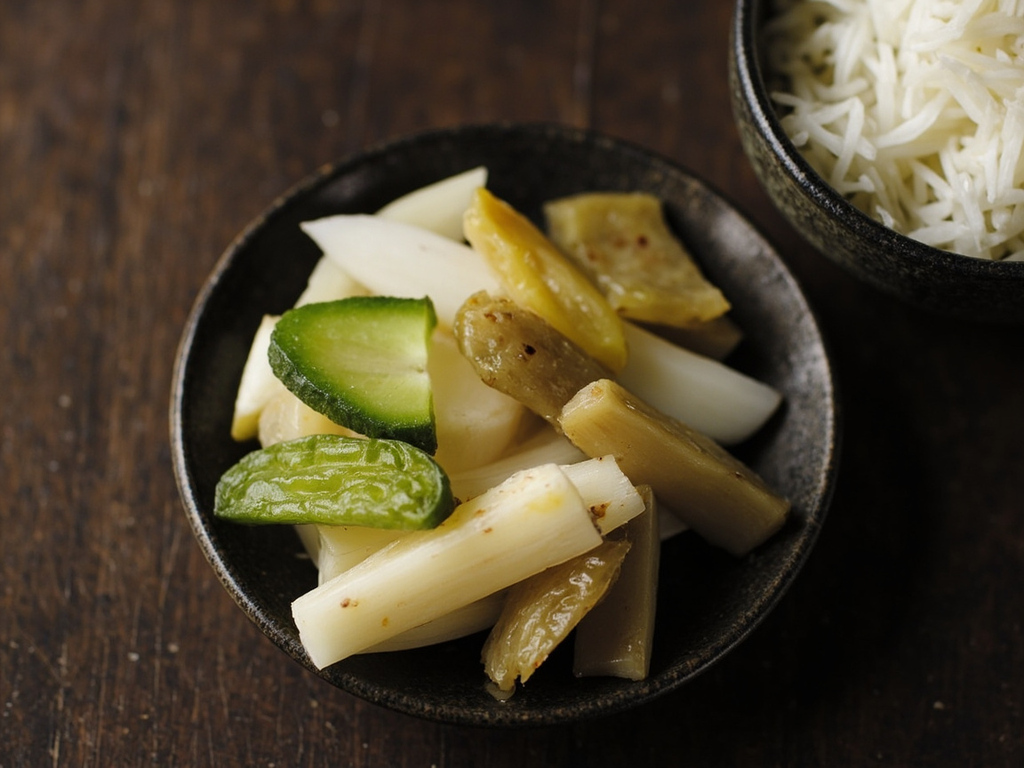 Preserving
Tsukemono Nukazuke — Rice-Bran Pickles
Kōnomono / tsukemono (香の物) — small pickles that punctuate the meal
🍋 🧂 🫙· 30 min (+ 1 to 2 days fermentation)
View the recipe