 flip
flipAmazake — The Warming Fermented Rice Drink
Amazake — The Warming Fermented Rice Drink
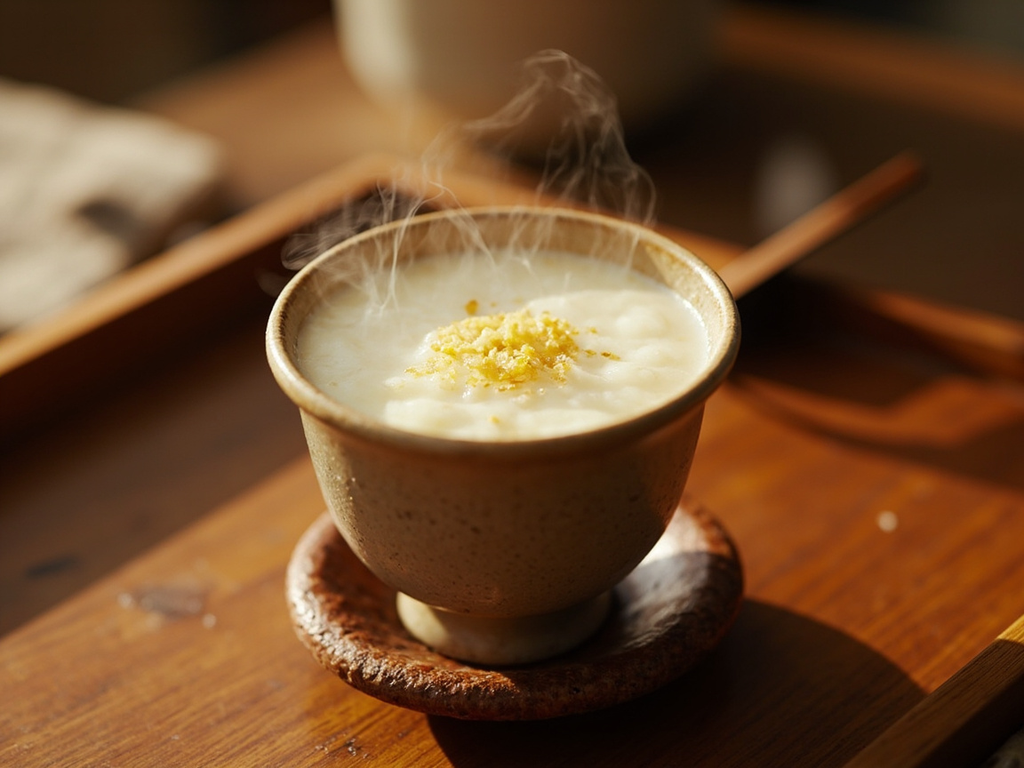
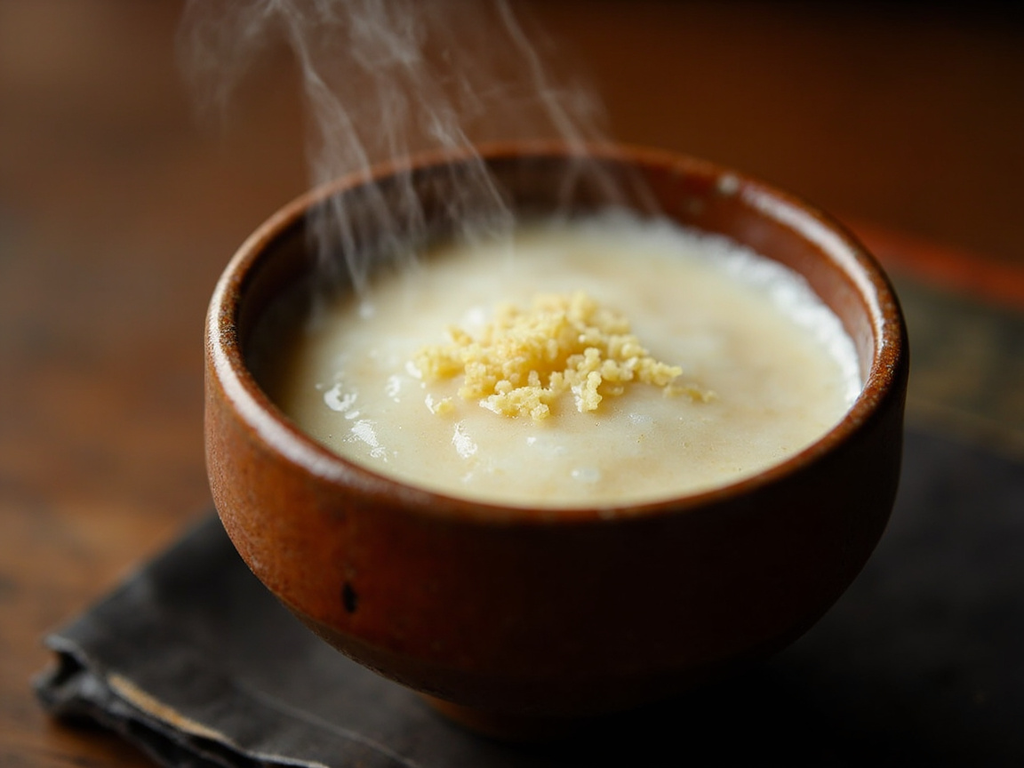
Why this dish? For the freezing shoots on Mount Fuji and in Nara, nothing is more Japanese than a bowl of steaming amazake. This fermented rice drink, sweet and alcohol-free when made with koji, has accompanied cold weather and festivals for centuries; it evokes the traditional, popular world in which Kurosawa was immersed.
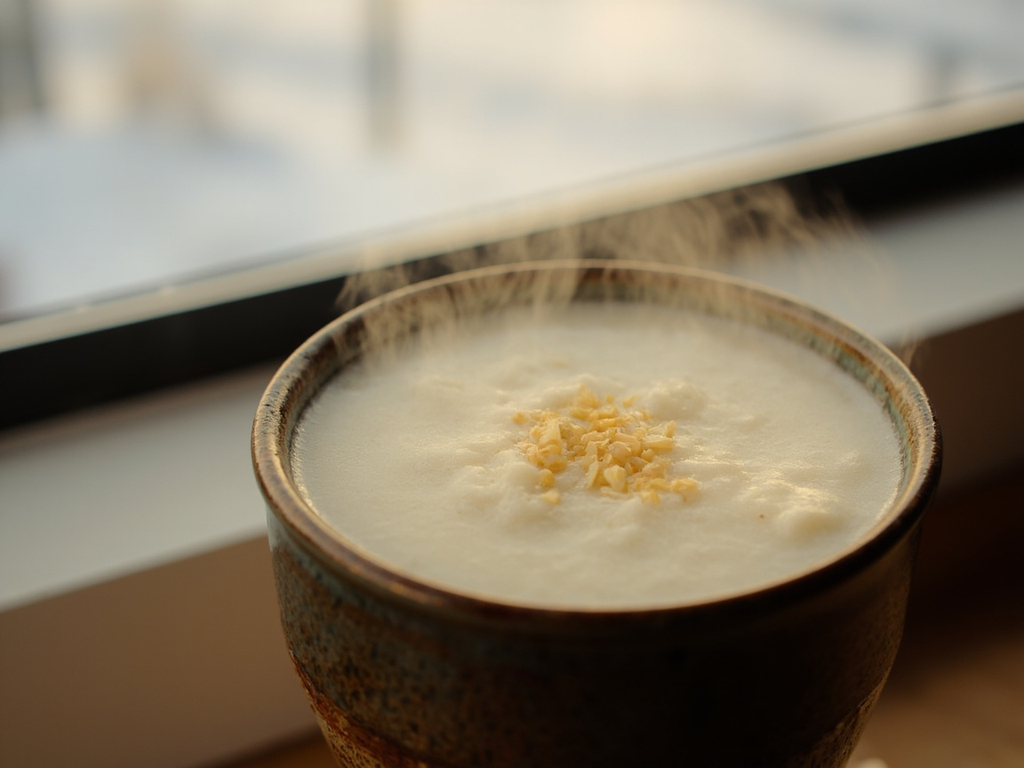
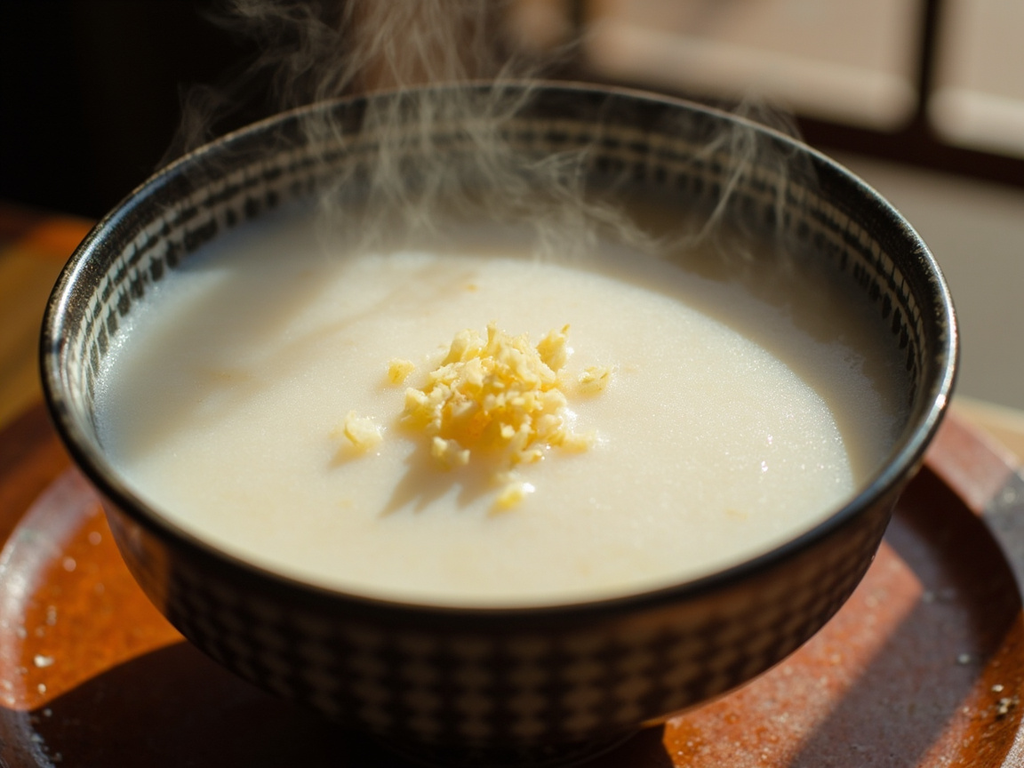
A thick, milky, naturally sweet drink obtained by fermenting rice with kōji (rice inoculated with a mold). Served hot, flavored with ginger, it comforts without alcohol. The sweetness comes entirely from the rice, with no added sugar.
The filming of Ran aged me ten years; on those heights, the wind chilled to the bone. Someone would hand me a bowl of burning amazake, white as the set's snow. Do not let it boil too hard, keep it under a simmer, otherwise the kōji dies and your drink will lose its sweetness. Grate a little ginger on top, it stings just enough to revive an old frozen man. It's a drink for children and old folks, and I confess I became both again before that bowl.
- •Cooked rice (or rice porridge) — one bowl (base)
- •Kōji (rice inoculated with Aspergillus oryzae) — same volume as rice (sweetening ferment)
- •Hot water — to consistency (liquid)
- •Fresh ginger — a little, grated (flavoring)
Amazake — The Warming Fermented Rice Drink
A thick, milky, naturally sweet drink obtained by fermenting rice with kōji (rice inoculated with a mold). Served hot, flavored with ginger, it comforts without alcohol. The sweetness comes entirely from the rice, with no added sugar.
Why this dish? For the freezing shoots on Mount Fuji and in Nara, nothing is more Japanese than a bowl of steaming amazake. This fermented rice drink, sweet and alcohol-free when made with koji, has accompanied cold weather and festivals for centuries; it evokes the traditional, popular world in which Kurosawa was immersed.
The filming of Ran aged me ten years; on those heights, the wind chilled to the bone. Someone would hand me a bowl of burning amazake, white as the set's snow. Do not let it boil too hard, keep it under a simmer, otherwise the kōji dies and your drink will lose its sweetness. Grate a little ginger on top, it stings just enough to revive an old frozen man. It's a drink for children and old folks, and I confess I became both again before that bowl.
Ingredients (period version)
- Cooked rice (or rice porridge) — one bowl (base)
- Kōji (rice inoculated with Aspergillus oryzae) — same volume as rice (sweetening ferment)
- Hot water — to consistency (liquid)
- Fresh ginger — a little, grated (flavoring)
Ingredients
- Cooked short-grain rice — 200 g (base)
- Kōji (rice koji) — 200 g (ferment)
- Water — 400 ml (warm, ~60 °C) (liquid)
- Fresh ginger — 1 small piece, grated (flavoring)
- Pinch of salt — 1 (enhances sweetness)
Method
- Mix the warm cooked rice with water to make a porridge at about 55-60 °C (never hotter, or the kōji is destroyed).
- Add the crumbled kōji, mix well.
- Maintain the mixture between 55 and 60 °C for 6 to 8 hours (yogurt maker, slow cooker on warm with lid ajar, or oven at 55 °C): it thickens and sweetens on its own.
- Blend for a smooth texture if desired, add a pinch of salt.
- Reheat gently (without boiling) before serving, and grate a little fresh ginger into each bowl.
How it was made : Amazake is attested in Japan since the Nara period (8th century); it was already drunk as a nutritive restorative, to the point of being called 'drinkable IV.' The kōji version is non-alcoholic; another version, made with sake lees (sakekasu), contains a little alcohol. A winter drink for Shintō festivals and street stalls.
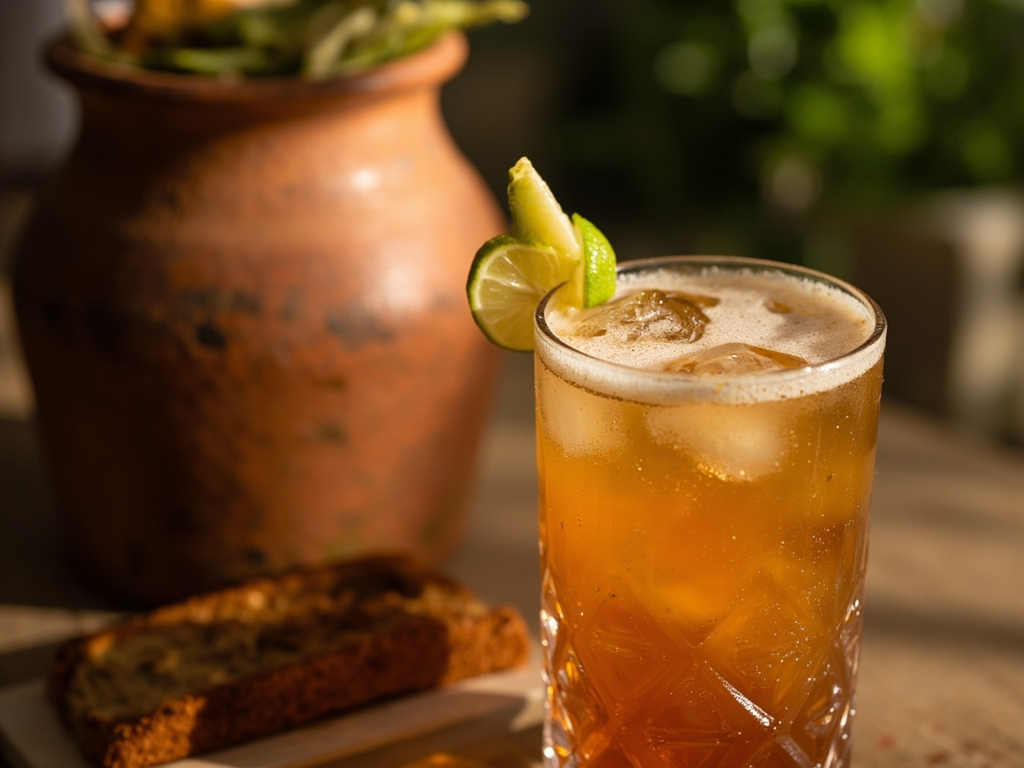
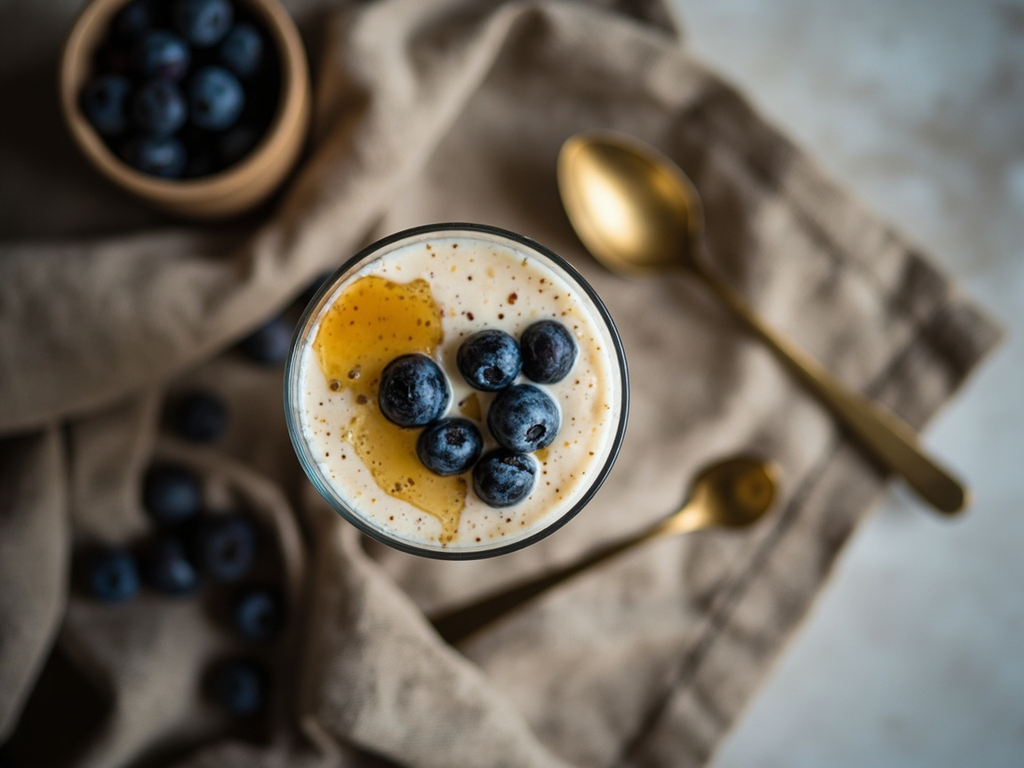
The contemporary twist : Serve it chilled in summer in a frosty glass, like a rice smoothie: the same ancient drink, re-read as a reverse shot.
Akira Kurosawa · Charactorium