 flip
flipSukiyaki — The Team's Festive Hot Pot
Sukiyaki — The Team's Festive Hot Pot
Why this dish? The quintessential convivial dish of 20th-century Japan, sukiyaki is cooked at the center of the table and shared. Kurosawa, who ate with his crew to foster 'troop spirit,' would have found in this common pot the exact extension at table of his way of filming: everyone around the same fire.
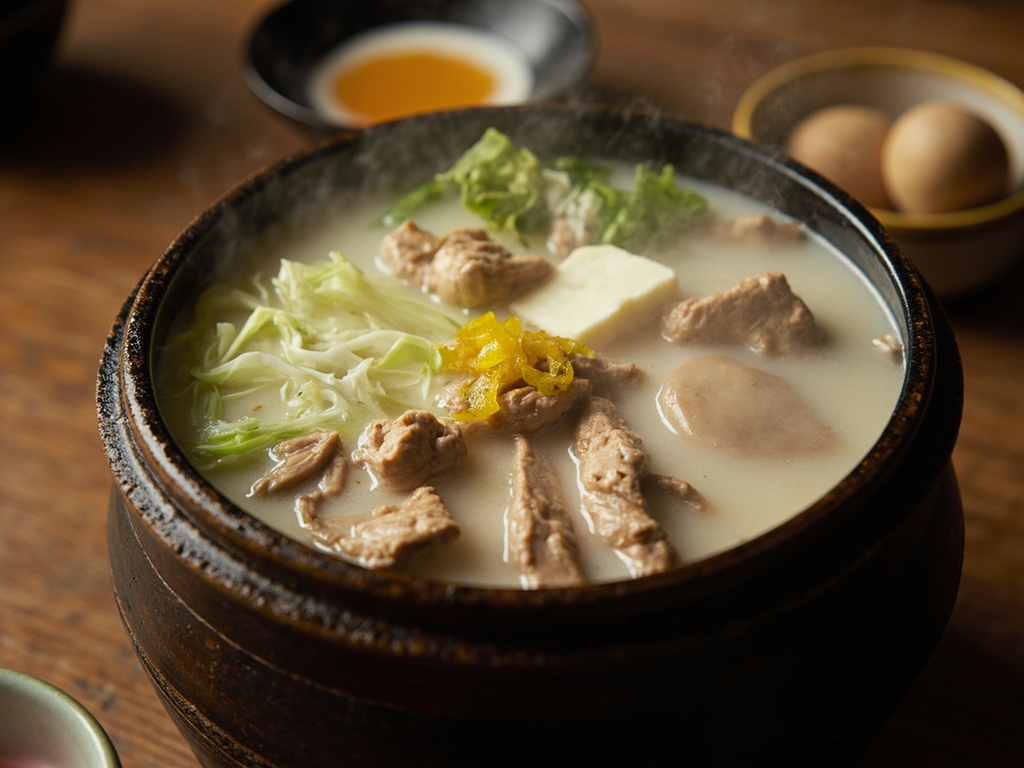
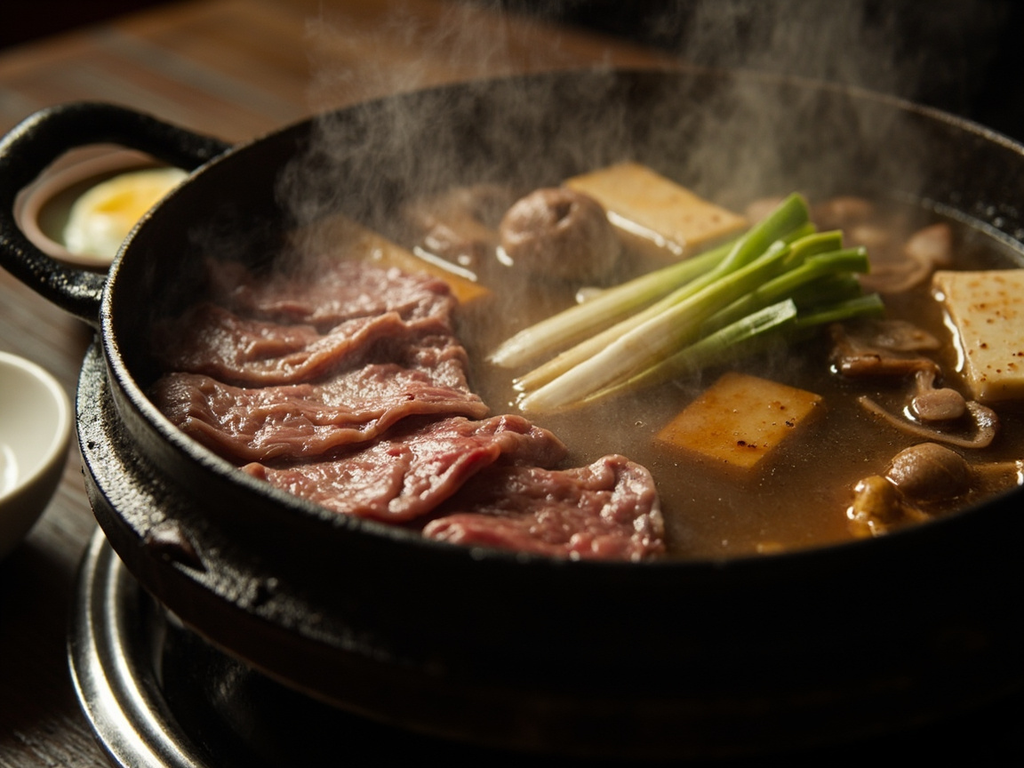
Thin slices of beef seared then simmered in a sweet-salty broth (warishita) with leek, grilled tofu, mushrooms, and noodles. Each person picks from the pot and dips their bite into a bowl of raw beaten egg. A festive, warm, and theatrical dish.
When a film ended well, I would invite the whole troupe around the pot. I don't like agitation: sukiyaki requires patience, you sear the beef, pour the sugar and soy sauce, and watch the meat take on its amber color. Dip your bite into the beaten egg—this golden veil softens the fire and burns your tongue less, it's an old gesture every Japanese knows. At table as on set, I want faces gathered around a single flame; that is where team spirit is born.
- •Beef, very thinly sliced — for the table (main protein)
- •Soy sauce, sugar, mirin, sake — in parts for warishita (sweet-salty broth)
- •Japanese leek (negi) — cut on the bias (vegetable)
- •Grilled tofu (yaki-dofu) — a few pieces (garnish)
- •Mushrooms (shiitake, enoki) — a handful (umami garnish)
- •Raw eggs — one per diner (dipping sauce)
Sukiyaki — The Team's Festive Hot Pot
Thin slices of beef seared then simmered in a sweet-salty broth (warishita) with leek, grilled tofu, mushrooms, and noodles. Each person picks from the pot and dips their bite into a bowl of raw beaten egg. A festive, warm, and theatrical dish.
Why this dish? The quintessential convivial dish of 20th-century Japan, sukiyaki is cooked at the center of the table and shared. Kurosawa, who ate with his crew to foster 'troop spirit,' would have found in this common pot the exact extension at table of his way of filming: everyone around the same fire.
When a film ended well, I would invite the whole troupe around the pot. I don't like agitation: sukiyaki requires patience, you sear the beef, pour the sugar and soy sauce, and watch the meat take on its amber color. Dip your bite into the beaten egg—this golden veil softens the fire and burns your tongue less, it's an old gesture every Japanese knows. At table as on set, I want faces gathered around a single flame; that is where team spirit is born.
Ingredients (period version)
- Beef, very thinly sliced — for the table (main protein)
- Soy sauce, sugar, mirin, sake — in parts for warishita (sweet-salty broth)
- Japanese leek (negi) — cut on the bias (vegetable)
- Grilled tofu (yaki-dofu) — a few pieces (garnish)
- Mushrooms (shiitake, enoki) — a handful (umami garnish)
- Raw eggs — one per diner (dipping sauce)
Ingredients
- Beef for fondue (very thinly sliced) — 500 g (protein)
- Soy sauce — 80 ml (warishita)
- Sugar — 3 tablespoons (warishita)
- Mirin — 80 ml (warishita)
- Sake — 60 ml (warishita)
- Leek — 2, cut on the bias (vegetable)
- Grilled firm tofu — 200 g (garnish)
- Fresh shiitake + enoki mushrooms — 250 g (garnish)
- Napa cabbage — 1/4 head, sliced (vegetable)
- Shirataki or udon noodles — 1 package (starch)
- Extra-fresh eggs — 1 per person (dipping sauce)
Method
- Mix soy sauce, sugar, mirin, and sake for the warishita (broth).
- In a hot cast-iron pan placed at the center of the table, sear a few slices of beef, sprinkle with a little sugar, and pour in some warishita.
- Gradually add leek, grilled tofu, mushrooms, cabbage, and noodles; let simmer gently, adding more broth as needed.
- Each person cracks an egg into their bowl and lightly beats it.
- Pick meat and vegetables from the pot, dip in beaten egg, and eat piping hot, cooking new batches as the meal progresses.
How it was made : Sukiyaki originated in the 19th century, when beef consumption, long prohibited by Buddhism, was rehabilitated during the Meiji era. It became a festive dish in the 20th century, always cooked at the table in a heavy cast-iron pan. Dipping in raw egg is the classic Kantō (Tokyo) style, Kurosawa's region.
The contemporary twist : Name the pot 'The Seven Samurai Table': seven different ingredients arranged around the beef, each for a warrior.
Akira Kurosawa · Charactorium