 flip
flipGohan to misoshiru — Rice and Morning Miso Soup
Gohan to misoshiru — Rice and Morning Miso Soup
Why this dish? The most ordinary and most beloved meal of Kurosawa: rice, miso soup, tsukemono. During his endless shoots, he often started the day with this steaming, frugal, comforting bowl, faithful to a traditional Japanese taste without fuss.
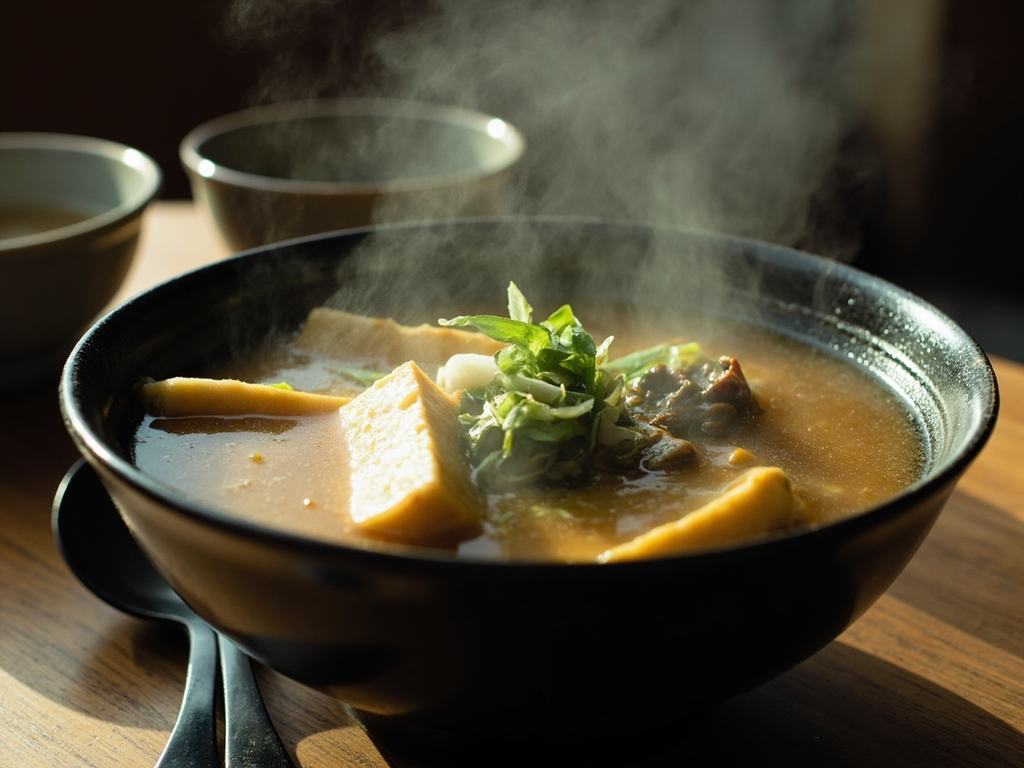
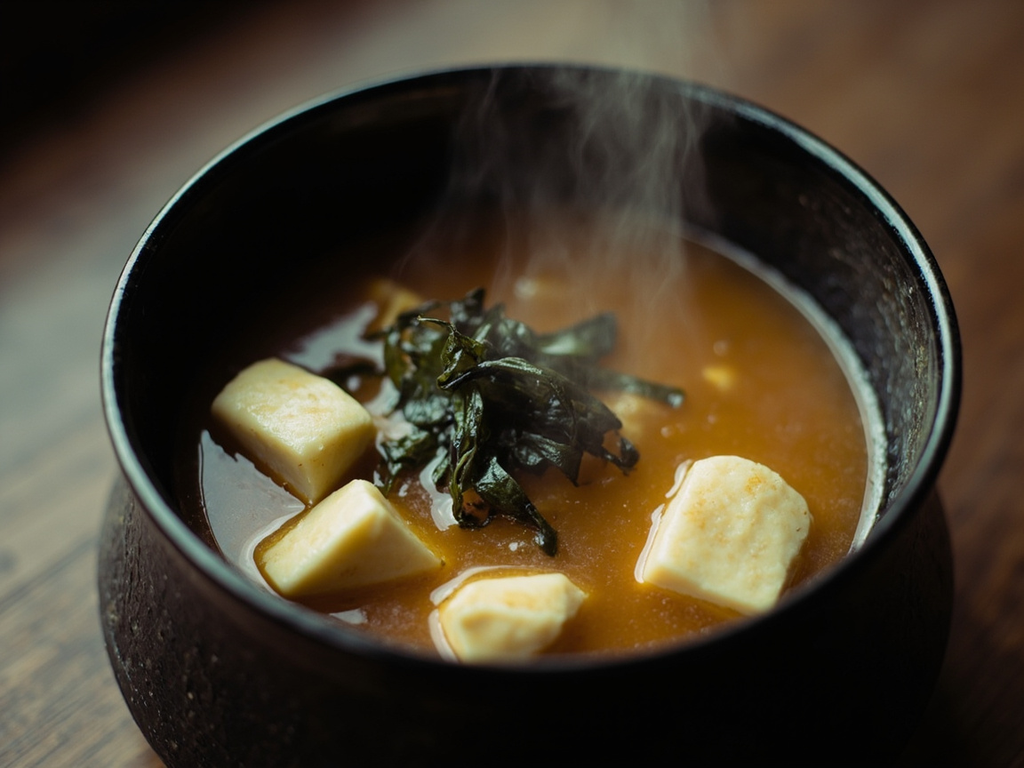
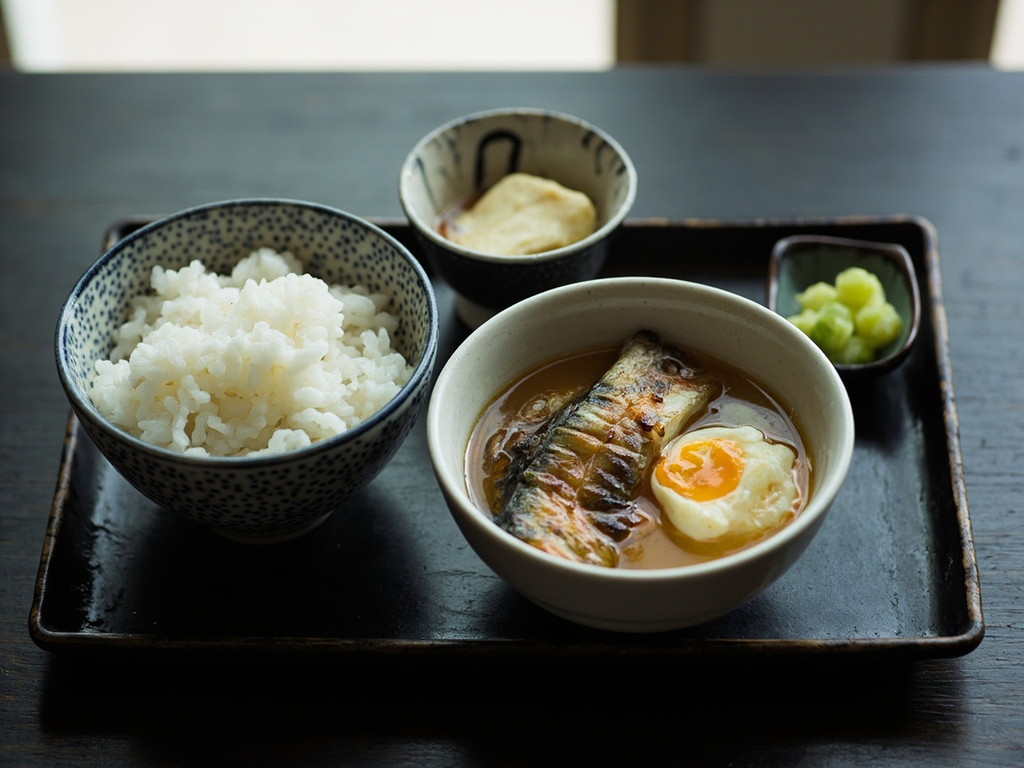
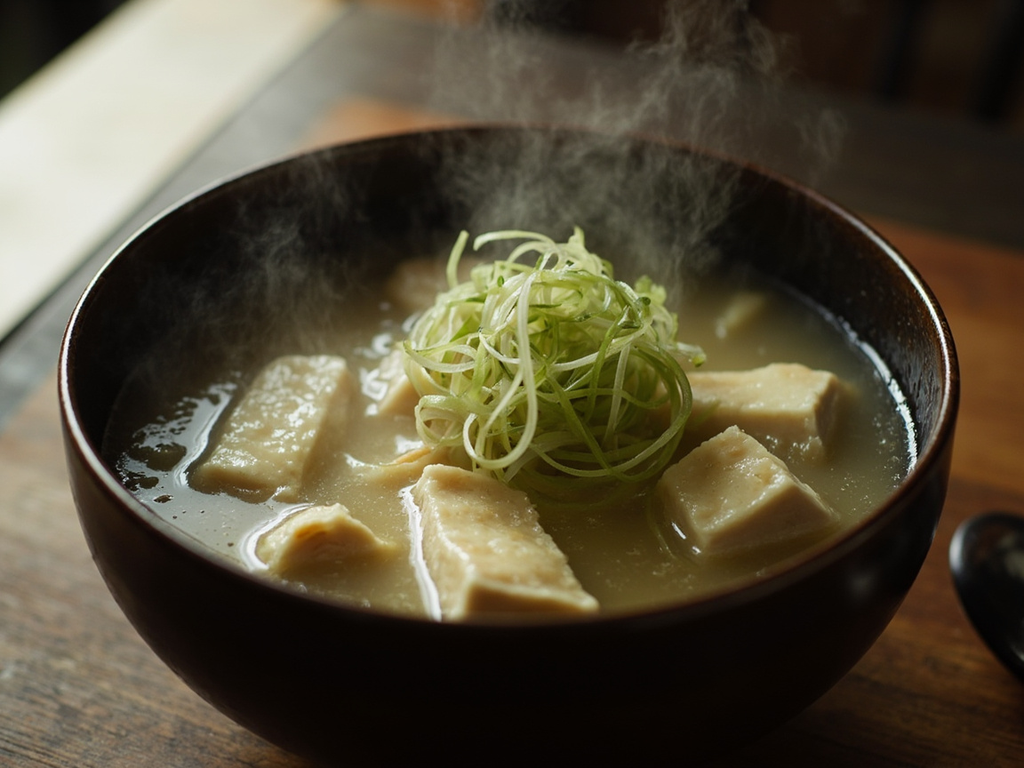
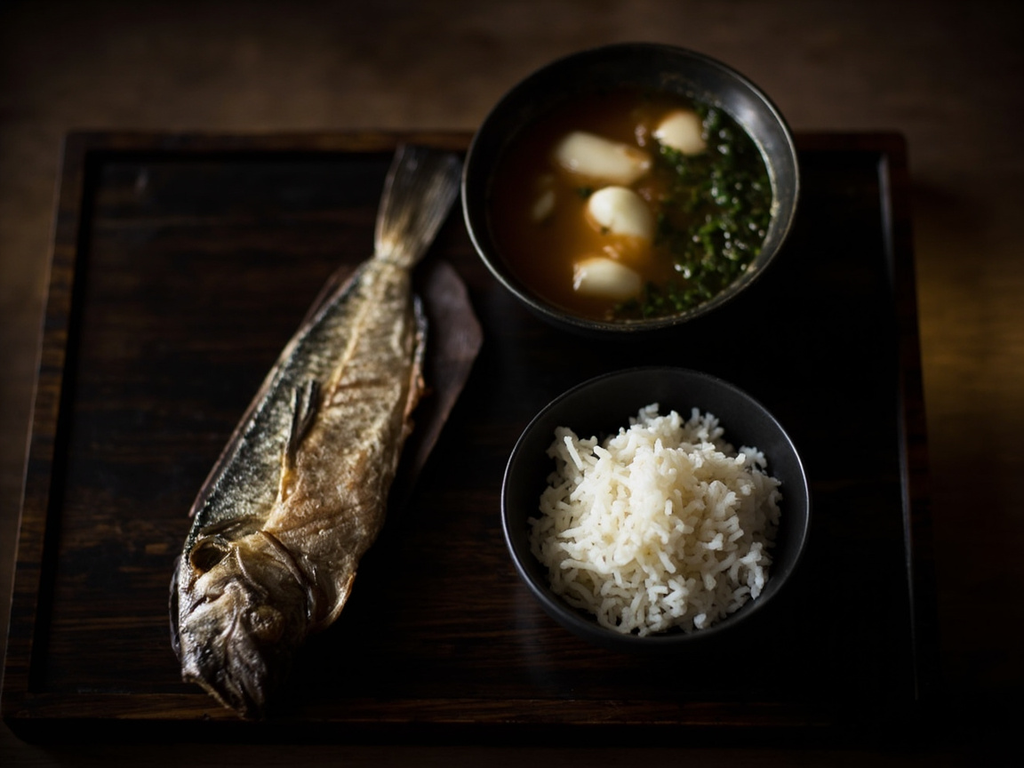
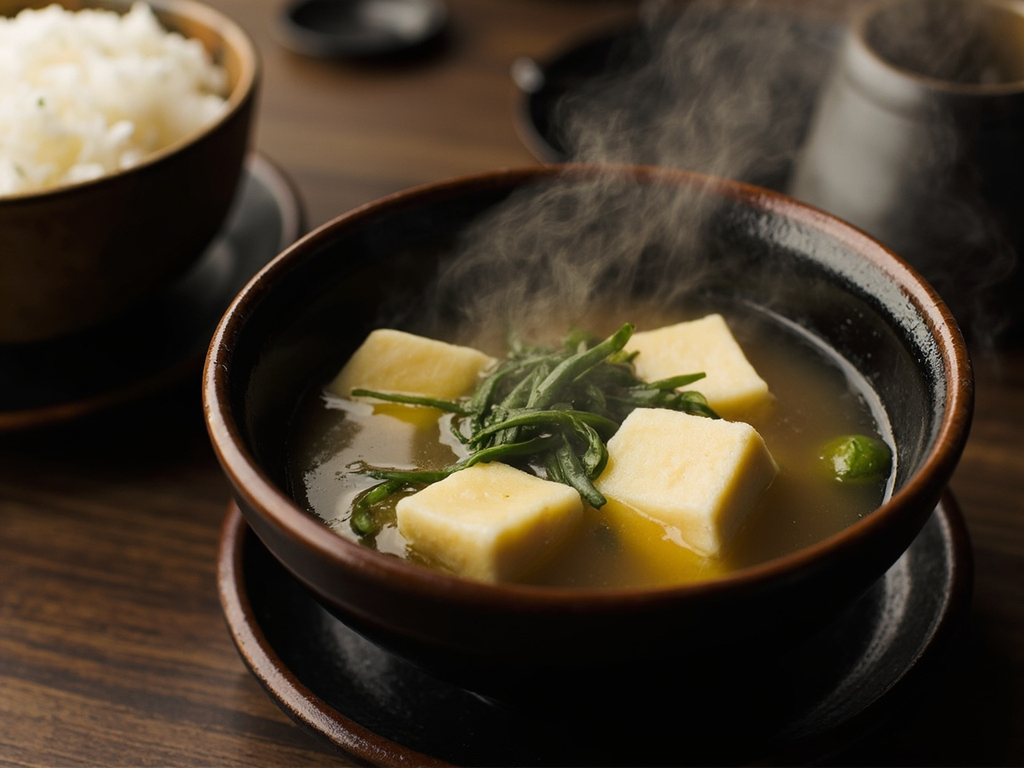
A bowl of perfectly fluffy white rice and a miso soup with wakame seaweed and tofu. The foundational lunch of every Japanese home: simple, hot, nourishing, ready in fifteen minutes once you have dashi on hand.
They take me for a tyrannical emperor on set, but at table I ask for nothing more than an honest bowl of rice and a steaming miso soup. You see, the secret is not in richness: it's never to boil the miso once it's dissolved, otherwise you kill its soul, its fragrance flees like an actor who has forgotten his lines. My mother would dissolve it at the last breath, off the fire, and the wakame had to stay green and alive. Eat it without waiting, while it steams—a dish, like a shot, cannot be done twice.
- •Japanese rice (uruchimai) — one bowl per person (base of the meal)
- •Kombu and katsuobushi — enough for a good dashi (umami broth)
- •Miso paste — one heaped tablespoon per bowl (fermented seasoning)
- •Dried wakame seaweed — a pinch (garnish)
- •Silken tofu — a few cubes (protein garnish)
Gohan to misoshiru — Rice and Morning Miso Soup
A bowl of perfectly fluffy white rice and a miso soup with wakame seaweed and tofu. The foundational lunch of every Japanese home: simple, hot, nourishing, ready in fifteen minutes once you have dashi on hand.
Why this dish? The most ordinary and most beloved meal of Kurosawa: rice, miso soup, tsukemono. During his endless shoots, he often started the day with this steaming, frugal, comforting bowl, faithful to a traditional Japanese taste without fuss.
They take me for a tyrannical emperor on set, but at table I ask for nothing more than an honest bowl of rice and a steaming miso soup. You see, the secret is not in richness: it's never to boil the miso once it's dissolved, otherwise you kill its soul, its fragrance flees like an actor who has forgotten his lines. My mother would dissolve it at the last breath, off the fire, and the wakame had to stay green and alive. Eat it without waiting, while it steams—a dish, like a shot, cannot be done twice.
Ingredients (period version)
- Japanese rice (uruchimai) — one bowl per person (base of the meal)
- Kombu and katsuobushi — enough for a good dashi (umami broth)
- Miso paste — one heaped tablespoon per bowl (fermented seasoning)
- Dried wakame seaweed — a pinch (garnish)
- Silken tofu — a few cubes (protein garnish)
Ingredients
- Japanese short-grain rice — 300 g (rinsed until water runs clear) (base)
- Kombu — 1 piece, 10 cm (dashi)
- Katsuobushi (bonito flakes) — 1 large handful (10 g) (dashi)
- Water — 800 ml (broth)
- Miso paste — 3 tablespoons (seasoning)
- Dried wakame — 1 tablespoon (garnish)
- Silken tofu — 150 g, cubed (garnish)
- Chopped green onion — 1 stalk (finishing)
Method
- Rinse the rice in cold water until it runs clear, let it rest for 30 minutes, then cook (rice cooker or covered pot, water level +1 cm, 12 minutes then 10 minutes off heat without lifting the lid).
- For the dashi: soak kombu in cold water for 20 minutes, heat gently and remove kombu just before boiling. Turn off heat, add katsuobushi, let steep 2 minutes, then strain.
- Rehydrate wakame in a little water for 5 minutes. Heat dashi without boiling, add tofu and wakame.
- Off the heat, dissolve miso in a ladle of broth before incorporating it—never boil again.
- Serve immediately: a bowl of rice, a bowl of soup, green onion on top.
How it was made : Miso, a fermented soybean paste, has been a pillar of Japanese cuisine since medieval times; morning miso soup became widespread in the Edo period. Homemade dashi with kombu and bonito remains the mark of a careful home kitchen, the kind in which Kurosawa grew up in the early 20th century.
The contemporary twist : Serve it in a black lacquered bowl and place the still-warm bonito flakes on the tofu: they undulate under the heat, like the rain of Rashōmon on the lens.
Akira Kurosawa · Charactorium