 flip
flipTsukemono Nukazuke — Rice-Bran Pickles
Tsukemono Nukazuke — Rice-Bran Pickles
Why this dish? Pickled vegetables (tsukemono) are part of Kurosawa's attested daily diet. Nukazuke, pickling in a bed of fermented rice bran that is tended daily, is the quintessence of Japanese home preservation—a patient, repetitive gesture, like the dozens of takes he demanded.
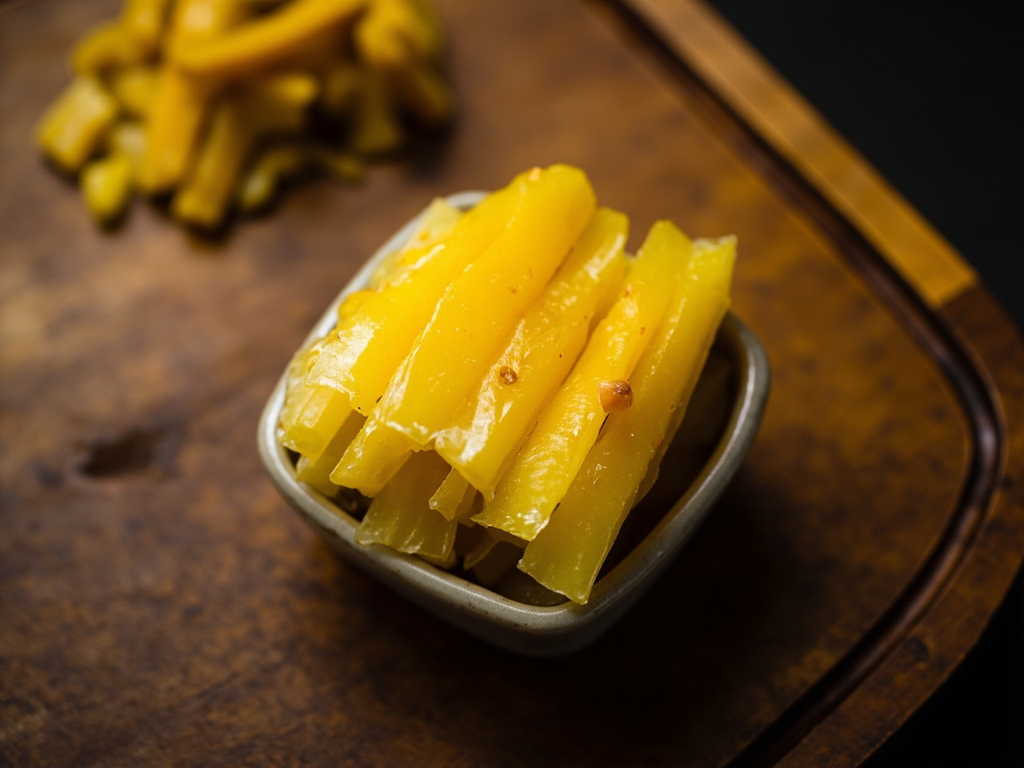
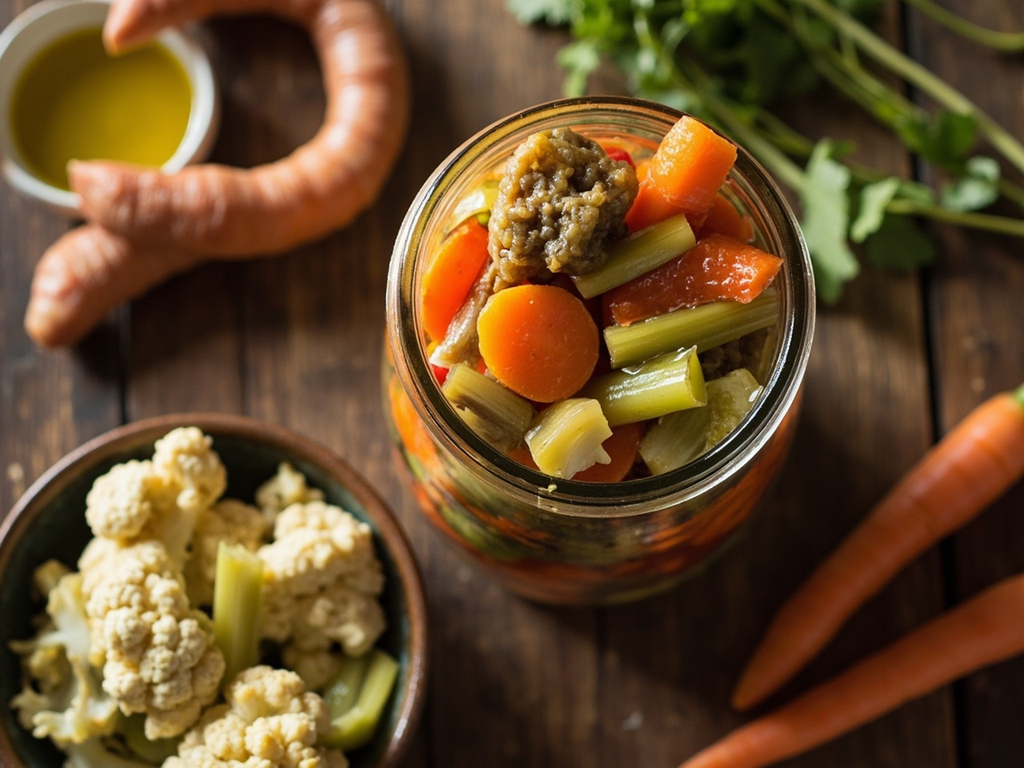
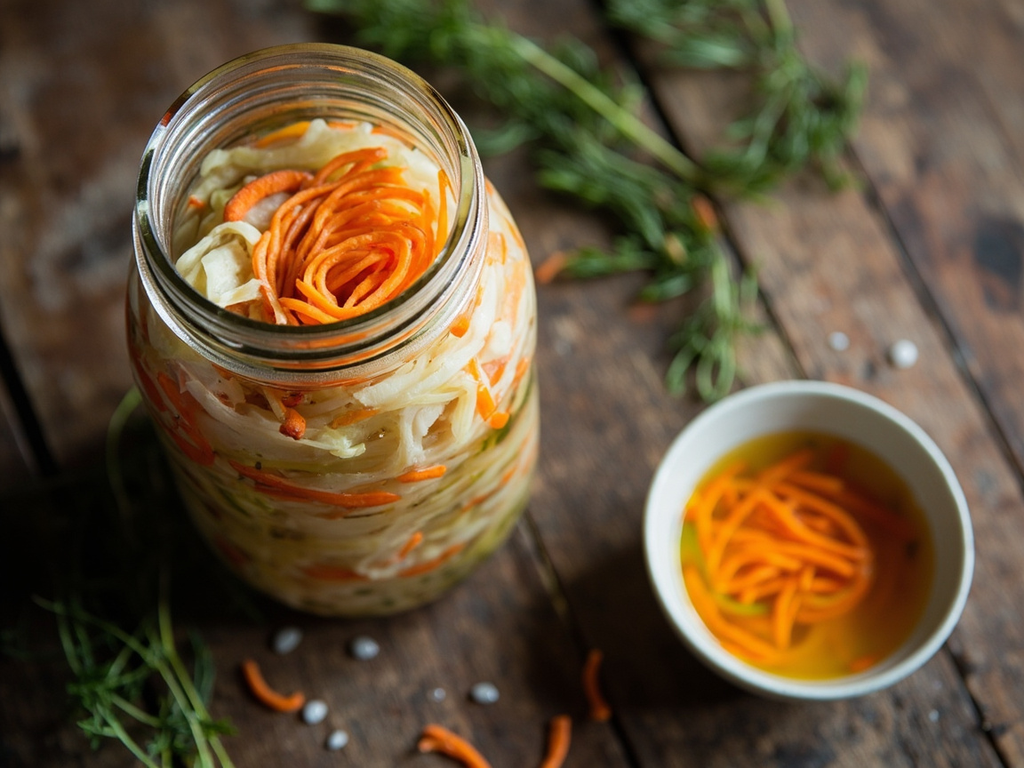
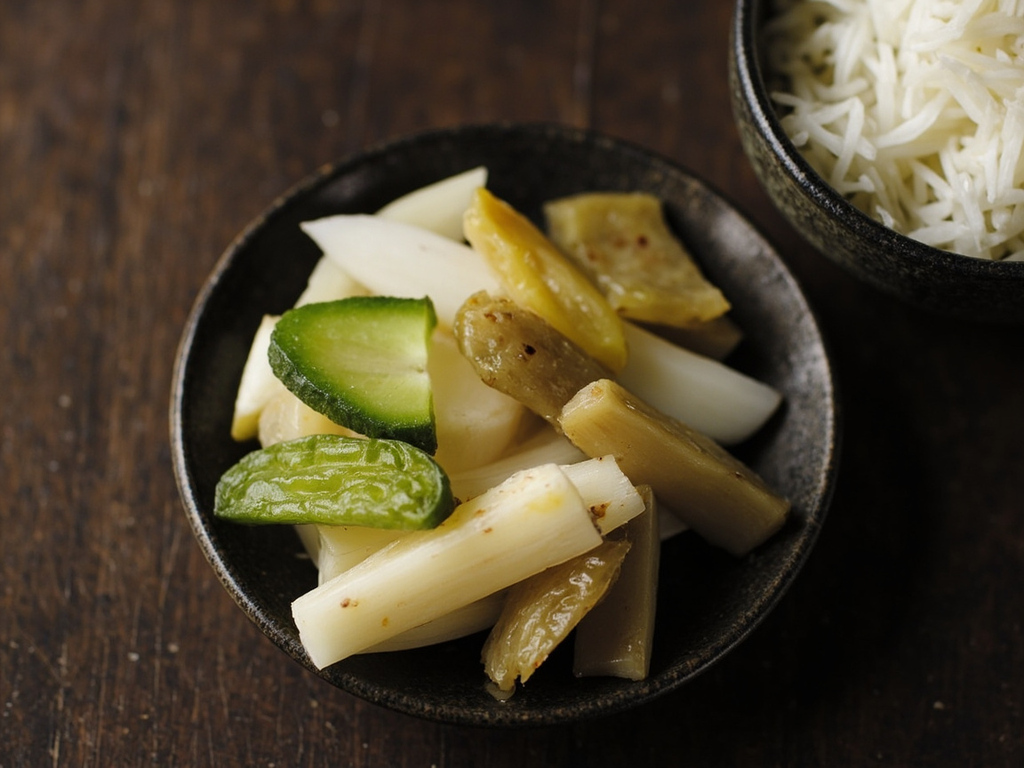
Cucumber, daikon radish, and turnip buried in a living bed of salted rice bran (nukadoko) that ferments the vegetables in one to two days. Crisp, tangy, and deeply umami, they cleanse the palate between bites of rice.
The nuka pot is a living thing; my mother would plunge her hand into it every day to turn it, summer and winter, and she never forgot. Bury your cucumber in the evening, take it out in the morning: one night is enough, two if you like it bold and sour. Don't be afraid to dip your fingers in, they are the ones that keep the ferment healthy. It's humble, almost nothing, and yet without that little tangy crunch a bowl of rice feels incomplete to me—like a film missing its final shot.
- •Rice bran (nuka) — enough to fill a jar (fermentation bed)
- •Salt — generous (salting, preservation)
- •Water — to paste consistency (binder)
- •Kombu, dried chili (optional) — a little (flavor and protection)
- •Seasonal vegetables (cucumber, daikon, turnip) — as desired (to pickle)
Tsukemono Nukazuke — Rice-Bran Pickles
Cucumber, daikon radish, and turnip buried in a living bed of salted rice bran (nukadoko) that ferments the vegetables in one to two days. Crisp, tangy, and deeply umami, they cleanse the palate between bites of rice.
Why this dish? Pickled vegetables (tsukemono) are part of Kurosawa's attested daily diet. Nukazuke, pickling in a bed of fermented rice bran that is tended daily, is the quintessence of Japanese home preservation—a patient, repetitive gesture, like the dozens of takes he demanded.
The nuka pot is a living thing; my mother would plunge her hand into it every day to turn it, summer and winter, and she never forgot. Bury your cucumber in the evening, take it out in the morning: one night is enough, two if you like it bold and sour. Don't be afraid to dip your fingers in, they are the ones that keep the ferment healthy. It's humble, almost nothing, and yet without that little tangy crunch a bowl of rice feels incomplete to me—like a film missing its final shot.
Ingredients (period version)
- Rice bran (nuka) — enough to fill a jar (fermentation bed)
- Salt — generous (salting, preservation)
- Water — to paste consistency (binder)
- Kombu, dried chili (optional) — a little (flavor and protection)
- Seasonal vegetables (cucumber, daikon, turnip) — as desired (to pickle)
Ingredients
- Rice bran (nuka) — 1 kg (nukadoko)
- Salt — 130 g (salting)
- Water — 1 liter (binder)
- Kombu — 1 piece (umami)
- Cucumber, daikon, turnip — as desired (vegetables to pickle)
Method
- Prepare the nukadoko: mix rice bran, salt, and water to a wet sand texture, add kombu. 'Start' it by burying vegetable peels for a week, turning it by hand every day.
- Rub vegetables with salt, then bury them completely in the nuka bed.
- Let ferment from 12 hours (cucumber) to 2 days (daikon) at room temperature.
- Remove vegetables, rinse off bran, wipe dry, and slice.
- Turn the nukadoko by hand daily to keep it alive; it will keep and feed like this for months.
How it was made : Nukazuke became widespread in the Edo period, when polishing white rice made bran abundant. Each household maintained its nukadoko like a treasure, sometimes passed down for generations, turned daily with bare hands—the lactic ferments from the skin contributing to its balance. It was the way to preserve vegetables before refrigeration, and a valuable source of vitamins in winter.
The contemporary twist : Present three sticks—green cucumber, white daikon, orange carrot—lined up like a color film strip, a nod to the flamboyant Kurosawa of Ran.
Akira Kurosawa · Charactorium