 flip
flipMakunouchi Bentō — The Long-Shoot Lunchbox
Makunouchi Bentō — The Long-Shoot Lunchbox
Why this dish? The record states: during his long shoots, Kurosawa appreciated the bento prepared by set cooks and shared them with the crew. Makunouchi—literally 'between acts,' born in theaters—is the quintessential Japanese bento, perfect for eating between takes at the foot of Mount Fuji.
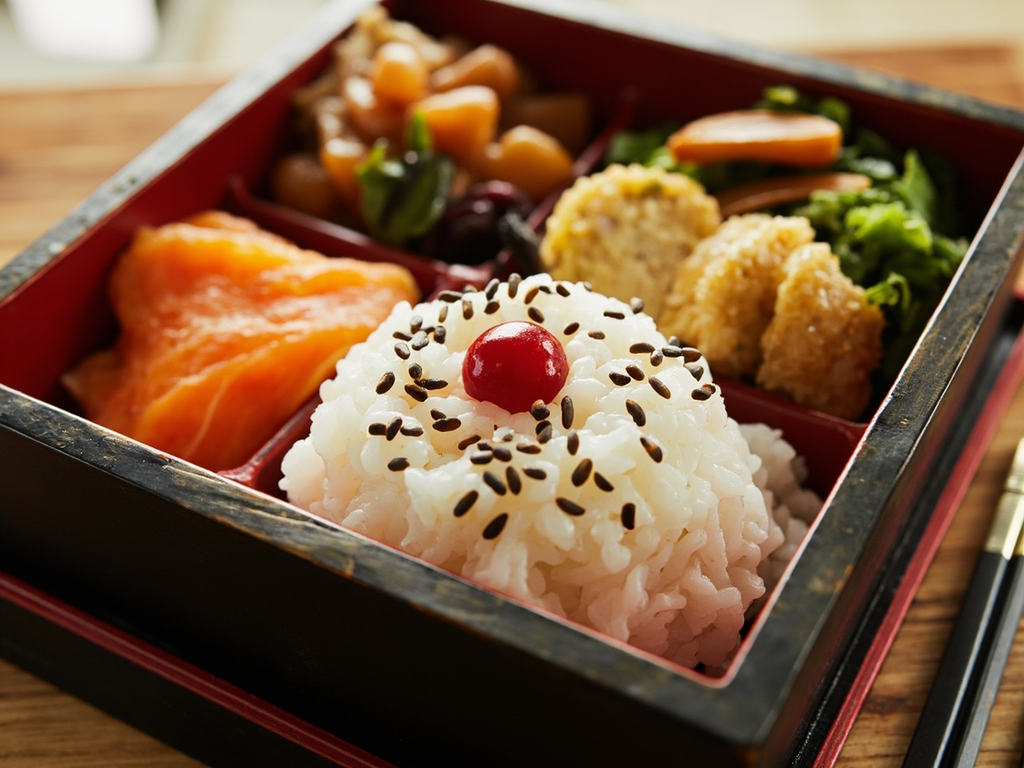
A compartmentalized box bringing together rice with sesame seeds and umeboshi, grilled fish, tamagoyaki (sweet-savory rolled omelette), simmered vegetables, and tsukemono. A complete, balanced, cold meal designed to be eaten away from any kitchen.
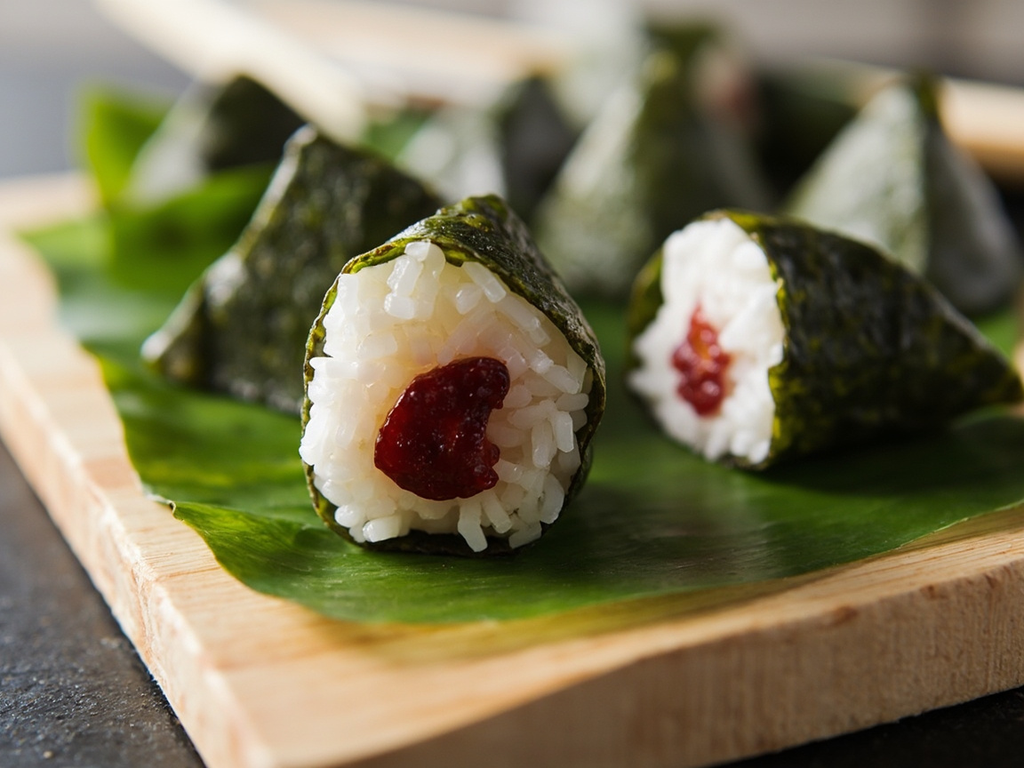
On the mountains of Kagemusha, the cold bit hard and we filmed from morning to night. The set cook came around with the boxes, and I sat with the grips, never apart. Pack your rice on one side, your okazu on the other—they must not touch, each flavor must keep its place, like each actor in the frame. The umeboshi in the center of the white rice is the sun of our flag; it salts the mouth, awakens the appetite, and, they say, keeps the rice from spoiling. A well-packed box feeds both man and eye.
- •White rice — packed, cooled (base)
- •Umeboshi (salted plum) — 1 per box (tangy center, preservation)
- •Grilled fish (salmon or mackerel) — 1 fillet (protein)
- •Eggs for tamagoyaki — 2 (rolled omelette)
- •Simmered root vegetables (nimono) — a few pieces (side dish)
- •Tsukemono (pickled vegetables) — a few slices (pickle)
- •Sesame seeds — a pinch (finishing)
Makunouchi Bentō — The Long-Shoot Lunchbox
A compartmentalized box bringing together rice with sesame seeds and umeboshi, grilled fish, tamagoyaki (sweet-savory rolled omelette), simmered vegetables, and tsukemono. A complete, balanced, cold meal designed to be eaten away from any kitchen.
Why this dish? The record states: during his long shoots, Kurosawa appreciated the bento prepared by set cooks and shared them with the crew. Makunouchi—literally 'between acts,' born in theaters—is the quintessential Japanese bento, perfect for eating between takes at the foot of Mount Fuji.
On the mountains of Kagemusha, the cold bit hard and we filmed from morning to night. The set cook came around with the boxes, and I sat with the grips, never apart. Pack your rice on one side, your okazu on the other—they must not touch, each flavor must keep its place, like each actor in the frame. The umeboshi in the center of the white rice is the sun of our flag; it salts the mouth, awakens the appetite, and, they say, keeps the rice from spoiling. A well-packed box feeds both man and eye.
Ingredients (period version)
- White rice — packed, cooled (base)
- Umeboshi (salted plum) — 1 per box (tangy center, preservation)
- Grilled fish (salmon or mackerel) — 1 fillet (protein)
- Eggs for tamagoyaki — 2 (rolled omelette)
- Simmered root vegetables (nimono) — a few pieces (side dish)
- Tsukemono (pickled vegetables) — a few slices (pickle)
- Sesame seeds — a pinch (finishing)
Ingredients
- Cooked Japanese short-grain rice — 200 g per box (base)
- Umeboshi — 1 (tangy center)
- Salmon fillet — 1 (≈100 g) (protein)
- Eggs — 2 (tamagoyaki)
- Sugar + soy sauce + dashi — 1 teaspoon each (omelette seasoning)
- Carrot and daikon radish — 100 g, in pieces (nimono)
- Cucumber or turnip pickles — a few slices (tsukemono)
- Toasted sesame seeds — 1 teaspoon (finishing)
Method
- Grill the salted salmon in a pan or oven, let cool slightly.
- Tamagoyaki: beat eggs with sugar, soy sauce, and dashi; cook in thin layers rolled onto themselves in an oiled pan, then slice.
- Simmer carrot and daikon for 15 minutes in a dashi-soy-mirin broth (nimono), drain.
- Pack the cooled rice into one compartment, sprinkle with sesame seeds, and press an umeboshi into the center.
- Arrange in the other compartments the fish, omelette rolls, nimono, and tsukemono, without letting them touch. Cover and transport.
How it was made : The makunouchi bentō dates back to the Edo period, where it was eaten during intermissions (maku no uchi) of kabuki theater. The umeboshi, a very salty and sour plum, served both as seasoning and natural preservative for rice—valuable before refrigeration, and ideal for outdoor meals.
The contemporary twist : Slide a thin bamboo leaf (haran) between the rice and the okazu, as chefs of old did: the separation becomes graphic, almost an edible storyboard.
Akira Kurosawa · Charactorium