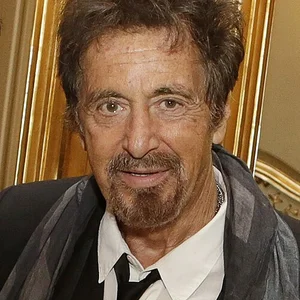

Al Pacino is an American actor born in 1940, a major figure of the New Hollywood movement. Brought to fame by his role as Michael Corleone in 'The Godfather' (1972), he established himself as one of the greatest performers in American cinema, trained at the Actors Studio.
Al Pacino(1940 — ?)
Al Pacino
États-Unis
5 min read
Frequently asked questions
Key Facts
- Born on April 25, 1940, in the East Harlem neighborhood of New York, of Sicilian descent
- Plays Michael Corleone in Francis Ford Coppola's 'The Godfather' trilogy (1972, 1974, 1990)
- Portrays Tony Montana in Brian De Palma's 'Scarface' (1983), a role that became iconic
- Wins the Academy Award for Best Actor in 1993 for 'Scent of a Woman'
- Trained in the Actors Studio method, he pursues a parallel career in theater (Shakespeare, Brecht)
Works & Achievements
The role of Michael Corleone that brought Pacino to fame and became one of the most famous characters in film history.
Portrayal of a New York City police officer who exposes corruption, a performance honored with an Oscar nomination.
A sequel regarded as one of the greatest films ever made, in which Michael Corleone descends into the loneliness of power.
A desperate bank robber in a Sidney Lumet film, a role of an intensity that remains famous.
Tony Montana, a Cuban immigrant turned drug lord; a film at first controversial that later became a cult classic.
The role of a blind colonel that finally earned Pacino the Academy Award for Best Actor.
A memorable face-off with Robert De Niro in Michael Mann's crime thriller.
An Emmy Award-winning television miniseries that showcased the full range of his talent.
Anecdotes
Al Pacino almost never got to play Michael Corleone: the Paramount studio considered him too short and unknown, and wanted a star like Robert Redford. Director Francis Ford Coppola fought for him and risked being fired. Pacino was saved by the restaurant scene in which Michael shoots Sollozzo and the policeman McCluskey, which finally won the producers over.
For 'Scarface' (1983), Pacino badly burned his hand when he grabbed the scorching barrel of a submachine gun during the final shootout. Filming had to be halted for several weeks while his wound healed.
Pacino was trained at New York's Actors Studio by the famous teacher Lee Strasberg, the theorist of 'the Method'. A delicious detail: Strasberg himself played the gangster Hyman Roth opposite Pacino in 'The Godfather Part II' (1974).
Raised in a poor neighborhood of the Bronx, Pacino left school at 17 and took on a string of odd jobs (movie theater usher, messenger, janitor) while dreaming of the theater. He endured years of hardship before success came.
After being nominated for an Oscar eight times without ever winning, Pacino finally took home the Best Actor statuette in 1993 for 'Scent of a Woman', in which his cry of 'Hoo-ah!' became iconic.
Primary Sources
It's not personal, Sonny. It's strictly business.
Say hello to my little friend!
In his memoir, Pacino recounts his impoverished childhood in the Bronx, his early passion for the theater, and his improbable rise to the top of American cinema.
Key Places
Manhattan neighborhood where Al Pacino was born in 1940, into a modest family of Italian descent.
Working-class neighborhood where Pacino grew up and spent a poor childhood, before dropping out of school for the theater.
Famous drama school where Pacino trained in the “Method” under Lee Strasberg.
Capital of American cinema where Pacino shot the majority of his films and built his career.
Manhattan's theater district where Pacino, a stage actor first and foremost, won several Tony Awards.
Typical Objects

The film's script covered in handwritten notes, the actor's central working tool for preparing and memorizing a role.

The device that records the actor's performance and creates the image. An emblematic tool of the New Hollywood of the 1970s.

The highest honor in American cinema, awarded to Pacino in 1993 for “Scent of a Woman” after eight nominations.

Michael Corleone's dark, polished suit or Tony Montana's flashy outfits, which shape the look of Pacino's legendary characters.

Pistols and rifles used as props in gangster films. Pacino burned his hand with a rifle on the set of “Scarface”.

A recurring accessory in Pacino's public image, which became part of his style and the silhouette of several of his characters.
School Curriculum
Vocabulary & Tags
Key Vocabulary
Tags
Daily Life
Morning
When filming, Pacino's day begins very early: arriving on set, going through makeup and wardrobe to step into his character's skin. A devotee of the 'Method', he rereads his scenes and concentrates at length before performing.
Afternoon
The afternoon is spent running through takes under the director's guidance, sometimes shooting the same scene dozens of times. Between shots, Pacino rehearses his lines, fine-tunes his delivery, and discusses his role with the director.
Evening
In the evening, after filming, comes the viewing of the day's takes (the 'rushes'). A stage actor at heart, Pacino also devotes many evenings to performing live on Broadway, before an audience.
Food
His preparation can lead him to change his diet depending on the role. Coming from an Italian-American family, he grew up with hearty home cooking based on pasta and family dishes.
Clothing
On set, he wears his characters' costumes, carefully chosen by the costume designers. Off screen, he is associated with dark outfits, an open collar, and his signature tinted glasses.
Housing
Having become a star, Pacino divides his life between New York, his hometown where he remains attached to the theater, and the Los Angeles area, close to the Hollywood studios.
Historical Timeline
Period Vocabulary
Liens externes & ressources
Références
Œuvres
Le Temps d'un week-end (Scent of a Woman)
1992