 flip
flipGrilled Kangaroo with Bush Herbs
Grilled Kangaroo with Bush Herbs
Why this dish? Kangaroo was the most common game in the Central Australian desert, hunted by the Arrernte around Hermannsburg and the MacDonnell Ranges. Namatjira, who often traveled through the bush to paint, regularly ate this meat during his camps with his extended family.
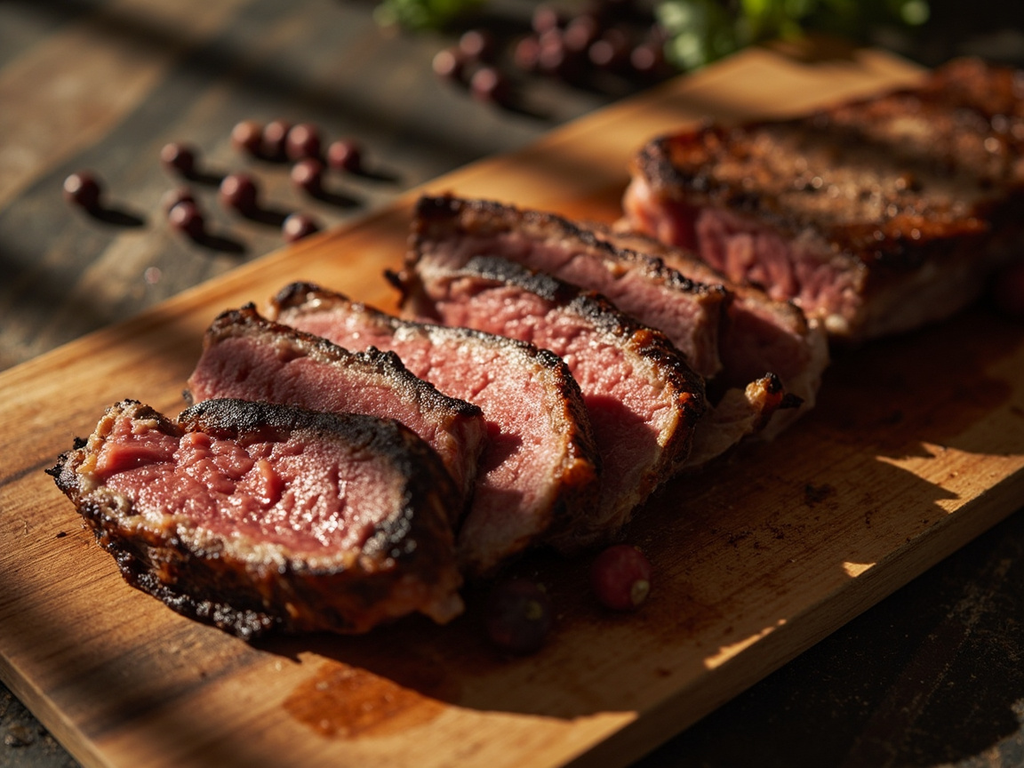
A piece of kangaroo grilled on the coals, scented with aromatic Australian bush herbs. The lean, firm meat, rich in flavor, is enhanced by direct fire cooking and the smoky aroma of eucalyptus wood. A dish that embodies the deep relationship of the Arrernte with their hunting territory.
Kangaroo is the real food of the country, the one our elders hunted long before the missionaries came. When we camp at Palm Valley or in the gorges, we make a big mulga fire, wait until the coals are red hot, and put the meat on. The women gather herbs all around, it flavors the meat with the smell of the country. It's better than ration beef, it tastes of our red earth.
- •Kangaroo leg — one piece for the family (main meat)
- •Bush herbs (dried bush tomato, lemon myrtle leaves) — a handful (aromatics)
- •Native salt (alkaline ash) — a little (seasoning)
- •Animal fat — a little to coat (cooking)
Grilled Kangaroo with Bush Herbs
A piece of kangaroo grilled on the coals, scented with aromatic Australian bush herbs. The lean, firm meat, rich in flavor, is enhanced by direct fire cooking and the smoky aroma of eucalyptus wood. A dish that embodies the deep relationship of the Arrernte with their hunting territory.
Why this dish? Kangaroo was the most common game in the Central Australian desert, hunted by the Arrernte around Hermannsburg and the MacDonnell Ranges. Namatjira, who often traveled through the bush to paint, regularly ate this meat during his camps with his extended family.
Kangaroo is the real food of the country, the one our elders hunted long before the missionaries came. When we camp at Palm Valley or in the gorges, we make a big mulga fire, wait until the coals are red hot, and put the meat on. The women gather herbs all around, it flavors the meat with the smell of the country. It's better than ration beef, it tastes of our red earth.
Ingredients (period version)
- Kangaroo leg — one piece for the family (main meat)
- Bush herbs (dried bush tomato, lemon myrtle leaves) — a handful (aromatics)
- Native salt (alkaline ash) — a little (seasoning)
- Animal fat — a little to coat (cooking)
Ingredients
- Kangaroo fillet or steak — 500 g (main meat)
- Ground bush tomato (or sweet smoked paprika as substitute) — 1 tsp (earthy aromatic)
- Dried lemon myrtle (or lemon zest) — 1 tsp (citrus aromatic)
- Olive oil — 2 tbsp (marinade)
- Salt — 1 tsp (seasoning)
- Bush pepper (or black pepper) — 1/2 tsp (subtle heat)
Method
- Remove kangaroo from fridge 30 minutes before cooking to bring to room temperature.
- Mix bush tomato, lemon myrtle, salt, and pepper with olive oil to form a marinade.
- Coat the kangaroo steaks with the marinade and let rest 15 minutes.
- Heat a cast-iron pan or grill over very high heat.
- Sear steaks for 2–3 minutes per side for rare to medium-rare (kangaroo toughens if overcooked).
- Rest 5 minutes under foil, then slice on the bias.
- Serve with damper or roasted root vegetables.
How it was made : The Arrernte hunted kangaroo with boomerangs, spears, and by communal drives. The whole animal was traditionally cooked in a pit oven: a hole dug in the ground, lined with fire-heated stones, the meat placed on top and covered with earth and coals. Cooking could take several hours. Local aromatic herbs were sometimes added, and fat was carefully preserved.
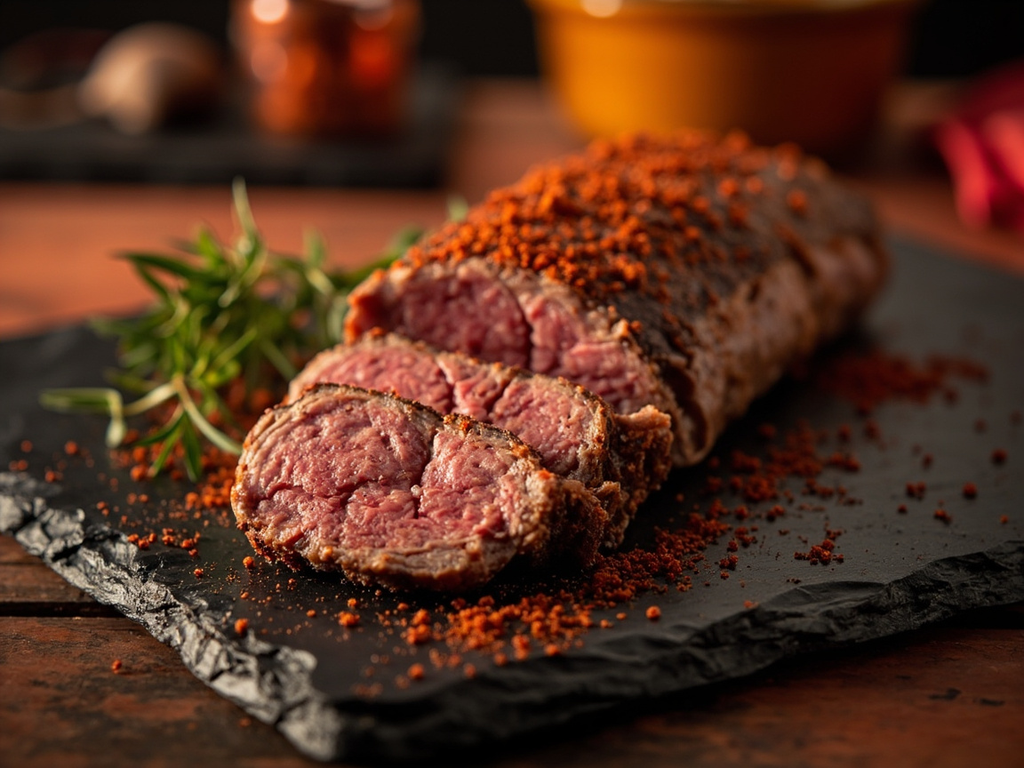
The contemporary twist : Present the pink slices fanned out on a slate board, sprinkled with ground bush tomato and accompanied by a quandong reduction for a sweet-sour touch.
Sources : Isaacs, Jennifer. 'Bush Food: Aboriginal Food and Herbal Medicine'. Weldons, 1987. · Flood, Josephine. 'The Original Australians: Story of the Aboriginal People'. Allen & Unwin, 2006.
Albert Namatjira · Charactorium