 flip
flipKrasis: Lesbian wine tempered in the krater
Krasis: Lesbian wine tempered in the krater
Why this dish? Wine is THE theme of Alcaeus: he made it a weapon against fear, cold, and the tyrant. His verses command to 'drench the lungs with wine' and to expect nothing better from life. Lesbian wine was renowned throughout Greece, and the flower-crowned krater appears in his poems.
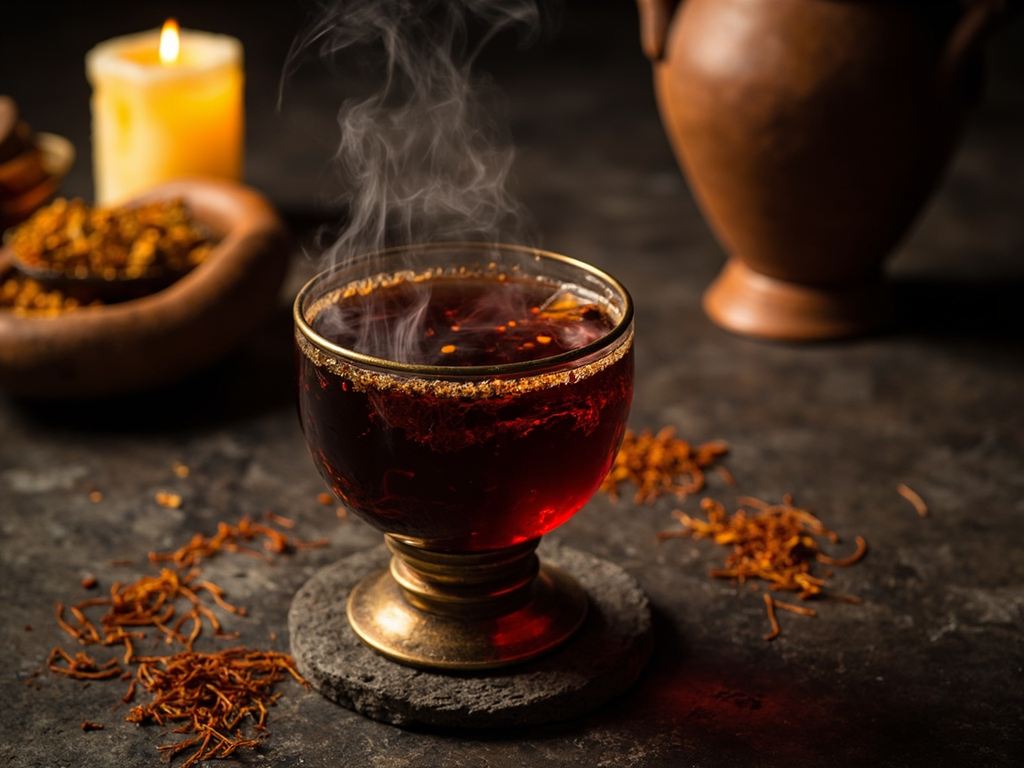
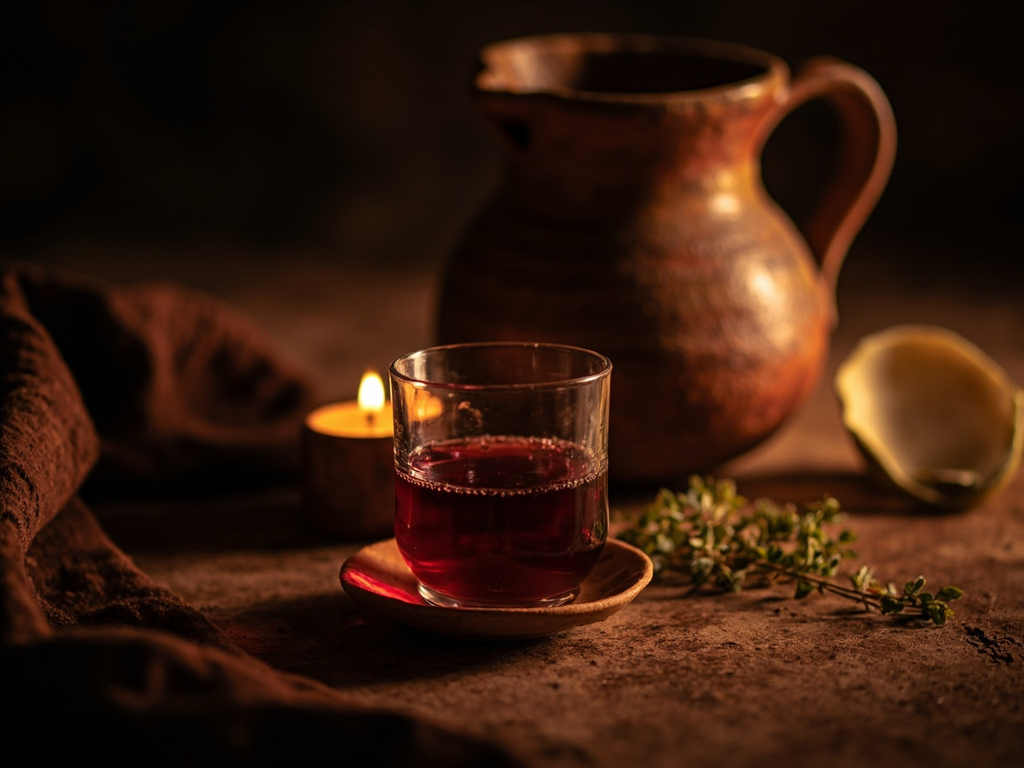
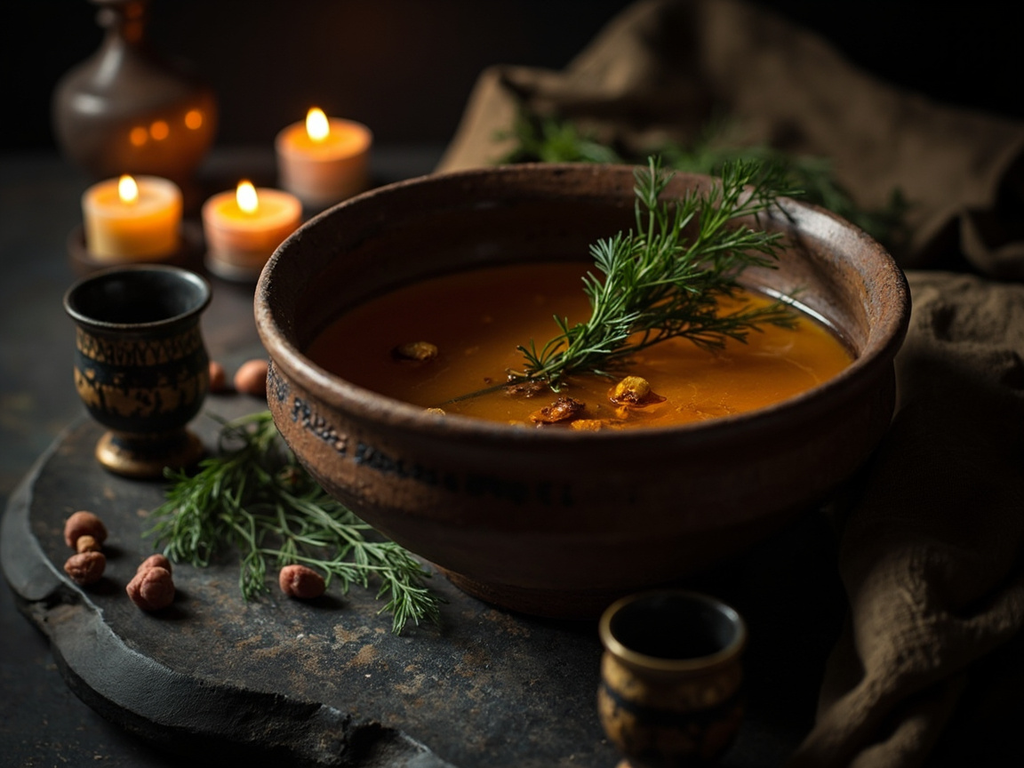
Not a cocktail, but a ritual gesture: into the great krater you pour several measures of water to one of wine, scent with honey and herbs, chill, and the cup circulates. The result is refreshing, slightly tart and honeyed — a drink of conviviality, not raw intoxication.
Let us drink! Why watch for the evening lamp? The day lasts only a finger's breadth! Go, boy, bring down the great cups, the well-wrought ones, and pour me wine the color of honey — but cut it with water, by the gods, as befits men and not wild Thracians. Crown our heads with dill, and let the krater be king of this night: beneath it, neither Pittacus nor the tyrant weighs anything anymore.
- •Lesbian wine (red or amber, sweet) — one measure (base)
- •Fresh spring water — two to three measures (tempering)
- •Hymettus honey — a dash (smoothness)
- •Fresh dill or thyme — a bunch (scent, crown)
Krasis: Lesbian wine tempered in the krater
Not a cocktail, but a ritual gesture: into the great krater you pour several measures of water to one of wine, scent with honey and herbs, chill, and the cup circulates. The result is refreshing, slightly tart and honeyed — a drink of conviviality, not raw intoxication.
Why this dish? Wine is THE theme of Alcaeus: he made it a weapon against fear, cold, and the tyrant. His verses command to 'drench the lungs with wine' and to expect nothing better from life. Lesbian wine was renowned throughout Greece, and the flower-crowned krater appears in his poems.
Let us drink! Why watch for the evening lamp? The day lasts only a finger's breadth! Go, boy, bring down the great cups, the well-wrought ones, and pour me wine the color of honey — but cut it with water, by the gods, as befits men and not wild Thracians. Crown our heads with dill, and let the krater be king of this night: beneath it, neither Pittacus nor the tyrant weighs anything anymore.
Ingredients (period version)
- Lesbian wine (red or amber, sweet) — one measure (base)
- Fresh spring water — two to three measures (tempering)
- Hymettus honey — a dash (smoothness)
- Fresh dill or thyme — a bunch (scent, crown)
Ingredients
- Fruity, soft red wine (or a Greek wine like Agiorgitiko) — 250 ml (base)
- Cold water — 500 to 750 ml (tempering)
- Liquid honey — 1 to 2 tsp (smoothness)
- Thyme or dill sprigs — 2-3 (scent)
- Non-alcoholic version: red grape juice — 250 ml + sparkling water (alternative base for children)
Method
- In a large open container (the 'krater'), dissolve the honey in a little warm water.
- Add the wine, then the rest of the cold water: aim for about one part wine to two or three parts water.
- Add the herb sprigs and let infuse for 10 minutes in a cool place.
- Remove the herbs, ladle into shallow cups.
- For the family version, replace the wine with grape juice diluted with sparkling water and a dash of honey.
How it was made : Drinking pure wine (akratos) was considered barbaric and risky: it was always mixed with water in the krater, often 1 to 3. The master of the banquet, the symposiarch, set the proportion and the number of rounds. Sometimes honey, herbs, or seawater were added, and the wine was drunk after the meal, never during.
The contemporary twist : Serve it in a large communal bowl with a ladle and low cups: everyone serves themselves from the same krater. The 'Greek banquet' effect is immediate and tells the story better than a long speech.
Sources : Alcaeus, Fragments (ed. Lobel-Page; trans. D. A. Campbell, Greek Lyric I, Loeb) · Athenaeus of Naucratis, The Deipnosophists, book X (on mixing wine)
Alcaeus · Charactorium