 flip
flipSunday Roast Beef and Yorkshire Pudding
Sunday Roast Beef and Yorkshire Pudding
Why this dish? On June 23, 1993, at the Isaac Newton Institute in Cambridge, Wiles announced his proof at the blackboard and concluded with a simple “I think I'll stop here.” Roast beef, the dish of grand occasions and college dinners, is what one imagines at a High Table to celebrate such an academic triumph.
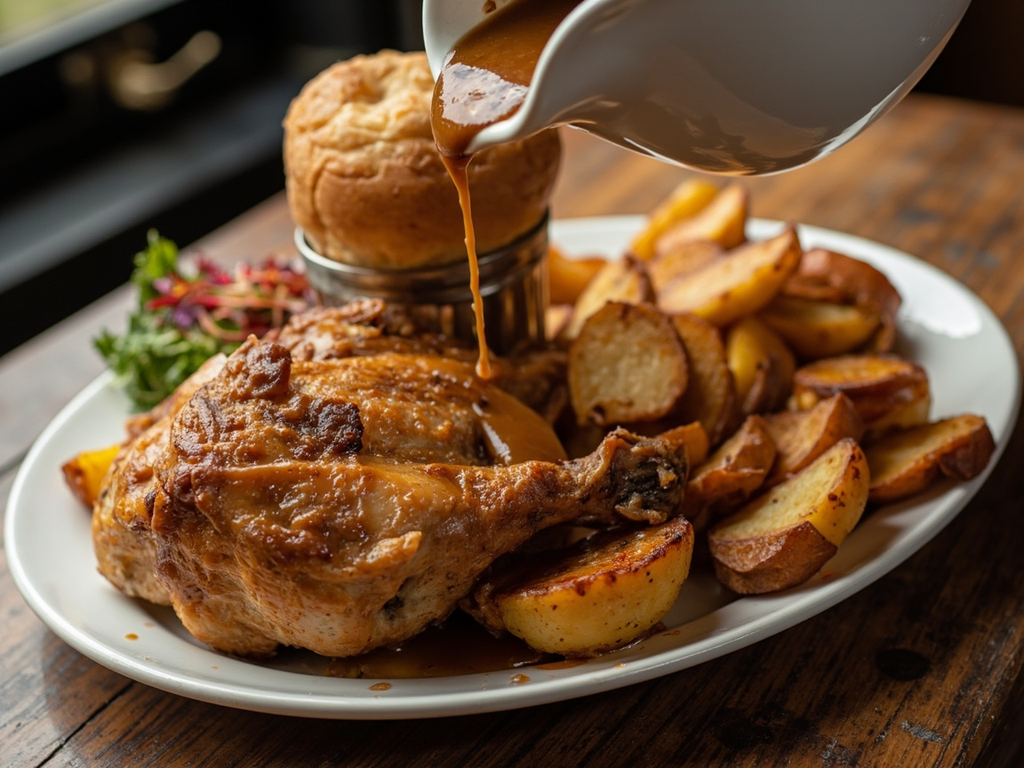
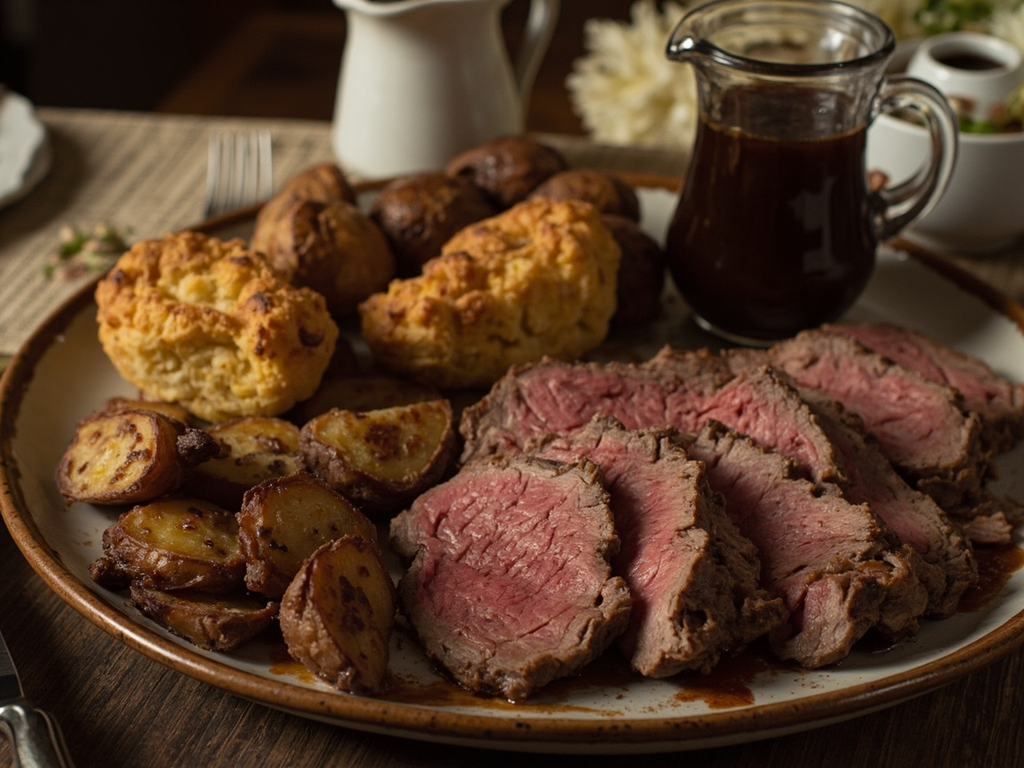
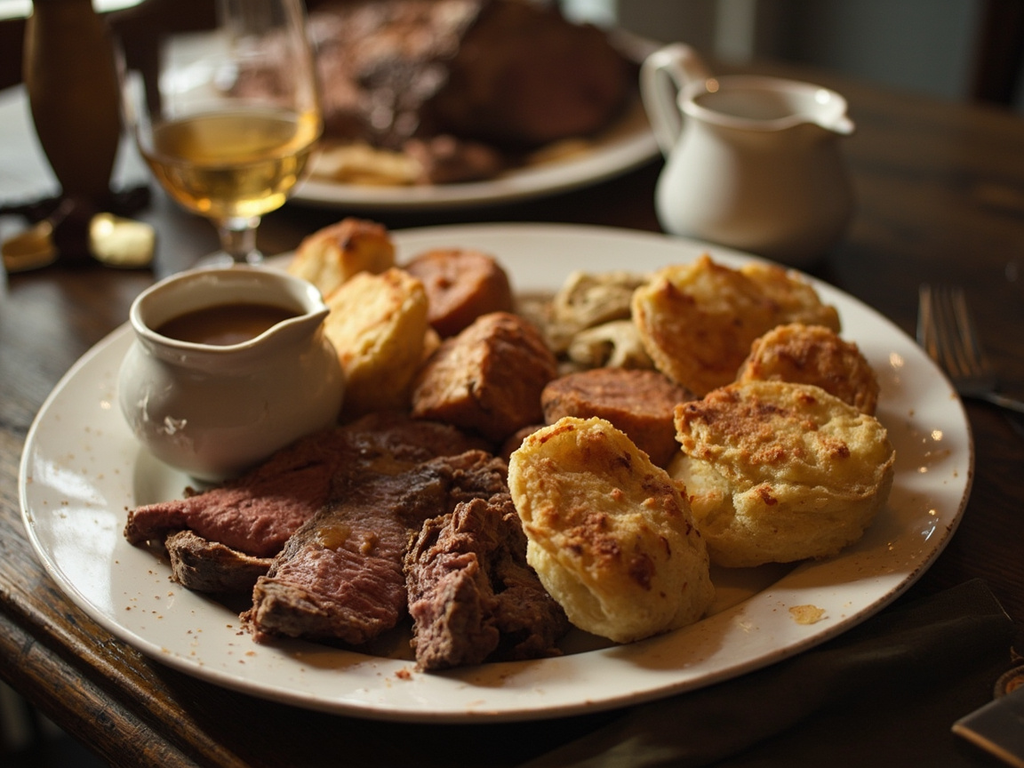
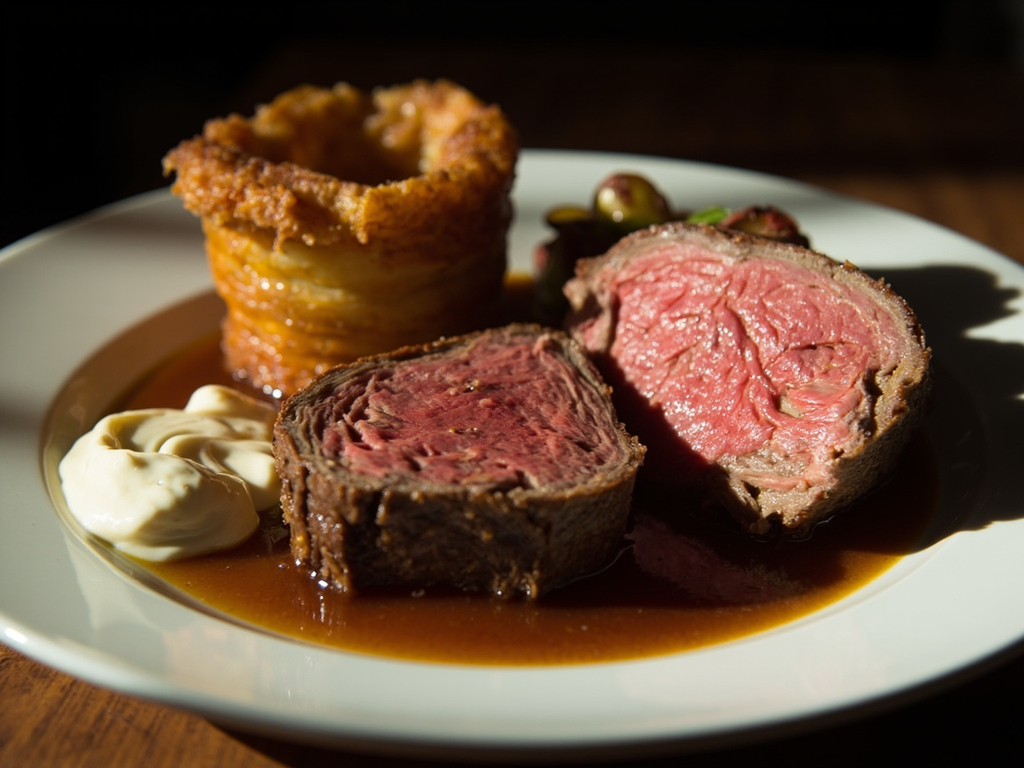
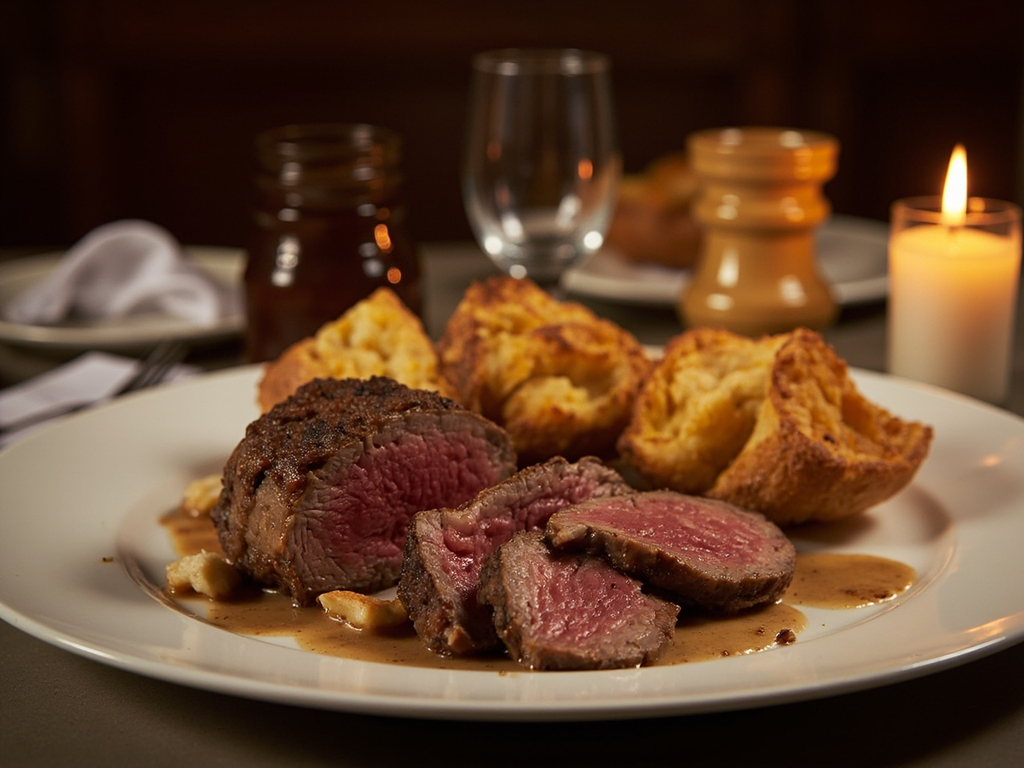
A fine cut of beef roasted pink, served with golden, puffed Yorkshire puddings, pan juices, and seasonal vegetables. The quintessential English Sunday and ceremonial meal.
I'm not a man for grand speeches, but there are evenings that call for a proper roast. The secret, I was taught young: the fat must be smoking hot before you pour in the Yorkshire pudding batter, otherwise they stay flat—and a flat Yorkshire pudding is a small tragedy. You let the meat rest, you take your time. It's the same lesson as for a theorem: haste never yields anything good.
- •Joint of beef for roasting (rib or sirloin) — a nice piece (centerpiece)
- •Beef dripping — qualitative (cooking, flavor)
- •Flour, eggs, milk — for pudding batter (Yorkshire puddings)
- •Potatoes and seasonal root vegetables — according to guests (side dish)
- •Salt, pepper, English mustard — qualitative (seasoning)
Sunday Roast Beef and Yorkshire Pudding
A fine cut of beef roasted pink, served with golden, puffed Yorkshire puddings, pan juices, and seasonal vegetables. The quintessential English Sunday and ceremonial meal.
Why this dish? On June 23, 1993, at the Isaac Newton Institute in Cambridge, Wiles announced his proof at the blackboard and concluded with a simple “I think I'll stop here.” Roast beef, the dish of grand occasions and college dinners, is what one imagines at a High Table to celebrate such an academic triumph.
I'm not a man for grand speeches, but there are evenings that call for a proper roast. The secret, I was taught young: the fat must be smoking hot before you pour in the Yorkshire pudding batter, otherwise they stay flat—and a flat Yorkshire pudding is a small tragedy. You let the meat rest, you take your time. It's the same lesson as for a theorem: haste never yields anything good.
Ingredients (period version)
- Joint of beef for roasting (rib or sirloin) — a nice piece (centerpiece)
- Beef dripping — qualitative (cooking, flavor)
- Flour, eggs, milk — for pudding batter (Yorkshire puddings)
- Potatoes and seasonal root vegetables — according to guests (side dish)
- Salt, pepper, English mustard — qualitative (seasoning)
Ingredients
- Beef roast (rib or sirloin) — 1.2 kg (centerpiece)
- Beef dripping or neutral oil — 4 tbsp (cooking)
- Flour — 100 g (pudding batter)
- Eggs — 2 (pudding batter)
- Milk — 150 ml (pudding batter)
- Potatoes — 800 g (roasted side)
- Salt, pepper, English mustard — to taste (seasoning)
Method
- Take the meat out 1 hour before cooking. Preheat the oven to 220°C.
- Season the roast with salt and pepper, sear briefly, then roast: about 15 minutes per 500 g for pink. Rest 20 minutes under foil.
- Prepare the Yorkshire pudding batter (flour, eggs, milk, salt) and let it rest.
- Heat the fat in pudding tins until smoking, pour in the batter at once, and bake at 220°C for about 20 minutes without opening the oven.
- Roast the potatoes in the cooking fat. Deglaze the roast pan for gravy.
- Serve sliced beef, puffed puddings, vegetables, and gravy, with English mustard.
How it was made : The Sunday roast and its Yorkshire pudding are attested as early as the 18th century, the pudding originally serving as a cheap starter cooked under the meat to catch the dripping, filling up before the costly dish. In Oxbridge colleges, the roast remains the heart of Formal Hall dinners.
The contemporary twist : Serve individual Yorkshire puddings with a dab of freshly grated horseradish: the modern kick enlivens the richness of the beef.
Sources : Mrs Beeton's Book of Household Management, 1861 · Jane Grigson, English Food, 1974
Andrew Wiles · Charactorium