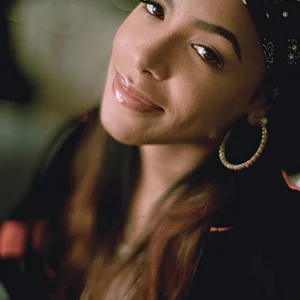

Anggun is an Indonesian singer born in 1974 in Jakarta, who became a French citizen in 1998. An international pop star, she broke through in France with her hit 'Snow on the Sahara' (1997) and represented France at the Eurovision Song Contest in 2012.
Frequently asked questions
Key Facts
- Born on April 29, 1974, in Jakarta, Indonesia
- Began her artistic career in Indonesia in the 1980s as a child prodigy in music
- Moved to France in 1994 and signed with Sony Music
- Became a French citizen in 1998, the same year her first international album was released
- Represented France at the 2012 Eurovision Song Contest with the song 'Echo'
Works & Achievements
Her first Indonesian album, recorded at age 14, which made Anggun a national star in Indonesia and revealed her early talent.
International single produced by Erick Benzi, charted in over 30 countries, which launched Anggun onto the world stage and embodied the pop-world music fusion of the 1990s.
French-language version of 'Snow on the Sahara', which helped Anggun establish herself in France and affirm her choice to sing in the language of her adopted country.
International album confirming Anggun's global success, with lyrics that blend Western pop and Asian musical influences.
Song representing France at Eurovision 2012, performed in both French and English, on the theme of the universality of love and cross-cultural dialogue.
Bilingual studio album (French/English) that encapsulates Anggun's artistic journey and her lasting place on the international French-language music scene.
Anecdotes
Anggun began her music career at age 7 in Indonesia, recording her first songs as early as 1981. At 14, she released an Indonesian-language rock album that made her famous throughout the archipelago — a remarkable feat for a teenager in a country of 200 million people.
After arriving in France in the early 1990s without speaking a word of French, Anggun learned the language within a few months through total immersion and intensive classes. She decided to start from scratch, refusing to coast on her Indonesian fame, and signed with a European label after years of hard work.
The music video for 'Snow on the Sahara' (1997) was filmed in the Sahara Desert. The song, blending Western pop with Eastern influences, became a hit in more than 30 countries simultaneously — a rare achievement for an artist from a non-English-speaking country.
In 2012, Anggun represented France at the Eurovision Song Contest in Baku, Azerbaijan, with the song 'Echo (You and I)'. She chose to sing in both French and English, fully embracing her dual Franco-Indonesian identity in front of 125 million viewers.
Anggun has been appointed as a UNICEF Goodwill Ambassador for Indonesia, with a focus on combating child labor and improving access to education. She uses her bicultural background as a bridge between the Western world and Southeast Asia.
Primary Sources
I arrived in Europe with a suitcase and a dream. France welcomed me, and I returned that welcome by becoming French in heart as much as on paper.
If there was no love on this earth / I'd still find you in the desert / Like snow on the Sahara.
Anggun, Franco-Indonesian artist, will represent France in Baku with 'Echo (You and I)', a song about the universality of love and the dialogue between cultures.
I am proud to be Indonesian and proud to be French. These two identities do not oppose each other — they complement each other and make me who I am.
Key Places
Anggun's birthplace and Indonesia's capital, where she grew up and began her musical career in childhood in a country of 200 million people.
Anggun's adoptive home since the early 1990s, where she rebuilt her career, learned French, and became a naturalized citizen in 1998.
The iconic filming location for the music video 'Snow on the Sahara' (1997), whose images of endless dunes symbolize universality and cultural blending.
The Azerbaijani capital that hosted Eurovision 2012, where Anggun represented France on stage before an audience of 125 million viewers.
Anggun's first stop in Europe in the early 1990s, where she tried to break through before eventually settling permanently in France.
Typical Objects

The central instrument of Anggun's career since childhood, a symbol of an early artistic calling that spans cultures and continents.

Obtained in 1998, it represents Anggun's choice to put down roots in France while keeping her Indonesian identity — a symbol of contemporary cultural blending.

Anggun is known for her elaborate outfits blending Asian influences with Western fashion, visually expressing her dual cultural identity.

A set of metallic percussion instruments typical of Javanese music, whose sounds shaped Anggun's musical world during her childhood in Jakarta.

The physical format of her 1997 international hit, symbolizing the breakthrough of a non-English-speaking artist onto the global pop market.

A representation of Anggun's dual national belonging, often cited in her interviews as the source of her unique artistic identity.
School Curriculum
Vocabulary & Tags
Key Vocabulary
Tags
Daily Life
Morning
At the start of her Parisian career, Anggun begins her mornings with intensive French lessons, working on pronunciation and writing to master her new language. She also attends vocal training sessions with professional coaches to adapt her voice to European pop standards.
Afternoon
Afternoons are devoted to studio rehearsals with her producer Erick Benzi, where she experiments with fusions of Asian melodies and Western electronic arrangements. These long, demanding creative sessions are where she builds the unique sound that will set her apart on the international stage.
Evening
On concert or promotional evenings, Anggun moves from TV shows to interviews to record label showcases across Europe. While on tour, she maintains a strong connection with the Indonesian community in each city she visits, preserving her cultural roots.
Food
Raised on Indonesian cuisine (rice, nasi goreng, satay, tropical spices), Anggun keeps her Asian eating habits while adapting to French gastronomy. This culinary blending reflects her dual identity, rooted in both Jakarta and Paris.
Clothing
On stage, Anggun wears outfits created by stylists who combine Javanese batik patterns with French haute couture cuts, visually expressing her dual culture. In her day-to-day life in the 1990s, she embraces Parisian fashion while incorporating accessories with Oriental influences.
Housing
Having settled in Paris in the early 1990s, Anggun lives in an apartment that blends Indonesian craft objects (wayang puppets, batik wall hangings) with contemporary European furniture. This home symbolizes her hybrid identity — a crossing point between two cultural worlds.
Historical Timeline
Period Vocabulary
Visual Style
Un univers visuel hybride entre l'exotisme chaleureux de l'Indonésie (batiks, fleurs tropicales) et le glamour pop parisien des années 1990, baigné de lumières dorées du désert.
Sound Ambience
Un mélange entre les sonorités tropicales de Jakarta et l'atmosphère feutrée des studios parisiens des années 1990, traversé par des résonances de gamelan javanais et de synthétiseurs pop.