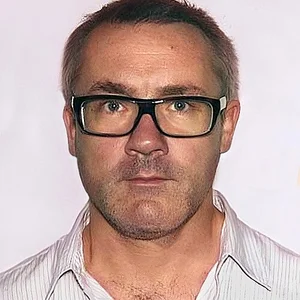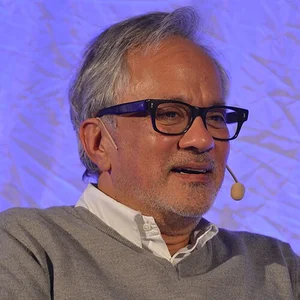

Anish Kapoor is a British sculptor of Indian origin, born in 1954 in Bombay. A major figure in contemporary art, he is renowned for his monumental sculptures that play with space, color, emptiness, and perception. He notably created Chicago's "Cloud Gate."
Frequently asked questions
Famous Quotes
« I have nothing to say as an artist.»
Key Facts
- Born on March 12, 1954, in Bombay (Mumbai), India
- Winner of the Turner Prize in 1991
- Creation of the "Cloud Gate" in Chicago (2004-2006), nicknamed "The Bean"
- Creation of the ArcelorMittal Orbit for the 2012 London Olympic Games
- Obtained in 2016 the exclusive artistic rights to use Vantablack, the most absolute black
Works & Achievements
A series of forms covered with pure pigments laid on the ground, inspired by India, which brought him to prominence on the art scene.
A giant red membrane over 150 metres long stretched across the Turbine Hall of Tate Modern, evoking a flayed body.
A stainless steel mirror-sculpture in Chicago, nicknamed “The Bean”, which has become an icon of the city.
An immense concave disc reflecting the sky, installed in several cities including New York and London.
A monumental purple inflatable structure filling the nave of the Grand Palais for Monumenta.
A 114.5-metre red steel tower-sculpture for the London Olympics, designed with engineer Cecil Balmond.
A whirling black water vortex sunk into the ground, evoking a bottomless hole and the void.
A vast sculpture of steel and stones exhibited at Versailles, at the heart of a controversy over contemporary art.
Anecdotes
In 2006, Anish Kapoor installed "Cloud Gate" in Chicago's Millennium Park. Nicknamed "The Bean" by locals because of its shape, this polished stainless steel sculpture reflects the city's skyline and distorts the image of passers-by like an enormous mirror.
In 2014, Kapoor obtained the exclusive artistic rights to use Vantablack, one of the blackest materials ever created, which absorbs up to 99.9% of light. This exclusivity angered many artists, including Stuart Semple, who responded by creating the "pinkest pink in the world" and banning Kapoor from using it.
In 2002, Kapoor unveiled "Marsyas" in the gigantic Turbine Hall of the Tate Modern in London, a work over 150 metres long made of a red membrane stretched between three steel rings. The title refers to the satyr of Greek mythology who was flayed alive by Apollo.
In 1990, Anish Kapoor represented Great Britain at the Venice Biennale, then the following year, in 1991, won the prestigious Turner Prize, one of the highest honours in British contemporary art.
For the 2012 London Olympic Games, Kapoor designed the "ArcelorMittal Orbit" with engineer Cecil Balmond, a 114.5-metre-high red steel sculpture-tower that became the largest piece of public art in the United Kingdom.
Primary Sources
I don't want to make a sculpture that speaks about form. I want to make a sculpture that speaks about belief, or passion, or experience.
Color has a physical presence. Red is not just a color, it is a material, almost a flesh.
What I wanted was something that feels immaterial, as if the sky were descending down to us and one could walk beneath it.
Key Places
Kapoor's birthplace, where he was born in 1954 into a family of Indian and Iraqi-Jewish descent.
His adopted city, where he studied art from 1973 and set up his studio. The hub of his international career.
Home to “Cloud Gate” (The Bean), one of his most famous public works, unveiled in 2006.
The museum where he unfurled “Marsyas” in the Turbine Hall in 2002, a monumental work made of red membrane.
The site of his controversial 2015 exhibition, most notably the work “Dirty Corner” installed in the gardens.
Where he presented “Leviathan” for Monumenta in 2011, an immense inflatable structure filling the nave.
Typical Objects

Intense colored powder (red, blue, yellow) spread across the floor and over the sculptures in his early works. Inspired by Indian markets and temples.

A perfectly reflective mirror surface used for sculptures such as Cloud Gate. It absorbs and distorts both the surroundings and the viewer.
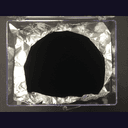
One of the blackest artificial materials in the world, absorbing nearly all light. Kapoor secured the exclusive artistic rights to use it.
📷 CC BY-SA 3.0 · Wikimedia Commons ↗
Greasy, brightly colored materials hurled or extruded by machines for works such as “Shooting into the Corner.” They evoke flesh and violence.

A vast, supple red sheet stretched between steel rings, as in “Marsyas.” It transforms architecture into a giant organic form.

A curved reflective disc that inverts and distorts the viewer's image. Kapoor explores its optical effects and the illusion of emptiness.
School Curriculum
Vocabulary & Tags
Key Vocabulary
Tags
Daily Life
Morning
Like many contemporary artists running a large studio, Kapoor often starts his day by talking with his team of assistants, engineers, and fabricators. Monumental projects demand an almost industrial level of coordination from the very morning.
Afternoon
The afternoon is devoted to work in his London studio, moving between experiments with materials, drawings, models, and technical discussions. Many of his works require complex engineering calculations.
Evening
His evenings may be filled with private viewings, meetings with collectors, curators, and architects, or preparations for international exhibitions all over the world.
Food
Living in London, a cosmopolitan city, Kapoor has access to a varied cuisine blending British, Indian, and international influences. His diet is that of a well-off contemporary artist of the 21st century.
Clothing
He usually wears plain, practical studio clothing, sometimes marked by pigments and materials, alternating with more elegant outfits for public events.
Housing
Kapoor lives and works in London, where he has a vast studio that allows him to design and assemble works of very large dimensions, as well as storage and fabrication spaces.
Historical Timeline
Period Vocabulary
Liens externes & ressources
Références
Œuvres
1000 Names
1979-1980
Sky Mirror
2006
Leviathan
2011
Descension
2014