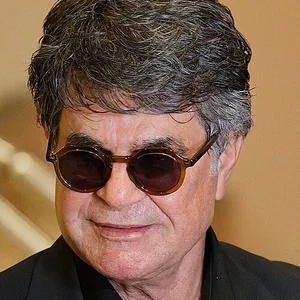

Jafar Panahi is an Iranian filmmaker born in 1960, a major figure in contemporary auteur cinema. A multiple award winner at the great film festivals, he was banned by the regime from making films and from leaving Iran, becoming a symbol of creative freedom.
Jafar Panahi(1960 — ?)
Jafar Panahi
Iran
7 min read
Frequently asked questions
Famous Quotes
« Nothing can stop me from making films.»
Key Facts
- Born on July 11, 1960, in Mianeh, Iran
- Caméra d'Or at Cannes in 1995 for The White Balloon
- Golden Lion at Venice in 2000 for The Circle
- Sentenced in 2010 to six years in prison and a twenty-year ban on making films
- Secretly filmed Taxi Tehran, which won the Golden Bear in Berlin in 2015
Works & Achievements
First feature film, written with **Abbas Kiarostami**, following a little girl who wants to buy a goldfish. Winner of the Caméra d'Or at Cannes, it brought Panahi to international attention.
A choral narrative about the condition of women in Iran, crowned with the Golden Lion at Venice and immediately banned in his own country.
Portrait of a pizza delivery man confronted with the social inequalities of Tehran, awarded a prize in the Un Certain Regard selection at Cannes.
A dramatic comedy about young girls who disguise themselves as boys to attend a football match they are banned from as women. Silver Bear at Berlin.
A diary filmed during his house arrest, smuggled out of Iran on a USB drive hidden inside a cake; a manifesto on the freedom to create.
A film shot inside a car in which Panahi plays a taxi driver collecting the words of his passengers. Golden Bear at Berlin.
A road movie centered on a young woman prevented from becoming an actress, awarded the screenplay prize at Cannes.
A film that questions revenge and forgiveness in the face of repression; Palme d'Or at Cannes, the height of his international recognition.
Anecdotes
In 2011, while banned from filmmaking, Jafar Panahi shot "This Is Not a Film" inside his Tehran apartment. To smuggle it out of Iran and send it to the Cannes Film Festival, the file was hidden on a USB stick concealed inside a cake. The film arrived in time to be screened.
In 2006, his film "Offside" tells the story of young Iranian women who disguise themselves as boys to get into a football stadium, since women are forbidden there. The film won a major prize in Berlin, yet remained banned from screening in Iran, the very country where it takes place.
In 2015, his film "Taxi Tehran
shot entirely inside a car with a small camera placed on the dashboard
won the Golden Bear at the Berlin Film Festival. Because Panahi was barred from leaving Iran
it was his niece
who appears in the film
who went up on stage to receive the award in his place.
Arrested again in 2022, Panahi began a hunger strike in prison in early 2023 to protest his detention. He was released soon afterward. His story became a worldwide symbol of artists' struggle for freedom of expression.
In 2025, after years of bans and trials, Jafar Panahi won the Palme d'Or at the Cannes Film Festival for "It Was Just an Accident". Finally able to travel, he accepted the award himself, applauded at length, more than thirty years after his debut.
Primary Sources
Filmed in his home during his house arrest and his ban on directing, Panahi “reads” the screenplay of the film he is forbidden to shoot, turning the ban itself into the subject of the work.
The filmmaker is sentenced to six years in prison and a twenty-year ban on directing films, writing screenplays, giving interviews and leaving Iran.
Prevented from attending the festival, Panahi has a message delivered in which he affirms that cinema remains for him a vital means of expression, stronger than the bans imposed on him.
Receiving the Palme d'Or, the filmmaker calls for the unity of Iranians and for freedom, declaring that no one should be able to dictate to people how to dress or what they must do.
Key Places
City in northwestern Iran, in the province of East Azerbaijan, where Jafar Panahi was born in 1960.
Capital of Iran where Panahi lives and works, and where he secretly shot several of his films, including “Taxi Tehran.”
Large prison in Tehran where many political prisoners are held. Panahi was imprisoned there following his arrests in 2010 and 2022.
Major French film festival where Panahi won the Caméra d'Or in 1995 and then the Palme d'Or in 2025.
German film festival where “Taxi Tehran” won the Golden Bear in 2015, a prize received by his niece in his absence.
Italian film festival where “The Circle” won the Golden Lion in 2000.
Typical Objects

Small, discreet video camera that makes it possible to shoot without authorization and without bulky equipment. Panahi uses it to film inside apartments or cars, where an official crew would be spotted.

Digital storage device that can hold an entire film. Concealed inside a cake, it was used to smuggle “This Is Not a Film” out of Iran to the Cannes Film Festival.

In “Taxi Tehran,” the interior of a car becomes the film's only set, with cameras mounted on the dashboard. The vehicle is used to film the city and its inhabitants without drawing attention.

Text that describes the scenes and dialogue of a film. For Panahi, writing screenplays is part of what the regime has forbidden him to do, which makes the object highly symbolic.
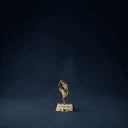
The top prize of the Cannes Film Festival, shaped like a golden palm frond. Panahi received it in 2025 for “It Was Just an Accident,” an international recognition after years of being banned.

Phone capable of filming in high quality, used by Iranian filmmakers to shoot discreetly. It allows them to capture images in a country where filming is tightly controlled.
School Curriculum
Vocabulary & Tags
Key Vocabulary
Tags
Lieu
Daily Life
Morning
During his years of being banned and under house arrest, Panahi spends much of his mornings at home in Tehran. He reads, secretly writes down ideas for screenplays, and stays in touch with his loved ones and other artists.
Afternoon
In the afternoon, he discreetly prepares or shoots his films with a tiny crew, sometimes reduced to just himself and one close associate. He works in enclosed spaces such as an apartment or a car to escape surveillance.
Evening
In the evening, he reviews and edits his footage, listens to music, and watches films by other directors. He also talks with friends from the film world, both in Iran and abroad.
Food
His diet is that of contemporary Iran: fragrant rice (*chelow*), slow-cooked stews (*khoresht*), flatbread, fresh herbs, yogurt, and black tea served piping hot throughout the day.
Clothing
Panahi dresses in a plain, modern way, like Iranian urban artists: a shirt or sweater, a simple jacket, and often a scarf. He is recognizable by his understated look, far from any showiness.
Housing
He lives in an apartment in Tehran, a metropolis of several million inhabitants. This home, an ordinary place to live, also became the forced setting of some of his films during the period when he was banned from shooting.
Historical Timeline
Period Vocabulary
Liens externes & ressources
Références
Œuvres
Le Ballon blanc (Badkonak-e Sefid)
1995
Le Cercle (Dayereh)
2000
Sang et or (Talaye Sorkh)
2003
Hors-jeu (Offside)
2006
Trois visages (Se Rokh)
2018