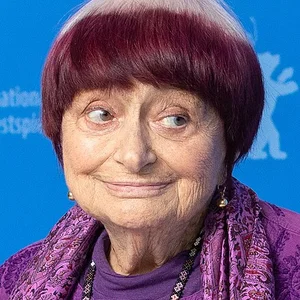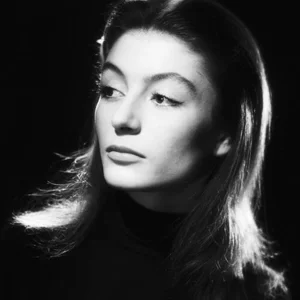

French actress born in 1932, Anouk Aimée established herself as one of the leading figures of European auteur cinema. Her role in *Un homme et une femme* by Claude Lelouch (1966) brought her international acclaim.
Anouk Aimée(1932 — 2024)
Anouk Aimée
France
9 min read
Frequently asked questions
Key Facts
- Born on April 27, 1932 in Paris under the name Françoise Sorya Dreyfus
- Made her film debut in 1947 in *La Maison sous la mer*
- Appeared in *La Dolce Vita* (1960) and *8½* (1963) by Federico Fellini, gaining international stature
- Won the Golden Globe for Best Actress in a Foreign Language Film for *Un homme et une femme* (1966)
- Nominated for an Academy Award for *Un homme et une femme* (1967), the only French actress of her generation to receive this recognition
Works & Achievements
A film by André Cayatte with a screenplay by Jean Anouilh, loosely inspired by Romeo and Juliet. The film introduced Anouk Aimée to the French public at large and earned her first enthusiastic reviews, at just 17 years old.
Federico Fellini's masterpiece, Palme d'Or at Cannes 1960, in which Anouk Aimée plays Maddalena, a bohemian and disillusioned aristocrat. The film, which portrays the decadence of Rome's jet-set, is considered one of the ten greatest films in the history of cinema.
Jacques Demy's debut feature film, shot in Nantes and considered a founding work of the French New Wave. Anouk Aimée plays a woman waiting for the return of her lost love — a role that is at once melancholic and luminous, now a cult classic.
Her second film made with Fellini, universally acknowledged as an absolute masterpiece. Anouk Aimée plays Luisa, the cold and wounded wife of a director in the grip of a creative crisis, in a film where dream and reality intertwine in a revolutionary way.
The film that made her a global star. This romantic melodrama, shot on the beaches of Normandy, won the Palme d'Or at Cannes, the Academy Award for Best Foreign Language Film, and earned Anouk Aimée a nomination for the Academy Award for Best Actress — an unprecedented international recognition for French art-house cinema.
A sequel directed by Claude Lelouch, reuniting Anouk Aimée and Jean-Louis Trintignant twenty years after the original film. The film plays on nostalgia, the passage of time, and the power of memory — themes central to the art-house cinema of the 1980s.
An ensemble film by American director Robert Altman set in the world of Parisian haute couture, featuring an exceptional international cast. Anouk Aimée's presence in this Hollywood production speaks to her worldwide renown, well beyond French cinema alone.
Anecdotes
Anouk Aimée's real name is actually Nicole Françoise Florence Dreyfus. It was the director who cast her in her very first film, at the age of 14, who gave her the stage name “Anouk” — an affectionate nickname. She then added “Aimée” to create a complete, poetic, and mysterious stage name that would stay with her for the rest of her life.
Claude Lelouch's film *A Man and a Woman* (1966) brought her unexpected worldwide recognition. Shot on a very modest budget on the Norman beaches of Deauville, this romantic melodrama won the Palme d'Or at the Cannes Film Festival and the Oscar for Best Foreign Language Film. Her nomination for the Academy Award for Best Actress in 1967 was a historic first for a European art-house actress.
Anouk Aimée had the exceptional privilege of working twice with Federico Fellini, one of the greatest filmmakers of the 20th century. She appears in *La Dolce Vita* (1960), the landmark film capturing Italian postwar society's obsession with glamour, and then in *8½* (1963), an autobiographical masterpiece considered one of the ten greatest films in cinema history. These two Roman collaborations cemented her reputation as an exceptional actress on an international scale.
Her personal life was as romantic as her films. She married, among others, the singer and actor Pierre Barouh — her on-screen partner in *A Man and a Woman* — and later the great British actor Albert Finney, from 1970 to 1978. This union between two of the most admired actors in Europe kept the international press busy for years.
In the later years of her life, Anouk Aimée continued to act and to be honored by the world of cinema. She received an honorary César in 2002 for her lifetime achievement, a testament to the singular place she held in the heart of French cinema. Her passing in April 2024, at the age of 91, was mourned around the world as the end of an era for European art-house cinema.
Primary Sources
The jury of the Cannes Film Festival awarded the 1966 Palme d'Or to Claude Lelouch for A Man and a Woman, a film carried by the truthfulness and restraint of Anouk Aimée and Jean-Louis Trintignant, in a story of disarming sincerity.
"What interested me in Lelouch's work was this way of filming the present, the true moment. There was a freedom on that shoot that I had never known anywhere else."
"Working with Fellini means entering a world where nothing is written in advance. He looks at you, he waits, and you become his character without really knowing how."
"Cinema has given me everything: a life, encounters, emotions I would never have experienced any other way. I owe it everything."
Key Places
Anouk Aimée was born in Paris on April 27, 1932. The French capital is the cradle of her acting training, the center of her professional life, and the place she never truly left despite her stays abroad.
It was on the Croisette that Anouk Aimée's destiny changed in 1966: *A Man and a Woman* received the Palme d'Or there, launching her into the ranks of the great international actresses. She returned regularly throughout her career.
The legendary Roman studios of Cinecittà, founded in 1937, hosted Fellini's productions. It was there that Anouk Aimée filmed *La Dolce Vita* and *8½*, two films that established her international reputation in the early 1960s.
The seaside resort of Deauville and its beaches served as the main backdrop for *A Man and a Woman* (1966). These wind-swept landscapes along the English Channel became inseparable from the film's romantic image and from the actress herself.
Anouk Aimée's nomination for the Academy Award for Best Actress in 1967 brought her to Hollywood. This American recognition, rare for an actress from European art cinema, cemented her status as a great international actress.
Typical Objects

An actress's daily working tool: a text covered in notes, underlinings, and memorized lines. Anouk Aimée was known for her meticulous preparation with scripts before each shoot, particularly during her work with Fellini.

An iconic piece of filmmaking equipment, the clapperboard synchronizes picture and sound at the start of each take. It marked the rhythm of Anouk Aimée's days, from the Roman studios of Cinecittà to the Normandy beaches of *Un homme et une femme*.

Anouk Aimée's films were shot on silver halide film stock, the dominant professional format of the 20th century. Lelouch sometimes used a lightweight 16 mm camera to capture scenes in motion, giving the film its characteristic visual fluidity.

Francis Lai's score for *Un homme et une femme* is one of the most celebrated soundtracks in French cinema. Selling millions of copies on vinyl worldwide, it is inseparable from the image of Anouk Aimée.

In *Un homme et une femme*, the understated yet elegant outfits worn by Anouk Aimée became iconic in the history of 1960s film fashion, influencing generations of costume designers.

In the 1960s, film posters were graphic works printed by lithography and plastered across cities. Anouk Aimée's face appeared in cinemas from Paris to Rome, from London to New York.
School Curriculum
Vocabulary & Tags
Key Vocabulary
Daily Life
Morning
On film sets, an actress like Anouk Aimée would start her day very early, often around 6 a.m., heading straight to the set. She would first go through hair and makeup — sometimes one to two hours of preparation — before the first takes, which typically began between 8 and 9 a.m. Between shots, she would review her lines in her dressing room or discuss the intentions of a scene with the director.
Afternoon
Afternoons on a 1960s film set were shaped by rehearsals, set changes, and multiple takes. Outdoor shoots, such as those on the Normandy beaches for *A Man and a Woman*, were at the mercy of the weather. Anouk Aimée was known for her focus and professionalism, even during long waits between scenes.
Evening
Away from the set, Anouk Aimée was an active presence in Parisian cultural and social life: private screenings, film premieres, dinners with directors, actors, and artists of her generation. She maintained close ties with the European cinema world, moving between Paris, Rome, and the major international festivals.
Food
In the 1960s and 70s, film actresses often followed strict diets to maintain their on-screen figure. Traditional French cuisine — neighbourhood restaurants, Parisian markets, cafés — was nonetheless part of daily life. In Rome, during shoots with Fellini, Italian food naturally took over: pasta, grilled vegetables, local wines.
Clothing
Anouk Aimée is associated with a sober, refined elegance characteristic of Parisian style in the 1960s. She wore creations by renowned couturiers, but also simple, practical clothes on set. Her outfits in *A Man and a Woman* — straight coats, clean-lined dresses — influenced fashion and magazines throughout the decade.
Housing
Anouk Aimée lived primarily in Paris, in Haussmann-style apartments typical of the city's artistic bourgeoisie. Her fame afforded her a comfortable lifestyle, though she never displayed the ostentatious luxury of some Hollywood stars. She also spent extended periods in Rome during her collaborations with Fellini, naturally fitting into the intellectual and artistic life of the Italian capital.