 flip
flipCrema catalana (Catalan crème brûlée for Sant Josep)
Crema catalana (Catalan crème brûlée for Sant Josep)
Why this dish? Crema catalana is THE festive dessert of Catalonia, traditionally served on March 19 for Sant Josep. For Gaudí, Catalan to the core and a figure of Modernisme that reaffirmed the country's identity, this custard perfumed with cinnamon and lemon is an emblem of the festive Catalan table.
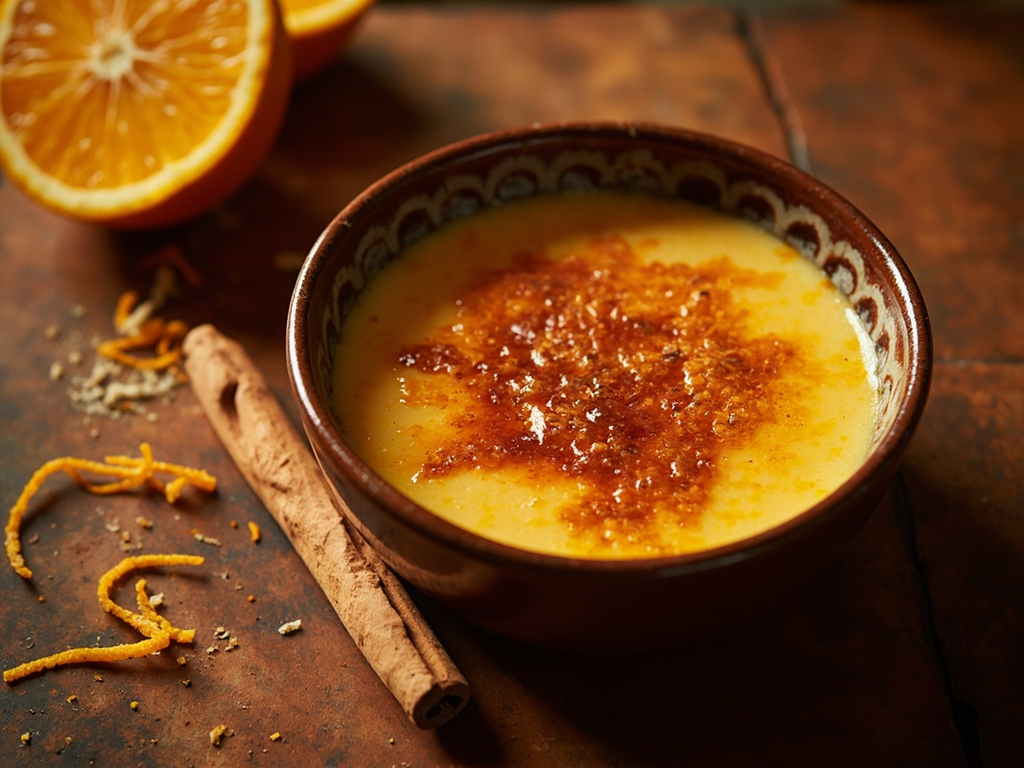
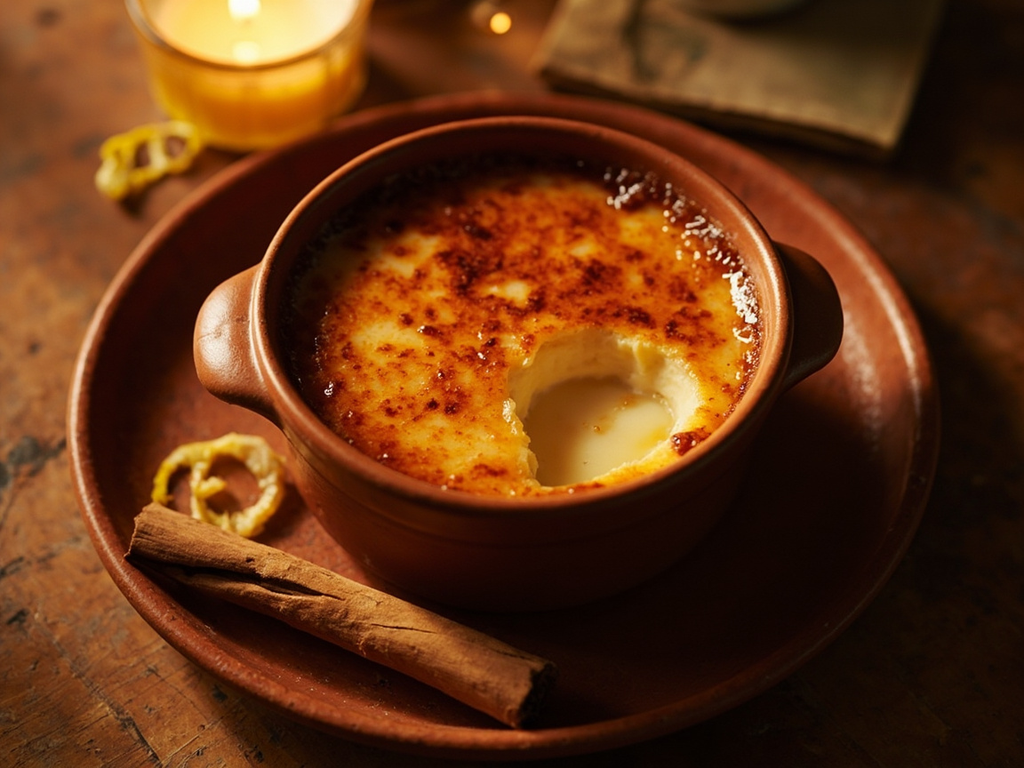
A creamy custard made with milk, egg yolks, lemon peel, and a cinnamon stick, topped with a thin layer of sugar caramelized with a hot iron. Under the crackling crust, the fragrant sweetness melts and perfumes.
On Sant Josep's day, even a sober man like me yields to crema. My mother perfumed it with lemon peel and a stick of canyella, stirring tirelessly until it coated the spoon without ever boiling — builder's patience, again. Then we sprinkled sugar and burned the surface with a red-hot iron: that crack of the crust is the vault holding, you see, the hard protecting the tender. One spoonful, and it's a feast on the palate.
- •Whole milk — half a liter (custard base)
- •Egg yolks — four (binder and creaminess)
- •Sugar — to taste + for burning (sweetness and crust)
- •Lemon peel — from one lemon (flavor)
- •Cinnamon stick (canyella) — one (signature flavor)
- •Cornstarch or flour — one spoonful (thickener)
Crema catalana (Catalan crème brûlée for Sant Josep)
A creamy custard made with milk, egg yolks, lemon peel, and a cinnamon stick, topped with a thin layer of sugar caramelized with a hot iron. Under the crackling crust, the fragrant sweetness melts and perfumes.
Why this dish? Crema catalana is THE festive dessert of Catalonia, traditionally served on March 19 for Sant Josep. For Gaudí, Catalan to the core and a figure of Modernisme that reaffirmed the country's identity, this custard perfumed with cinnamon and lemon is an emblem of the festive Catalan table.
On Sant Josep's day, even a sober man like me yields to crema. My mother perfumed it with lemon peel and a stick of canyella, stirring tirelessly until it coated the spoon without ever boiling — builder's patience, again. Then we sprinkled sugar and burned the surface with a red-hot iron: that crack of the crust is the vault holding, you see, the hard protecting the tender. One spoonful, and it's a feast on the palate.
Ingredients (period version)
- Whole milk — half a liter (custard base)
- Egg yolks — four (binder and creaminess)
- Sugar — to taste + for burning (sweetness and crust)
- Lemon peel — from one lemon (flavor)
- Cinnamon stick (canyella) — one (signature flavor)
- Cornstarch or flour — one spoonful (thickener)
Ingredients
- Whole milk — 500 ml (base)
- Egg yolks — 4 (creaminess)
- Sugar — 100 g + 4 tbsp for caramelizing (sweetness and crust)
- Zest of untreated lemon — 1 lemon (flavor)
- Cinnamon stick — 1 (flavor)
- Cornstarch — 2 tbsp (thickener)
Method
- Heat the milk with the lemon zest and cinnamon stick, then let infuse off the heat for 10 minutes and strain.
- Whisk the yolks with the sugar, then incorporate the cornstarch dissolved in a little cold milk.
- Pour the warm infused milk over the mixture while whisking, return to low heat and stir constantly until thickened (do not boil).
- Divide the custard among shallow terracotta dishes and let cool in the refrigerator for several hours.
- Just before serving, sprinkle each custard with sugar and caramelize with a hot iron or blowtorch to form the crackling crust.
How it was made : Known since the Middle Ages as crema de Sant Josep, it differs from French crème brûlée by its milk base (not cream) and its starch thickening. The sugar was traditionally caramelized with a round iron heated in the fire (el ferro), long before the blowtorch.
The contemporary twist : Served in a dish with wavy edges reminiscent of Casa Milà's balconies, and the sugar crust broken with a spoon blow as if shattering ceramic for trencadís.
Antoni Gaudí · Charactorium