 flip
flipCatalan Cream with Orange from the Nine O'Clock Table
Catalan Cream with Orange from the Nine O'Clock Table
Why this dish? Montpellier and lower Languedoc shared with neighboring Roussillon and Catalonia a dessert culture of cream and citrus. To close the dinners of art lovers at Bruyas's home, a cream perfumed with orange and cinnamon prolonged the conversation over a sweet wine from the region.
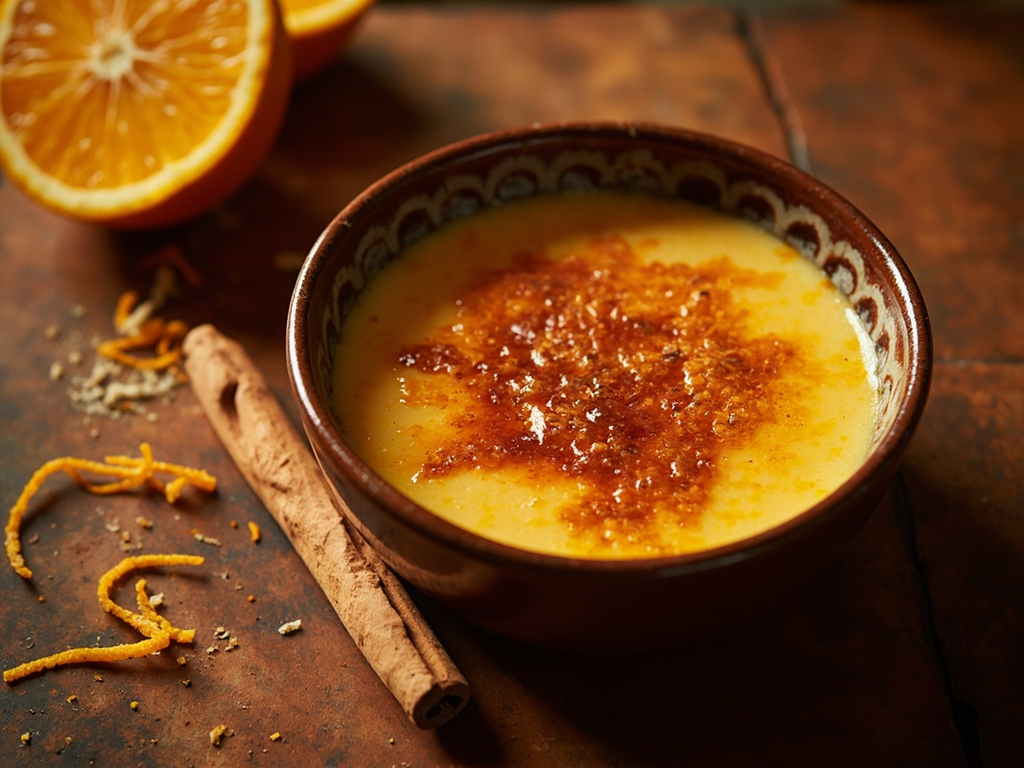
A creamy custard made with egg yolks, scented with orange and cinnamon, topped with a thin layer of crackling caramel. The southern sweet that ends a patron's dinner.
After the game and the cheese, one must make room for sweetness — otherwise a dinner remains unfinished, like a canvas without its glaze. This cream, perfumed with orange peel and cinnamon, we would cover with a little sugar that a red-hot iron would caramelize at the moment of serving. The crackling under the spoon — that is a pleasure that even a man of my temperament allows himself. It was accompanied by a glass of muscat from our lands, and the evening could stretch on.
- •Whole milk — one pint (base)
- •Egg yolks — six (binder)
- •Sugar — a good measure (sweetness)
- •Orange peel — from one fruit (flavoring)
- •Cinnamon stick — one (spice)
- •Flour or starch — one spoonful (thickener)
Catalan Cream with Orange from the Nine O'Clock Table
A creamy custard made with egg yolks, scented with orange and cinnamon, topped with a thin layer of crackling caramel. The southern sweet that ends a patron's dinner.
Why this dish? Montpellier and lower Languedoc shared with neighboring Roussillon and Catalonia a dessert culture of cream and citrus. To close the dinners of art lovers at Bruyas's home, a cream perfumed with orange and cinnamon prolonged the conversation over a sweet wine from the region.
After the game and the cheese, one must make room for sweetness — otherwise a dinner remains unfinished, like a canvas without its glaze. This cream, perfumed with orange peel and cinnamon, we would cover with a little sugar that a red-hot iron would caramelize at the moment of serving. The crackling under the spoon — that is a pleasure that even a man of my temperament allows himself. It was accompanied by a glass of muscat from our lands, and the evening could stretch on.
Ingredients (period version)
- Whole milk — one pint (base)
- Egg yolks — six (binder)
- Sugar — a good measure (sweetness)
- Orange peel — from one fruit (flavoring)
- Cinnamon stick — one (spice)
- Flour or starch — one spoonful (thickener)
Ingredients
- Whole milk — 50 cl (base)
- Egg yolks — 6 (binder)
- Sugar — 120 g (+ sugar for caramelizing) (sweetness)
- Orange zest — 1 orange (flavoring)
- Cinnamon stick — 1 (spice)
- Cornstarch (or flour) — 2 tablespoons (thickener)
Method
- Heat the milk with the orange zest and cinnamon, let infuse for 10 minutes off the heat, then strain.
- Whisk the yolks with the sugar until pale, incorporate the cornstarch.
- Pour the infused milk over the yolks while whisking, return to low heat and cook until thickened, without boiling.
- Divide into ramekins or a shallow dish, let cool in the refrigerator for several hours.
- At serving time, sprinkle with sugar and caramelize with a red-hot iron (or blowtorch) until a crackling crust forms.
How it was made : A southern ancestor of crème brûlée, Catalan cream was cooked on the stove (not in a bain-marie in the oven) and caramelized with a *fer à brûler* heated in the embers. Since cornstarch is a New World product, originally it was thickened with wheat flour; orange and cinnamon, long imported through Mediterranean ports, were not anachronisms.
The contemporary twist : Serve in a glass with a few blood orange supremes and a shard of caramel, like a palette of warm colors.
Alfred Bruyas · Charactorium