 flip
flipStudio Cafezinho
Studio Cafezinho
Why this dish? Brazil is the homeland of coffee, and the cafezinho — a small, very sweet black coffee offered to every visitor — rhythms Carioca social life, from street counters to the recording studios where Jobim spent his days.
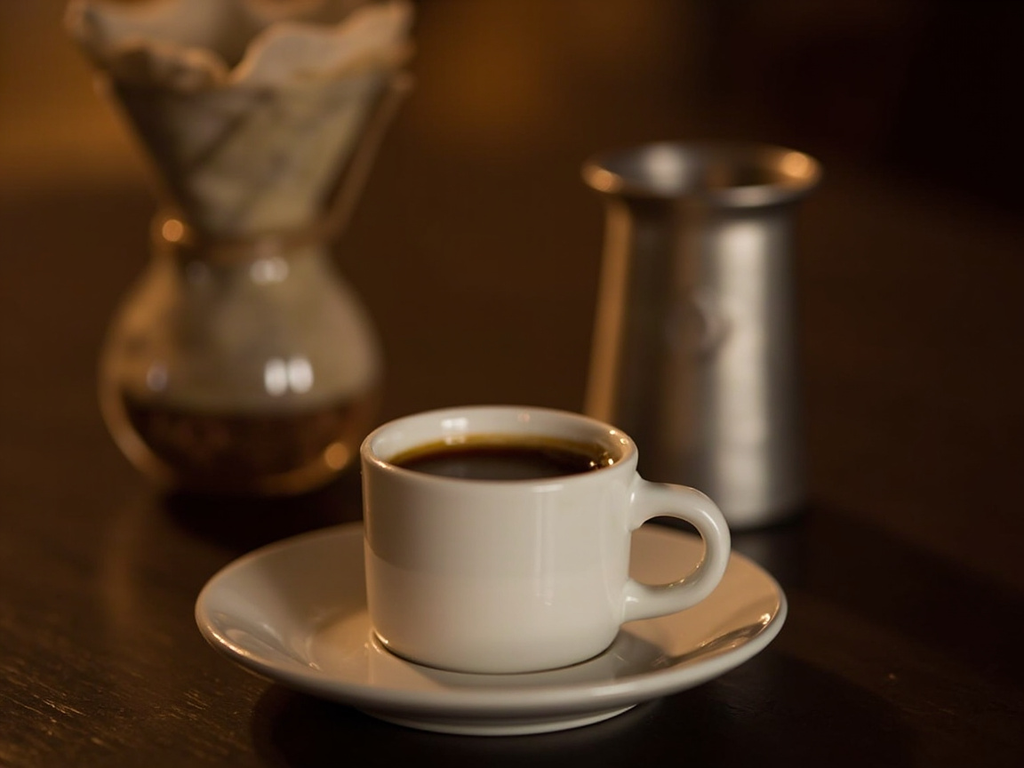
A short, strong, heavily sweetened black coffee, traditionally filtered through a cloth strainer (coador) and served in tiny cups. Offered, shared, never refused.
In Brazil, you never enter anywhere without someone slipping a cafezinho into your hand. Small, black, well sweetened — you put the sugar in the water before the coffee itself, that's the secret. You strain it through the coador, that cloth sock, drop by drop, without hurrying. Between takes at the studio, it's what kept us awake and loosened our tongues. One coffee, and the song starts again.
- •Finely ground Brazilian roast coffee — generously (base)
- •Water — according to number of cups (extraction)
- •Sugar — a lot (typical sweetness)
Studio Cafezinho
A short, strong, heavily sweetened black coffee, traditionally filtered through a cloth strainer (coador) and served in tiny cups. Offered, shared, never refused.
Why this dish? Brazil is the homeland of coffee, and the cafezinho — a small, very sweet black coffee offered to every visitor — rhythms Carioca social life, from street counters to the recording studios where Jobim spent his days.
In Brazil, you never enter anywhere without someone slipping a cafezinho into your hand. Small, black, well sweetened — you put the sugar in the water before the coffee itself, that's the secret. You strain it through the coador, that cloth sock, drop by drop, without hurrying. Between takes at the studio, it's what kept us awake and loosened our tongues. One coffee, and the song starts again.
Ingredients (period version)
- Finely ground Brazilian roast coffee — generously (base)
- Water — according to number of cups (extraction)
- Sugar — a lot (typical sweetness)
Ingredients
- Finely ground coffee (Brazilian arabica) — 4 tbsp (base)
- Water — 500 ml (extraction)
- Sugar — 3 to 4 tbsp (to taste) (sweetness)
Method
- Bring water to a simmer (not a full boil) and dissolve the sugar in it.
- Add the ground coffee directly to the hot sweetened water, turn off the heat, and let steep for one to two minutes.
- Slowly filter through a cloth filter (coador) or paper filter into a container kept warm.
- Serve immediately, piping hot, in small cups, and offer around.
How it was made : From the 19th century onward, coffee made Brazil's fortune, making it the world's largest producer. The cloth coador, inexpensive and reusable, became standard in ordinary homes long before machines. Serving cafezinho is a non-negotiable gesture of hospitality, from fazendas to Rio offices.
The contemporary twist : Serve it as a 'bossa nova break' with a square of goiabada or a warm pão de queijo, and a Jobim playlist in the background.
Sources : Câmara Cascudo, História da Alimentação no Brasil · Associação Brasileira da Indústria de Café (ABIC)
Antônio Carlos Jobim · Charactorium