 flip
flipShat — Honey, Date and Sesame Cakes for Great Festivals
Shat — Honey, Date and Sesame Cakes for Great Festivals
Why this dish? During the great solar festivals at Karnak and Heliopolis — those celebrating Ra's daily victory over Apep — honey cakes were piled onto tables as offerings to the luminous god. Golden honey embodies the light that the serpent of chaos seeks to swallow: a dessert-offering entirely solar.
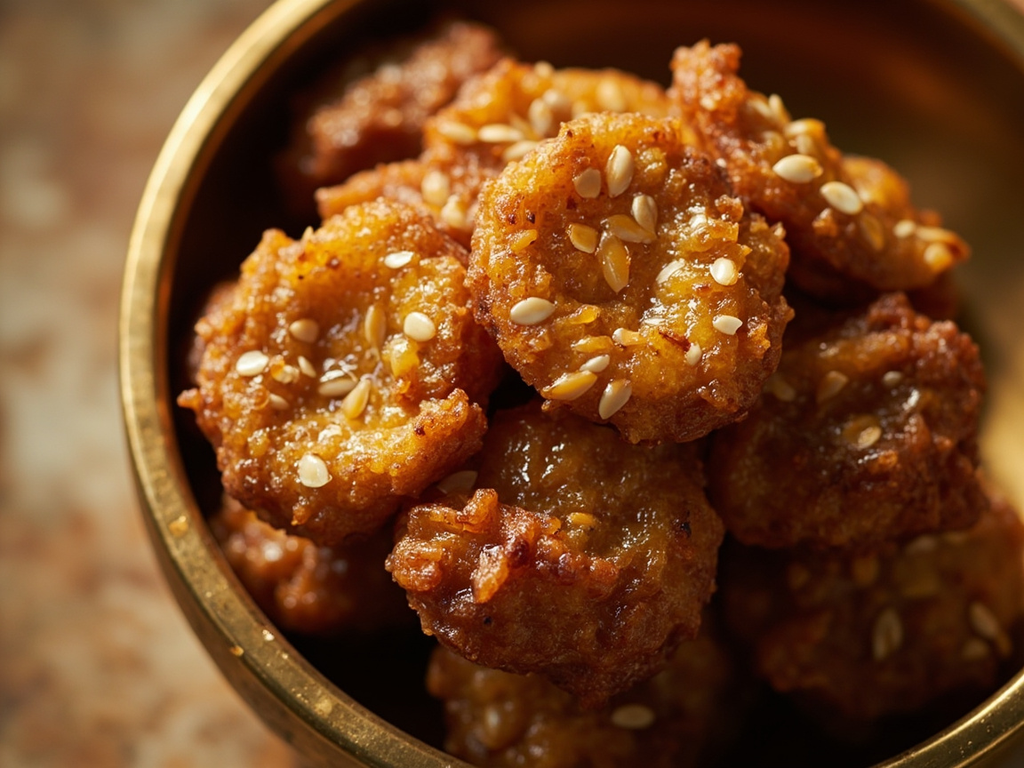
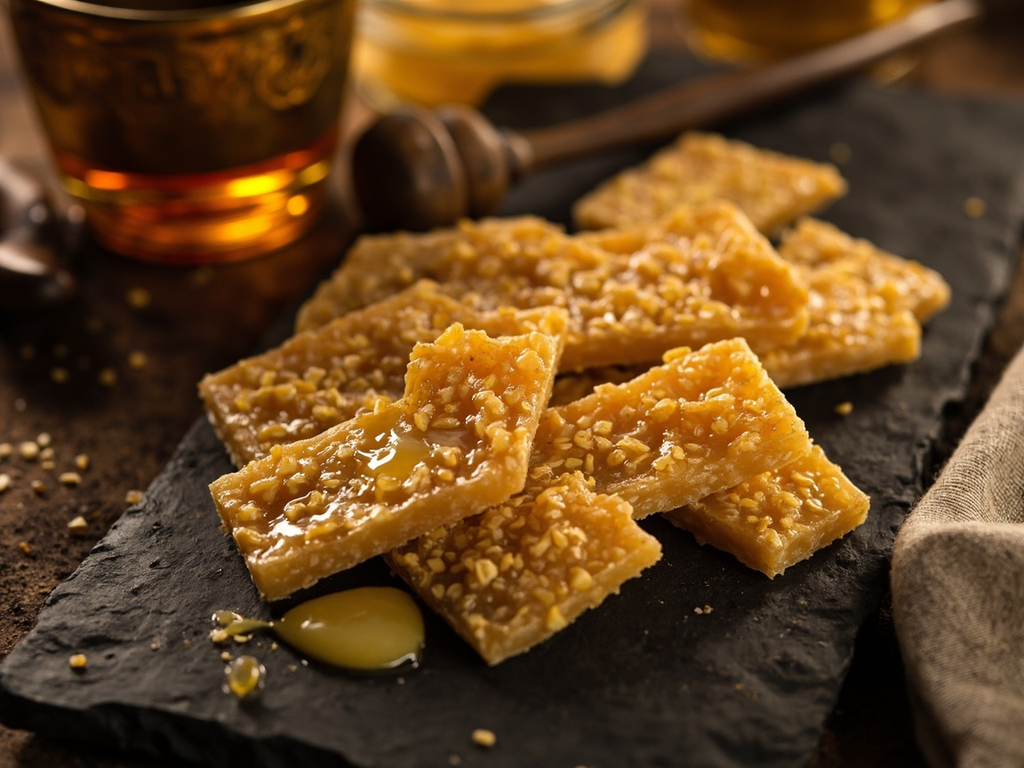
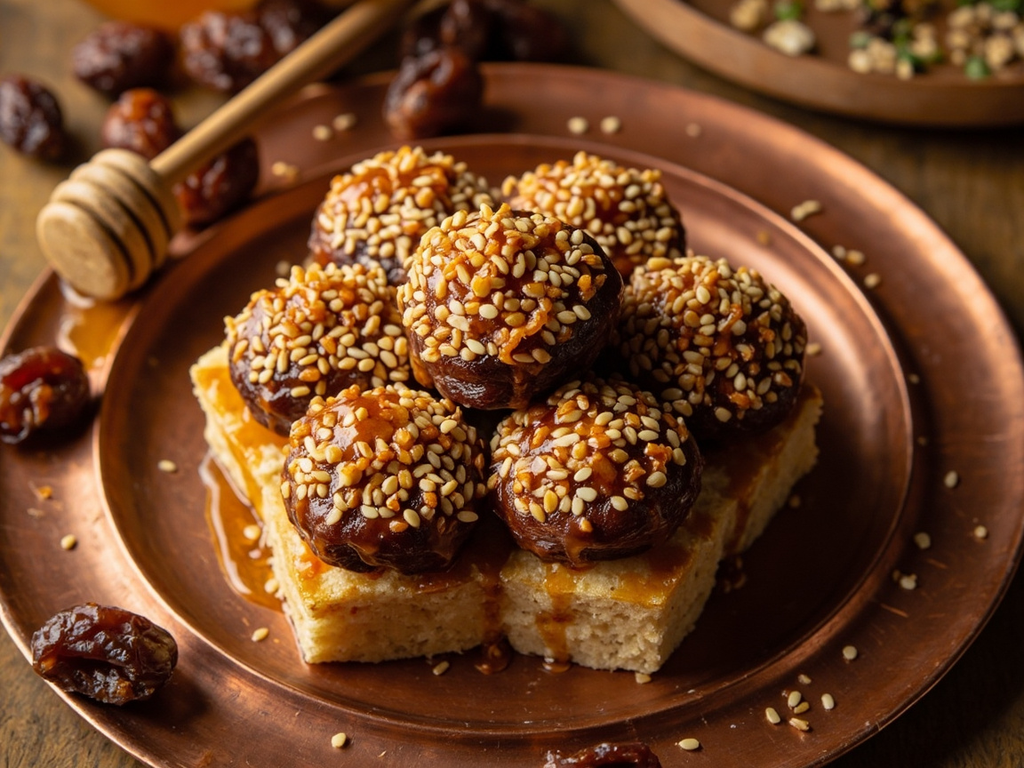
Small, soft bites of honey and date dough, rolled in sesame — the festive sweet of ancient Egypt, with no refined sugar, only honey and fruit.
Ah, your little golden cakes, gleaming with honey like splinters of the sun-disk! You stack them before your Ra to celebrate that he has, they say, 'overthrown' me once more. Eat them, laugh under the columns of Karnak. But I know the taste that comes after honey: that of nothingness, when the last lamp goes out. All sweetness is but a brief respite snatched from my maw.
- •Emmer flour — as needed (body of the cake)
- •Honey — generously (sweetener and binder)
- •Crushed dates — a good amount (sweetness, softness)
- •Sesame seeds — a handful (coating, crunch)
- •Balanites or linseed oil — a drizzle (fat)
Shat — Honey, Date and Sesame Cakes for Great Festivals
Small, soft bites of honey and date dough, rolled in sesame — the festive sweet of ancient Egypt, with no refined sugar, only honey and fruit.
Why this dish? During the great solar festivals at Karnak and Heliopolis — those celebrating Ra's daily victory over Apep — honey cakes were piled onto tables as offerings to the luminous god. Golden honey embodies the light that the serpent of chaos seeks to swallow: a dessert-offering entirely solar.
Ah, your little golden cakes, gleaming with honey like splinters of the sun-disk! You stack them before your Ra to celebrate that he has, they say, 'overthrown' me once more. Eat them, laugh under the columns of Karnak. But I know the taste that comes after honey: that of nothingness, when the last lamp goes out. All sweetness is but a brief respite snatched from my maw.
Ingredients (period version)
- Emmer flour — as needed (body of the cake)
- Honey — generously (sweetener and binder)
- Crushed dates — a good amount (sweetness, softness)
- Sesame seeds — a handful (coating, crunch)
- Balanites or linseed oil — a drizzle (fat)
Ingredients
- Spelt flour — 200 g
- Honey — 120 g (sweetener and binder)
- Pitted and crushed dates — 150 g (softness)
- Sesame seeds — 60 g (coating)
- Neutral or sesame oil — 3 tbsp (fat)
- Cinnamon or cardamom (optional, ancient spirit) — 1 pinch (aroma)
Method
- Mash dates into a paste, mix with honey and oil.
- Gradually incorporate flour to form a soft, sticky dough (optional spice).
- Shape into small balls or cones, roll generously in sesame seeds.
- Bake at 170°C, 15-18 min, until sesame is golden.
- Let cool slightly and drizzle with a final thread of honey before serving in a pyramid on a platter.
How it was made : Without cane sugar (unknown in ancient Egypt), all pastry relied on honey and dried fruits — dates, figs. Texts and funerary models show dozens of shapes of offering cakes ('shat'), often with honey and sesame.
The contemporary twist : Arranged in a pyramid on a copper tray with a dusting of pollen or edible petals, they make an 'antique chic' end-of-meal mignardise.
Sources : William J. Darby, Paul Ghalioungui, Louis Grivetti, Food: The Gift of Osiris (1977) · Pierre Tallet, Histoire de la cuisine et de la gastronomie égyptiennes
Apep · Charactorium