 flip
flipPlakous with Honey and Fresh Cheese
Plakous with Honey and Fresh Cheese
Why this dish? Plakous, a cheese and honey cake, crowned Greek banquets during the "second table." When Aristarchus participated in a symposion among Alexandrian scholars, it was this kind of sweet that accompanied the wine and discussions.
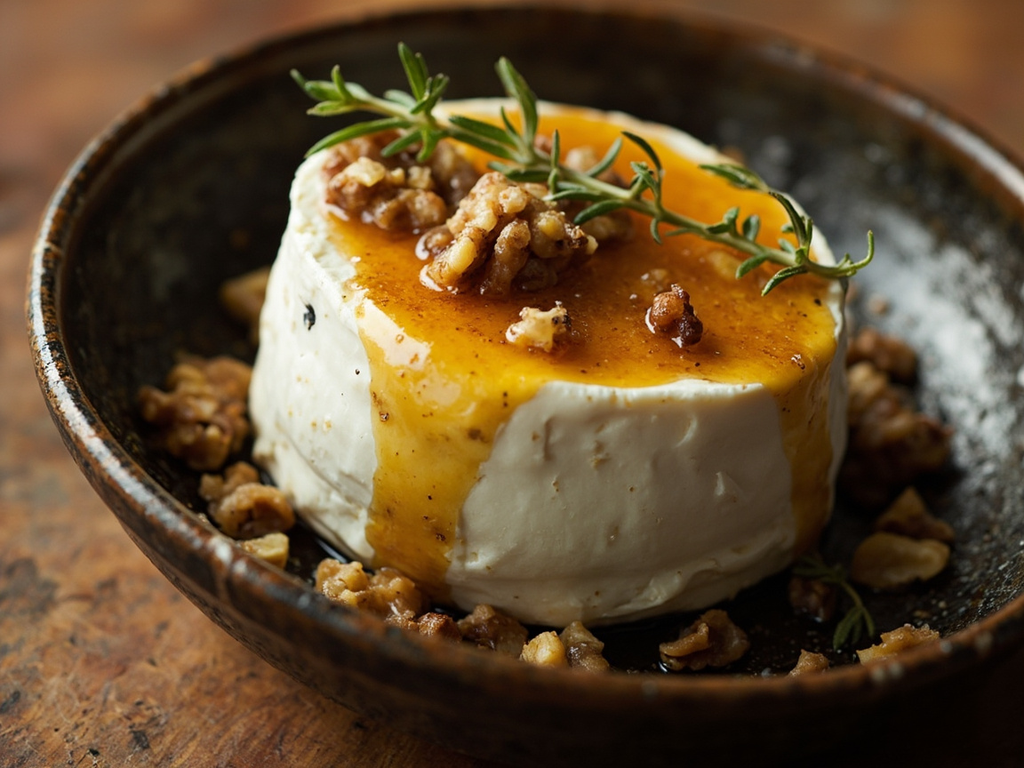
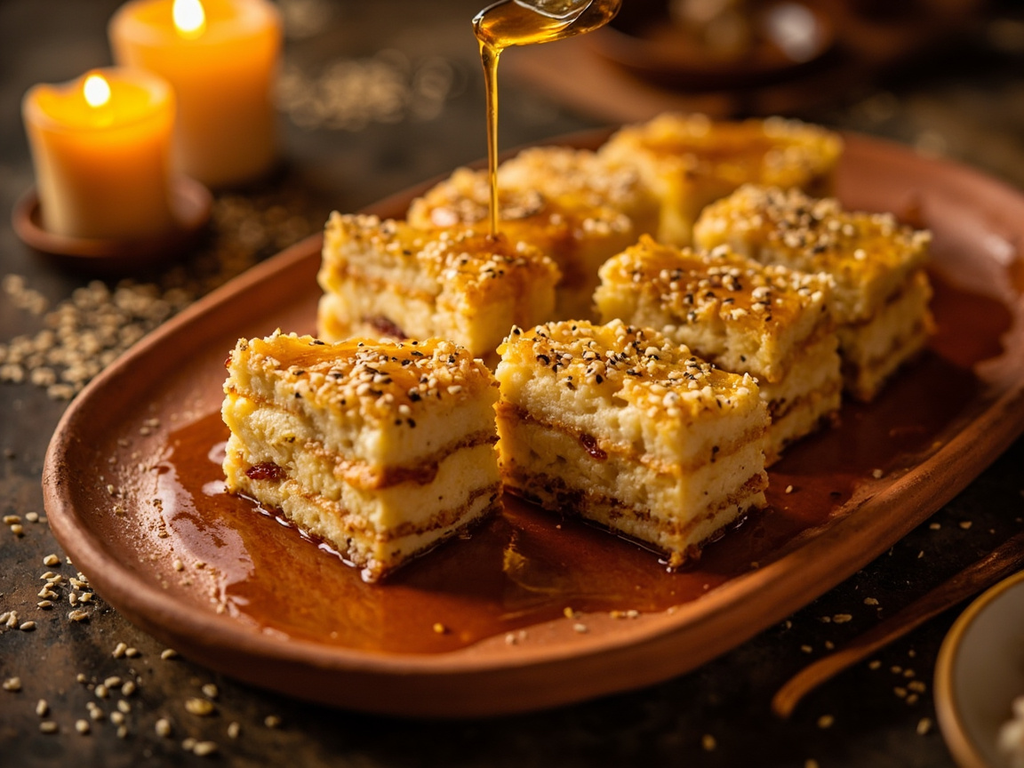
A cake of thin pastry layers alternated with fresh cheese and drenched in fragrant honey. Rich, melting, and very sweet, it is the treat of feast days and learned banquets.
When men of learning gather in Alexandria, the cup goes around and the second table arrives: it is time for plakous. We stack thin sheets of dough and fresh cheese, drench it all in warm thyme-scented honey, and share this sweetness while debating until dawn. More than one has laughed at my motionless Sun at the center of the world — but faced with such a cake, even the laughers reach out their hands, and that is already a victory.
- •Fine wheat flour dough — several sheets (flaky structure)
- •Fresh goat or sheep cheese — a good amount (melting heart)
- •Thyme honey — generously (sweet binder)
- •Olive oil — for the dough (flexibility)
Plakous with Honey and Fresh Cheese
A cake of thin pastry layers alternated with fresh cheese and drenched in fragrant honey. Rich, melting, and very sweet, it is the treat of feast days and learned banquets.
Why this dish? Plakous, a cheese and honey cake, crowned Greek banquets during the "second table." When Aristarchus participated in a symposion among Alexandrian scholars, it was this kind of sweet that accompanied the wine and discussions.
When men of learning gather in Alexandria, the cup goes around and the second table arrives: it is time for plakous. We stack thin sheets of dough and fresh cheese, drench it all in warm thyme-scented honey, and share this sweetness while debating until dawn. More than one has laughed at my motionless Sun at the center of the world — but faced with such a cake, even the laughers reach out their hands, and that is already a victory.
Ingredients (period version)
- Fine wheat flour dough — several sheets (flaky structure)
- Fresh goat or sheep cheese — a good amount (melting heart)
- Thyme honey — generously (sweet binder)
- Olive oil — for the dough (flexibility)
Ingredients
- Phyllo pastry sheets — 6 sheets (flaky structure)
- Ricotta or fresh sheep cheese — 250 g (melting heart)
- Thyme honey — 120 g (sweet binder)
- Mild olive oil — 3 tbsp (brushing)
- Sesame seeds — 1 tbsp (finishing (optional))
Method
- Preheat the oven to 180°C and lightly oil a small baking dish.
- Mix the fresh cheese with a spoonful of honey to obtain a cream.
- Place one sheet of phyllo, brush with olive oil, repeat for three layers.
- Spread half the cheese cream, cover with two oiled sheets, then the rest of the cheese, and finish with the last sheet.
- Bake for 25 to 30 minutes until the top is golden.
- Remove from oven, generously drizzle with warm honey and sprinkle with sesame seeds. Let cool slightly before cutting into pieces.
How it was made : Plakous ("flat thing") is the Greek ancestor of cheese and honey cakes; the Roman agronomist Cato transmitted a detailed recipe inherited from the Greeks, made of layers of dough (tracta), fresh cheese, and honey. It was a festive sweet, served at banquets and offered to the gods.
The contemporary twist : Cut it into baklava-style diamonds and decorate each piece with a drop of honey: a "philosopher's cheesecake" to share for dessert.
Sources : Cato the Elder, De Agricultura (recipe for placenta) · Athenaeus of Naucratis, The Deipnosophists (Book XIV)
Aristarchus · Charactorium