 flip
flipPelanos with honey and sesame
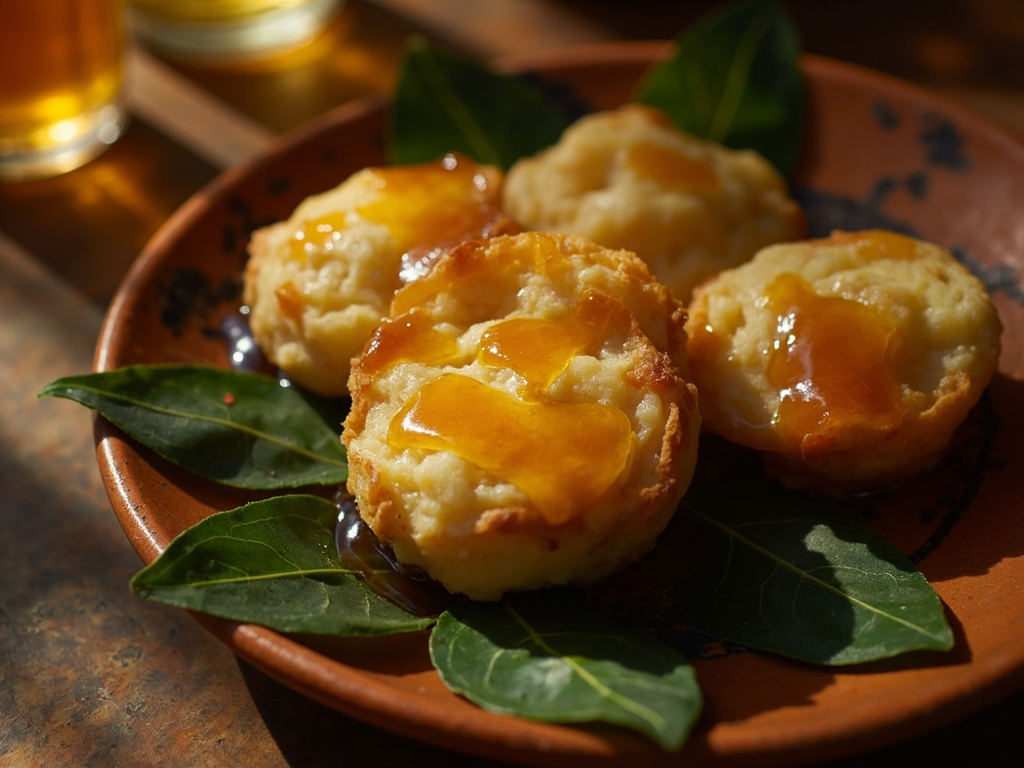
Pelanos with honey and sesame
Why this dish? Not only animals were placed on Athena's altars: simple cakes of barley, honey, and oil — pelanoi — were offered by those who could not sacrifice an animal. This small sweet cake is, par excellence, the food a mortal destines for the goddess herself.
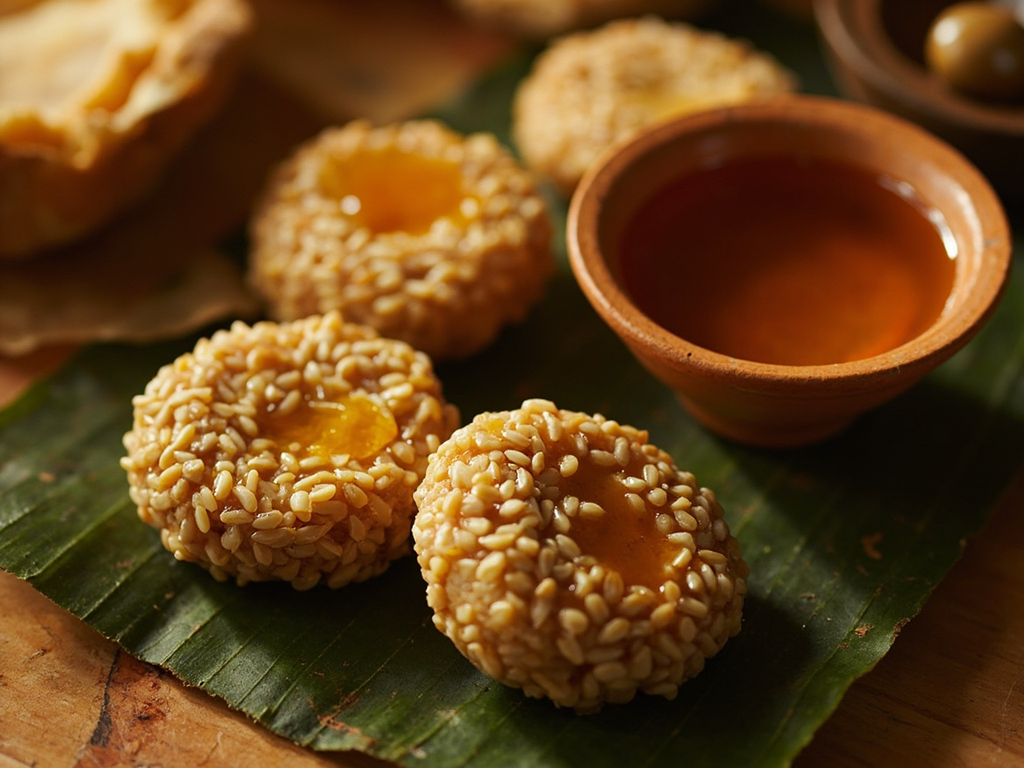
Small barley cakes bound with honey and olive oil, sprinkled with sesame. A humble, sweet offering placed on the altar or shared after the rite. Inspired by Greek votive cakes, without reproducing a living sacred rite.
You have no ox to offer me, mortal? No matter: a small barley cake kneaded with honey and oil pleases me just as much, if your hand is pure. Roll it small, sprinkle it with sesame, and lay it down without fear. The gods weigh not the wealth of the offering but the righteousness of the giver. Go, and may your city prosper under my owl's gaze.
- •Barley flour — two handfuls (cake base)
- •Honey — a full spoon (binder and sweetness)
- •Olive oil — a drizzle (softness and signature)
- •Sesame seeds — a handful (symbolic garnish)
Pelanos with honey and sesame
Small barley cakes bound with honey and olive oil, sprinkled with sesame. A humble, sweet offering placed on the altar or shared after the rite. Inspired by Greek votive cakes, without reproducing a living sacred rite.
Why this dish? Not only animals were placed on Athena's altars: simple cakes of barley, honey, and oil — pelanoi — were offered by those who could not sacrifice an animal. This small sweet cake is, par excellence, the food a mortal destines for the goddess herself.
You have no ox to offer me, mortal? No matter: a small barley cake kneaded with honey and oil pleases me just as much, if your hand is pure. Roll it small, sprinkle it with sesame, and lay it down without fear. The gods weigh not the wealth of the offering but the righteousness of the giver. Go, and may your city prosper under my owl's gaze.
Ingredients (period version)
- Barley flour — two handfuls (cake base)
- Honey — a full spoon (binder and sweetness)
- Olive oil — a drizzle (softness and signature)
- Sesame seeds — a handful (symbolic garnish)
Ingredients
- Barley flour — 150 g (cake base)
- Honey — 100 g (binder and sweetness)
- Olive oil — 2 tbsp (softness and signature)
- Sesame seeds — 3 tbsp (garnish)
- Water — 1-2 tbsp if needed (dough adjustment)
Method
- Mix barley flour with oil and half the honey.
- Add a little water if necessary to form a soft, sticky dough.
- Shape into small balls or discs, roll in sesame seeds.
- Bake 12-15 minutes at 170°C until lightly golden.
- Brush with remaining honey to make them shiny and glossy.
How it was made : Pelanoi were offering cakes made from flour (often barley), honey, and oil, placed on altars by those who did not offer blood sacrifice. Honey, the only sweetener in ancient Greece, and sesame were associated with festive and ritual preparations.
The contemporary twist : Present as small domes dusted with toasted sesame, 'miniature offerings' on an olive leaf.
Sources : Andrew Dalby & Sally Grainger, The Classical Cookbook, British Museum Press, 1996 · Louise Bruit Zaidman, Pauline Schmitt Pantel, La religion grecque dans les cités à l'époque classique, Armand Colin
Athena · Charactorium