 flip
flipMelikraton, the honey and milk libation for the dead
Melikraton, the honey and milk libation for the dead
Why this dish? This is Antigone's very gesture: she defies Creon's edict to offer her brother Polyneices the funeral rites due to the dead. These rites included the choai, libations of milk, honey, wine, and water poured on the tomb. Melikraton — honey and milk mixed — is par excellence the beverage offered to the deceased and the powers below. No recipe is more intimate to her.
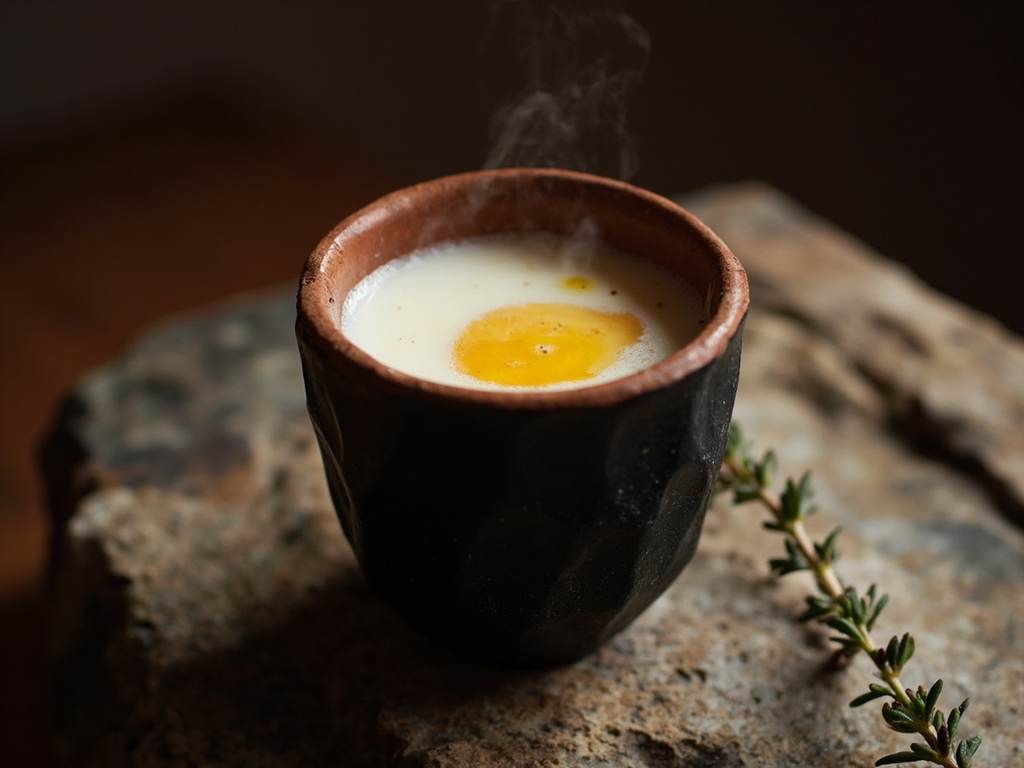
A sweet and creamy mixture of honey and milk, sometimes with a little wine and water added, warmed and then poured as an offering. Barely sweet-milky, perfumed with thyme honey. More than a drink: a gesture of piety toward the departed, which can also be tasted as a sweet mead.
Listen well, for it is for this gesture that I am going to die. When a dead man lies unburied, his shadow wanders restless; then we pour for him milk, honey, wine, and clear water. With my own hands I mixed honey with milk for my brother Polyneices, and three times I poured it on the earth that covered him. The laws of the gods below are not of yesterday nor today: no king's edict will make me betray a brother. Pour, you too, and may those you mourn be appeased.
- •Honey (thyme honey preferred) — a good portion (sweetness, sanctity)
- •Fresh goat's milk — twice the honey (milky base)
- •Wine — a little (optional) (libation)
- •Spring water — as needed (dilutes the libation)
Melikraton, the honey and milk libation for the dead
A sweet and creamy mixture of honey and milk, sometimes with a little wine and water added, warmed and then poured as an offering. Barely sweet-milky, perfumed with thyme honey. More than a drink: a gesture of piety toward the departed, which can also be tasted as a sweet mead.
Why this dish? This is Antigone's very gesture: she defies Creon's edict to offer her brother Polyneices the funeral rites due to the dead. These rites included the choai, libations of milk, honey, wine, and water poured on the tomb. Melikraton — honey and milk mixed — is par excellence the beverage offered to the deceased and the powers below. No recipe is more intimate to her.
Listen well, for it is for this gesture that I am going to die. When a dead man lies unburied, his shadow wanders restless; then we pour for him milk, honey, wine, and clear water. With my own hands I mixed honey with milk for my brother Polyneices, and three times I poured it on the earth that covered him. The laws of the gods below are not of yesterday nor today: no king's edict will make me betray a brother. Pour, you too, and may those you mourn be appeased.
Ingredients (period version)
- Honey (thyme honey preferred) — a good portion (sweetness, sanctity)
- Fresh goat's milk — twice the honey (milky base)
- Wine — a little (optional) (libation)
- Spring water — as needed (dilutes the libation)
Ingredients
- Thyme or flower honey — 4 tbsp (sweetness)
- Milk (goat or cow) — 250 ml (base)
- Water — 100 ml (dilution)
- Sweet wine — 1 tbsp (optional) (flavor)
Method
- Gently warm the milk without boiling.
- Off the heat, dissolve the honey completely.
- Add the water (and the stream of sweet wine if desired) to obtain a light beverage.
- For the symbolic offering: slowly pour a portion onto the earth or into a dedicated cup.
- To taste: serve warm in a terracotta cup, stirring as honey settles.
- Drink in small sips, slowly, like a moment of reflection.
How it was made : Funerary libations (choai) poured on tombs typically combined milk, honey (often mixed as melikraton), wine, and water, sometimes oil, accompanied by cakes. They were poured to appease the dead and the chthonic deities. Depriving a dead person of burial and these rites was, in Greek thought, a grave offense against divine laws — exactly the conflict at the heart of Sophocles' tragedy.
The contemporary twist : Served warm as an ancient "golden milk," sprinkled with a pinch of flower pollen, in a dark cup to evoke the rite.
Antigone · Charactorium