 flip
flipTigernut Cakes with Honey and Sesame
Tigernut Cakes with Honey and Sesame
Why this dish? The great festivals of Akhenaten — such as the annual procession of the disk at Akhetaten — were accompanied by honey sweets. These small tigernut cakes, attested in tomb iconography, are the festive note of an otherwise sober and luminous table.
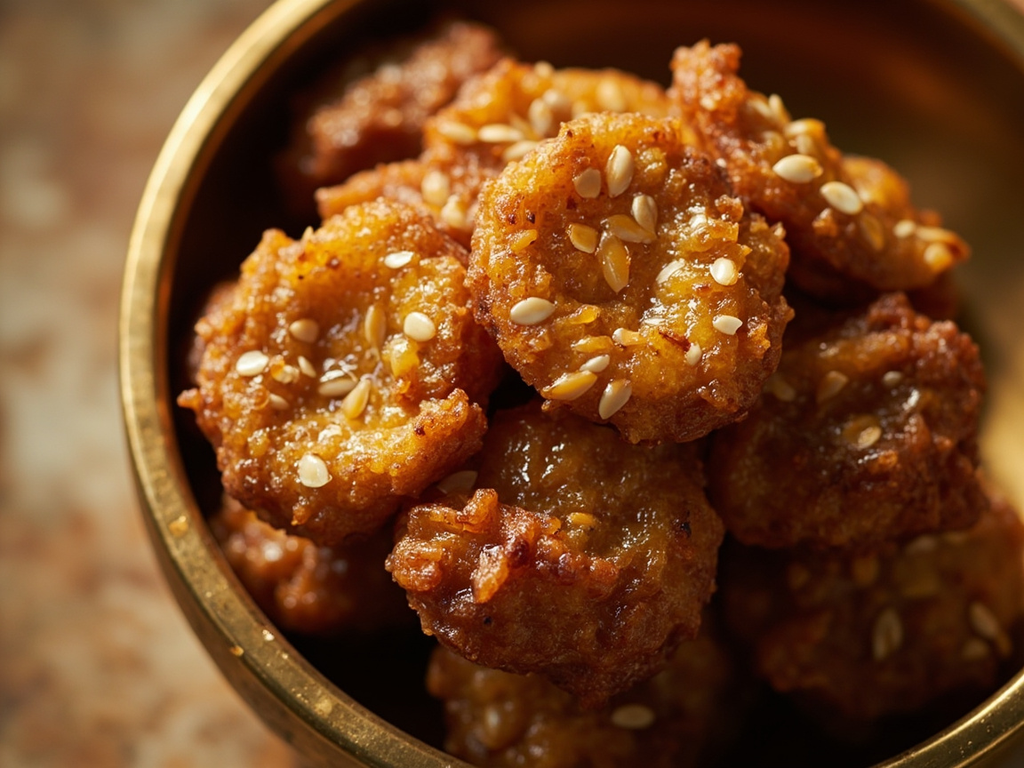
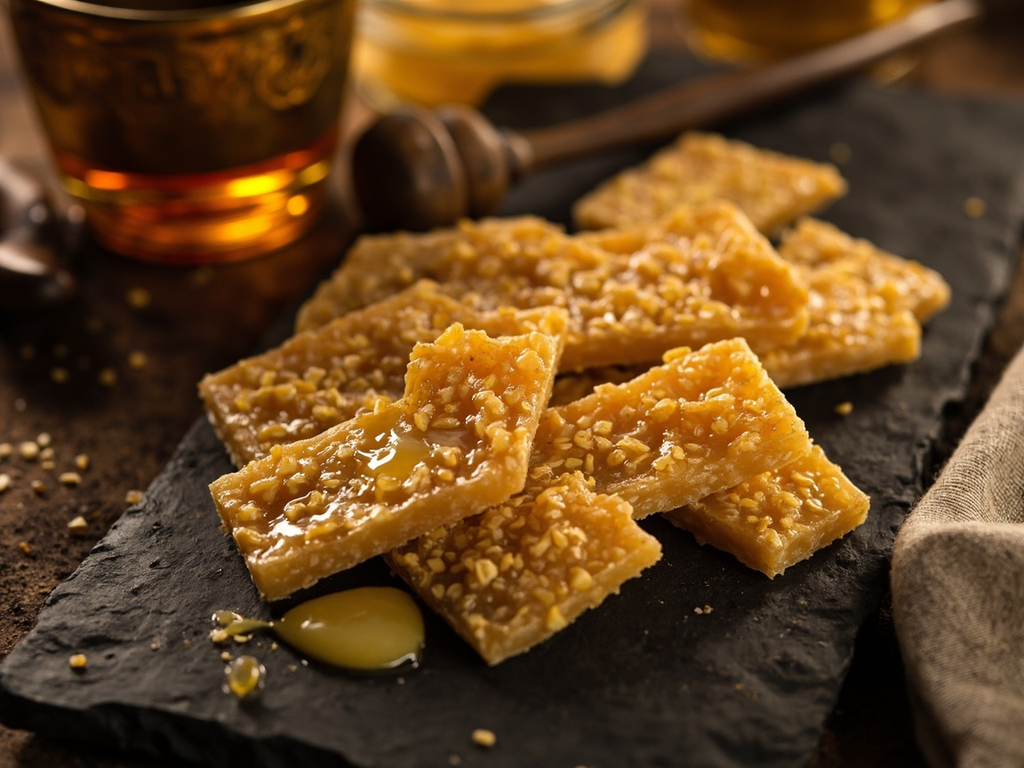
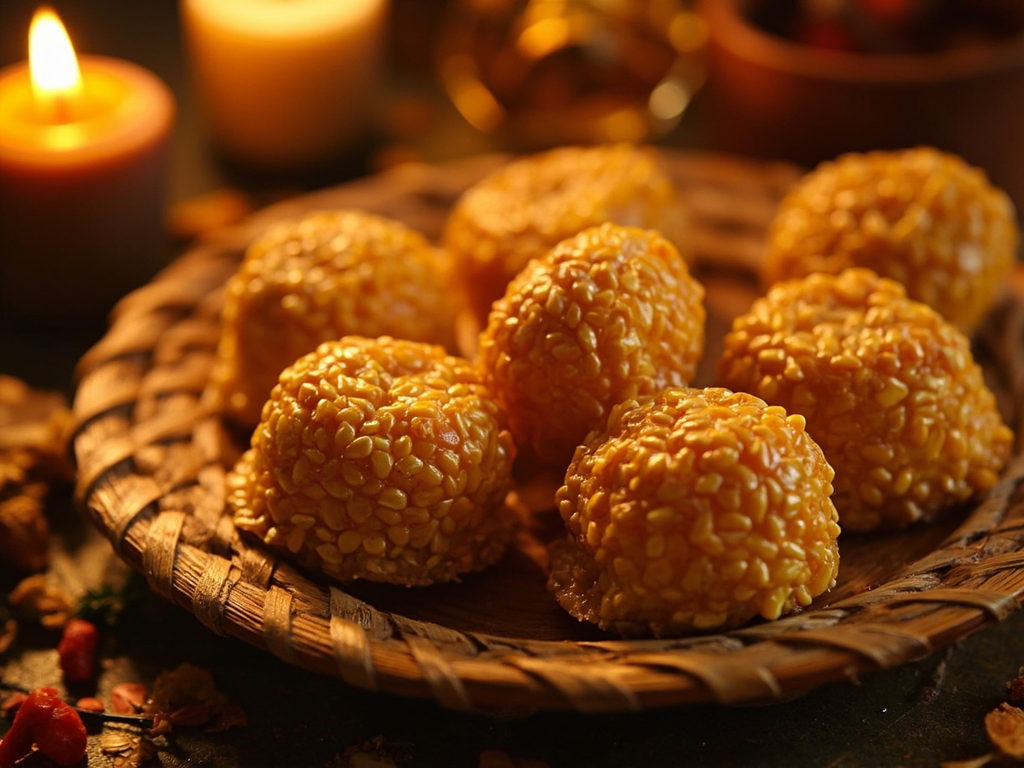
Small soft cakes of ground tigernut (earth almond), bound with honey and rolled in sesame, barely baked to remain tender. The indulgence of feast days.
On the days when my entire city goes out to follow my course, from the palace to the stelae that mark the horizon, they do not content themselves with bread: they prepare sweetness. Grind the tigernut that the black earth fattens, bind it with thick honey, shape small moons and roll them in toasted sesame. Barely baked, they melt under the tooth like a lingering ray — that is what was offered for my festival, and what afterward was shared with laughter.
- •Ground tigernut (earth almond) — two handfuls (cake base)
- •Honey — generously (sweet binder)
- •Sesame seeds — a handful (coating)
- •Emmer flour — a little (structure)
- •Cinnamon or cardamom (depending on gardens) — a pinch (fragrance (optional))
Tigernut Cakes with Honey and Sesame
Small soft cakes of ground tigernut (earth almond), bound with honey and rolled in sesame, barely baked to remain tender. The indulgence of feast days.
Why this dish? The great festivals of Akhenaten — such as the annual procession of the disk at Akhetaten — were accompanied by honey sweets. These small tigernut cakes, attested in tomb iconography, are the festive note of an otherwise sober and luminous table.
On the days when my entire city goes out to follow my course, from the palace to the stelae that mark the horizon, they do not content themselves with bread: they prepare sweetness. Grind the tigernut that the black earth fattens, bind it with thick honey, shape small moons and roll them in toasted sesame. Barely baked, they melt under the tooth like a lingering ray — that is what was offered for my festival, and what afterward was shared with laughter.
Ingredients (period version)
- Ground tigernut (earth almond) — two handfuls (cake base)
- Honey — generously (sweet binder)
- Sesame seeds — a handful (coating)
- Emmer flour — a little (structure)
- Cinnamon or cardamom (depending on gardens) — a pinch (fragrance (optional))
Ingredients
- Tigernut flour (chufa) — 150 g (base)
- Almond flour — 50 g (softness)
- Honey — 4 tbsp (sweet binder)
- Sesame seeds — 4 tbsp (coating)
- Spelt flour — 30 g (structure)
- Cinnamon — 1 pinch (fragrance (optional))
- A little water — if needed (to adjust dough)
Method
- Mix the tigernut flour, almond flour, spelt flour, and cinnamon.
- Add the honey and work until a cohesive dough forms; add a little water if too dry.
- Shape into small balls or flattened crescents ("moons").
- Roll each cake in sesame seeds to coat thoroughly.
- Place on a baking sheet and bake at 170°C for 12–15 minutes, just to toast the sesame; they should remain soft.
- Let cool slightly: they firm up as they cool and will keep for a few days.
How it was made : Egyptians made all kinds of honey cakes, sometimes shaped like animals, spirals, or disks, enriched with tigernut (much appreciated), figs, dates, and sesame. Sugar being unknown, honey and fruits provided all sweetness. These treats appear on banquet and offering reliefs.
The contemporary twist : Shape them into perfectly round disks and score fine radiating lines with a knife before baking: so many little suns of Aten to place on the festive table.
Sources : W. J. Darby, P. Ghalioungui, L. Grivetti, "Food: The Gift of Osiris" (1977) · Pierre Tallet, "La cuisine des pharaons" (Actes Sud) · Reliefs of banquets and offerings from the New Kingdom
Aten · Charactorium