 flip
flipSai Bhaji, the Nourishing Greens of Sindh
Sai Bhaji, the Nourishing Greens of Sindh
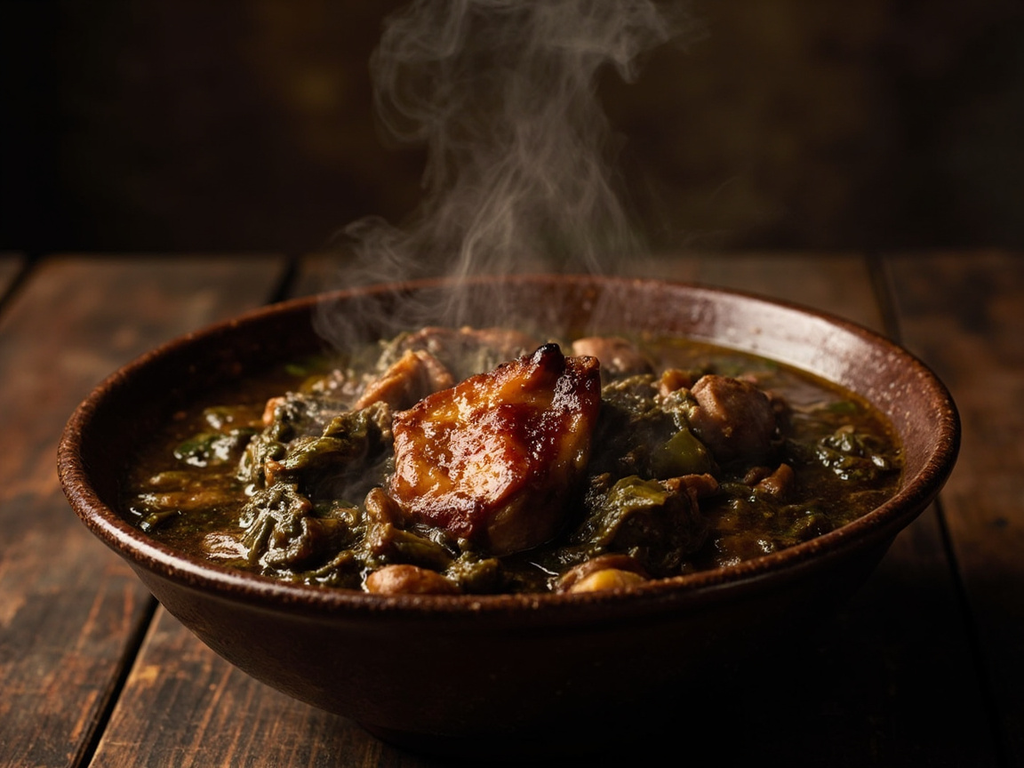
Why this dish? Sai bhaji is THE emblematic dish of Sindhi cuisine, from which the Bhuttos originate: a puree of spinach and fenugreek mixed with lentils and vegetables, reputed to be nourishing and balanced. It is the 'health' dish of Sindhi families, served to regain strength.
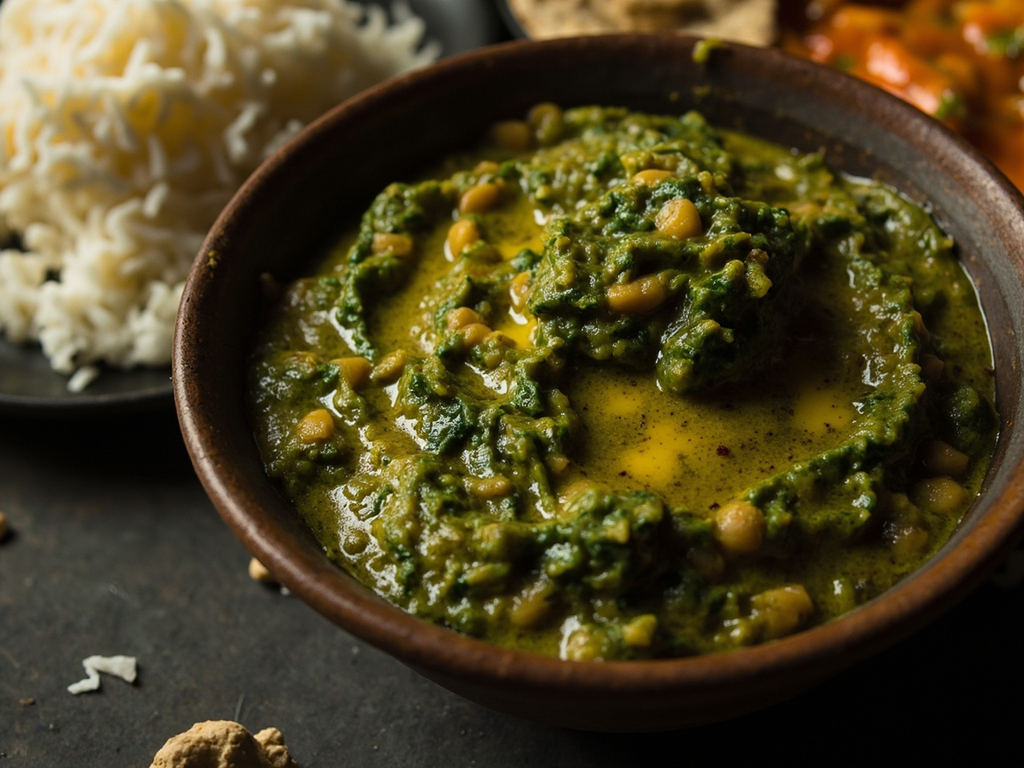
Spinach, fenugreek leaves, and dill melted with chana dal and a few vegetables, mashed into a thick green puree, spiced with garlic and cumin — a dish reputed to be fortifying, often eaten with rice.
They sometimes reproach me for my strong character; I reply that I am from Sindh, and there we grow up on sai bhaji. That thick green of spinach and fenugreek, my grandmother served it to anyone who needed to regain strength — a sick person, a young mother, a too-thin child. The fenugreek gives it that frank bitterness that one learns to love, because it is that which heals, they said. Eat it with a little rice, and you will stand through a whole day of campaigning.
- •Spinach — a large bunch (green base)
- •Fenugreek leaves (methi), dill — a handful (beneficial bitterness)
- •Chana dal (split chickpeas) — one bowl (protein and binder)
- •Seasonal vegetables (eggplant, okra, carrot...) — a few (softness)
- •Garlic, ginger, cumin, chili — to taste (aromatics)
Sai Bhaji, the Nourishing Greens of Sindh
Spinach, fenugreek leaves, and dill melted with chana dal and a few vegetables, mashed into a thick green puree, spiced with garlic and cumin — a dish reputed to be fortifying, often eaten with rice.
Why this dish? Sai bhaji is THE emblematic dish of Sindhi cuisine, from which the Bhuttos originate: a puree of spinach and fenugreek mixed with lentils and vegetables, reputed to be nourishing and balanced. It is the 'health' dish of Sindhi families, served to regain strength.
They sometimes reproach me for my strong character; I reply that I am from Sindh, and there we grow up on sai bhaji. That thick green of spinach and fenugreek, my grandmother served it to anyone who needed to regain strength — a sick person, a young mother, a too-thin child. The fenugreek gives it that frank bitterness that one learns to love, because it is that which heals, they said. Eat it with a little rice, and you will stand through a whole day of campaigning.
Ingredients (period version)
- Spinach — a large bunch (green base)
- Fenugreek leaves (methi), dill — a handful (beneficial bitterness)
- Chana dal (split chickpeas) — one bowl (protein and binder)
- Seasonal vegetables (eggplant, okra, carrot...) — a few (softness)
- Garlic, ginger, cumin, chili — to taste (aromatics)
Ingredients
- Fresh spinach — 400 g (base)
- Fenugreek leaves (methi, fresh or frozen) — 1 handful (signature bitterness)
- Fresh dill — a few sprigs (fragrance)
- Chana dal — 100 g (nourishing binder)
- Eggplant or carrot — 1, diced (texture)
- Tomato — 1 (acidity)
- Garlic, ginger — 1 tbsp paste (aromatics)
- Cumin, turmeric, chili — 1 tsp each (spices)
- Ghee or oil — 2 tbsp (cooking)
Method
- Soak chana dal for 30 minutes, then cook with diced vegetables until tender.
- Add spinach, fenugreek, and dill; let the leaves wilt.
- Coarsely mash everything to obtain a thick green puree.
- Prepare a tadka of garlic, cumin, and chili in ghee, and stir it into the puree.
- Simmer for a few minutes, adjust salt, and serve with rice.
How it was made : A peasant dish that became a national Sindhi emblem, sai bhaji was cooked in a single pot, vegetables and lentils together, to feed the whole family at little cost. Its reputation as a fortifying dish meant it was served to convalescents.
The contemporary twist : Serve as a green quenelle glistening with a drizzle of ghee, steamed rice in a half-moon alongside — a contemporary 'health bowl' nod to a dish generations old.
Sources : Traditional Sindhi cuisine (sai bhaji, emblematic regional dish)
Benazir Bhutto · Charactorium