 flip
flipZapotec Nicuatole with Piloncillo
Zapotec Nicuatole with Piloncillo
Why this dish? Nicuatole, a sweet corn jelly, is one of the oldest desserts of Mexico, of Zapotec origin — the very people of Juárez. It has been sold cut into diamonds at markets and village festivals in Oaxaca for centuries: a popular sweet that the child from Guelatao must have known.
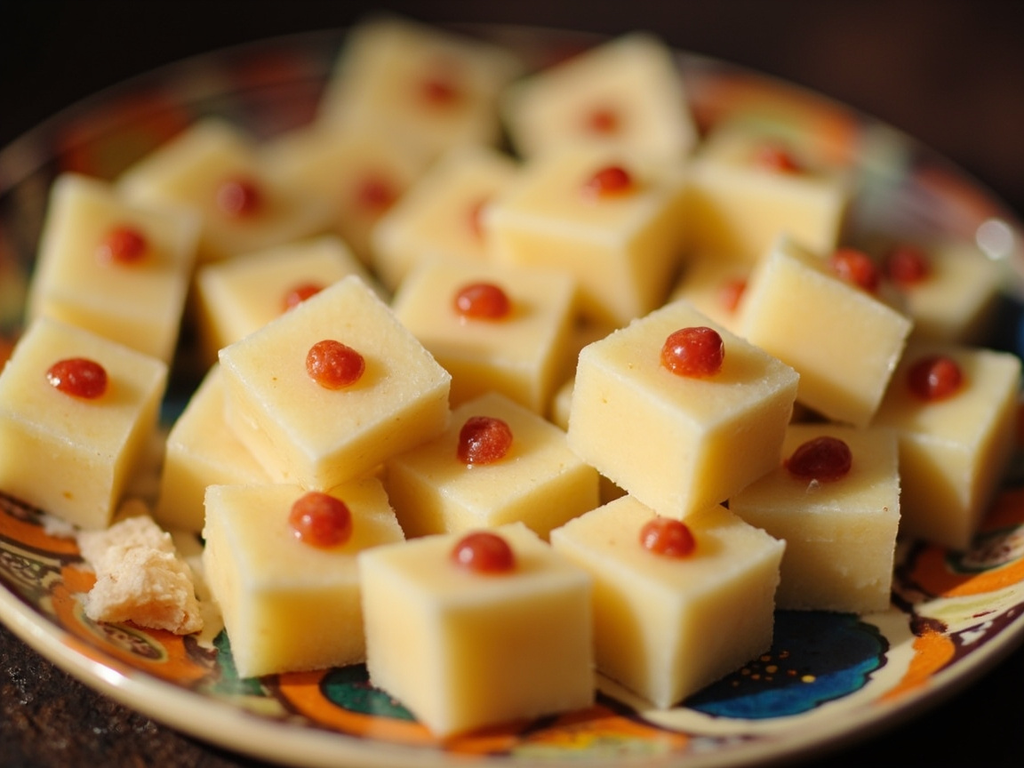
A smooth jelly of corn masa and piloncillo, flavored with cinnamon, set in a mold and topped with a red cochineal disk. Melting, lightly sweet, it is the corn candy of Zapotec markets.
Before the frock coats and seals of the Republic, there was a little Zapotec shepherd who watched the market. Nicuatole is the sweetness of my people: corn, again and always corn, but this time sweetened with piloncillo and set into a trembling jelly. The market women cut it into diamonds, mark it with a red circle of grana, and hand it to children for a few centavos. Taste it: it is the whole childhood of Oaxaca melting on the tongue.
- •Nixtamalized corn masa — a good measure (base)
- •Piloncillo — to taste (sweetness)
- •Cinnamon — one piece (flavoring)
- •Water — as needed (liquid)
- •Cochineal (grana cochinilla) — a pinch (red color)
Zapotec Nicuatole with Piloncillo
A smooth jelly of corn masa and piloncillo, flavored with cinnamon, set in a mold and topped with a red cochineal disk. Melting, lightly sweet, it is the corn candy of Zapotec markets.
Why this dish? Nicuatole, a sweet corn jelly, is one of the oldest desserts of Mexico, of Zapotec origin — the very people of Juárez. It has been sold cut into diamonds at markets and village festivals in Oaxaca for centuries: a popular sweet that the child from Guelatao must have known.
Before the frock coats and seals of the Republic, there was a little Zapotec shepherd who watched the market. Nicuatole is the sweetness of my people: corn, again and always corn, but this time sweetened with piloncillo and set into a trembling jelly. The market women cut it into diamonds, mark it with a red circle of grana, and hand it to children for a few centavos. Taste it: it is the whole childhood of Oaxaca melting on the tongue.
Ingredients (period version)
- Nixtamalized corn masa — a good measure (base)
- Piloncillo — to taste (sweetness)
- Cinnamon — one piece (flavoring)
- Water — as needed (liquid)
- Cochineal (grana cochinilla) — a pinch (red color)
Ingredients
- Masa harina (nixtamalized corn flour) — 120 g (base)
- Water — 750 ml (liquid)
- Piloncillo (or brown sugar) — 120 g (sweetness)
- Cinnamon stick — 1 (flavoring)
- Natural red food coloring (cochineal or beet) — a few drops (decoration)
Method
- Whisk the masa harina into cold water to avoid lumps; strain if necessary.
- In a saucepan, melt the piloncillo with a little water and the cinnamon stick into a light syrup.
- Pour the masa mixture into the syrup, remove the cinnamon, and cook over low heat, stirring constantly, for 15-20 minutes: the mixture should thicken and coat the spoon.
- Pour into a mold or small ramekins; smooth the surface.
- Before it sets completely, place in the center a disk of masa colored red (mix a spoonful of the mixture with the coloring).
- Let cool and set in the refrigerator for a few hours, then cut into diamonds to serve.
How it was made : Nicuatole is attested as one of the oldest Zapotec desserts: diluted masa was cooked with a sweetener — formerly agave honey or cane introduced after the Conquest — until it gelled upon cooling. The red color came from grana cochinilla, the Oaxacan insect whose carmine made the region's fortune.
The contemporary twist : Mold it in individual verrines with a thin layer of red fruit coulis on top, a chic nod to the cochineal dot of yore.
Sources : Ricardo Muñoz Zurita, Diccionario enciclopédico de la gastronomía mexicana (2012) · Diana Kennedy, Oaxaca al Gusto (2010)
Benito Juárez · Charactorium