Fàn and cài (飯菜) — The Grain and Its Accompaniments
At a Han table, the meal is organized around fàn, the boiled or steamed grain (millet for commoners, rice for the upper ranks), the nourishing foundation of every bite. Around it are arranged the cài: small dishes of vegetables, stewed meat, pickles, and fermented sauces, taken in small amounts with chopsticks. The jiāng (醬, fermented paste) is added as the sovereign condiment, and sometimes the meal ends with a malt sweet or a cup of rice wine. There is no starter or dessert: everything arrives together, and it is the balance between the blandness of the grain and the intensity of the cài that makes a good meal.
Signature : Jiāng (醬), Fermented Soybean and Cereal Paste
The king of condiments in Han cuisine, jiāng is a thick paste obtained by fermenting soybeans (or a soybean-wheat mixture) with salt for weeks. The direct ancestor of miso and soy sauce, it provides the deep umami-fermented flavor that defines all savory dishes of the era. At court, it was considered so essential that Confucius himself said he would not eat a dish if it was not accompanied by its proper jiāng.
Cai Lun at the table
48 — 121
5 period recipes
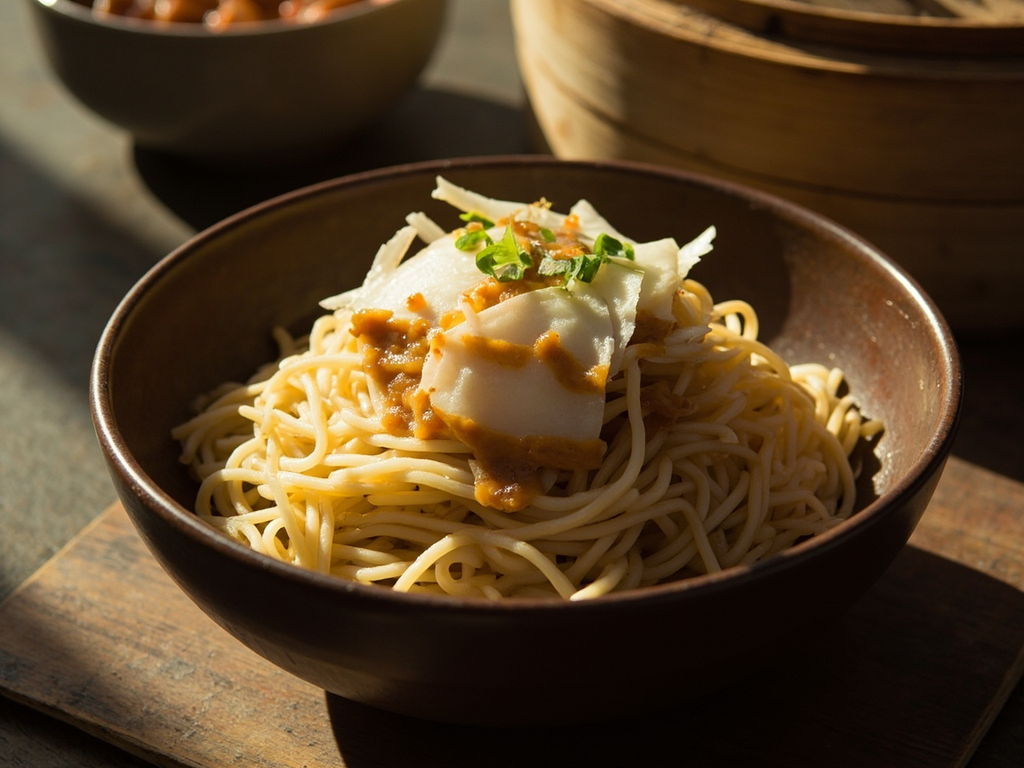 Everyday
Steamed Millet with Radish and Jiāng
Everyday fàn and cài (ordinary grain + vegetable meal)
🍄 🧂· 30 min
View the recipe
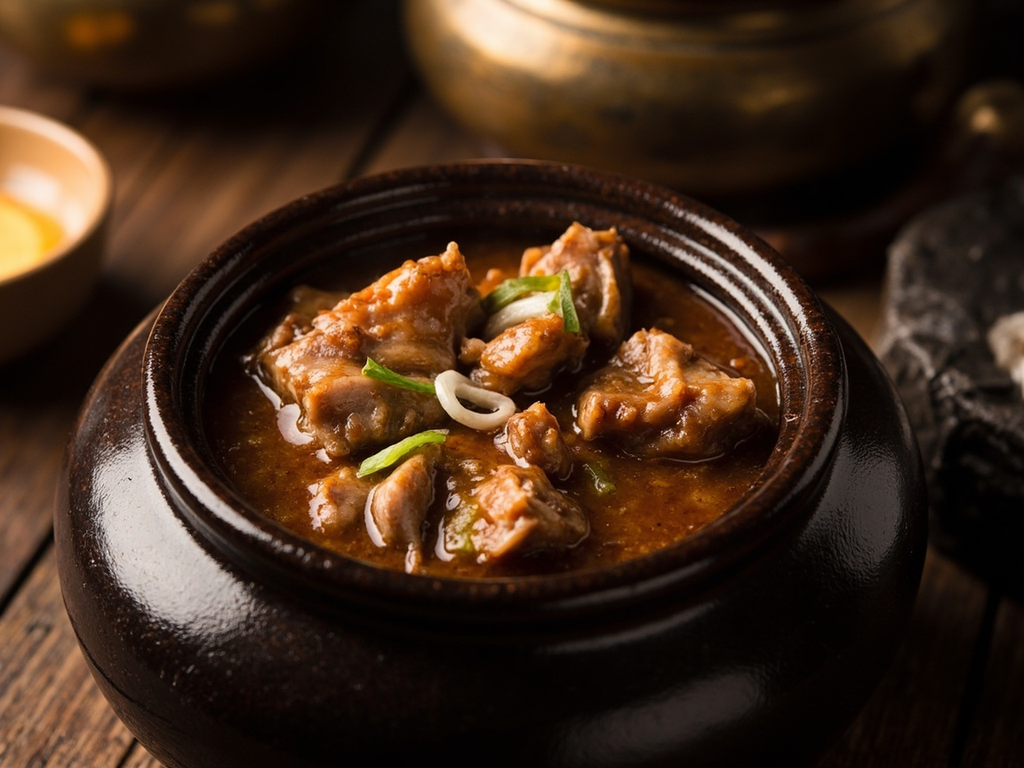 Festive
Pork Gēng with Fermented Soybean
Banquet cài — the geng, meat stew-soup for grand tables
🍄 🫙 🧂· 2 h
View the recipe
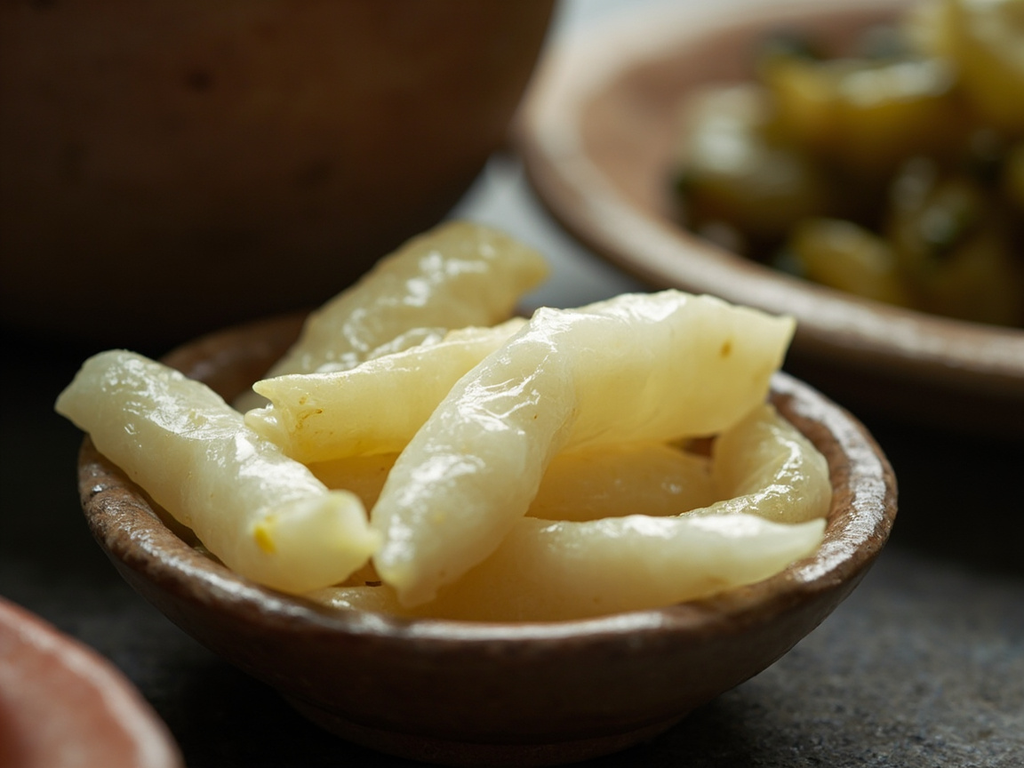 Preserving
Brined Radish and Cabbage (zū, 菹)
Storage cài — the zū, brined vegetables from the larder
🍋 🫙 🧂· 20 min + 3 to 5 days fermentation
View the recipe
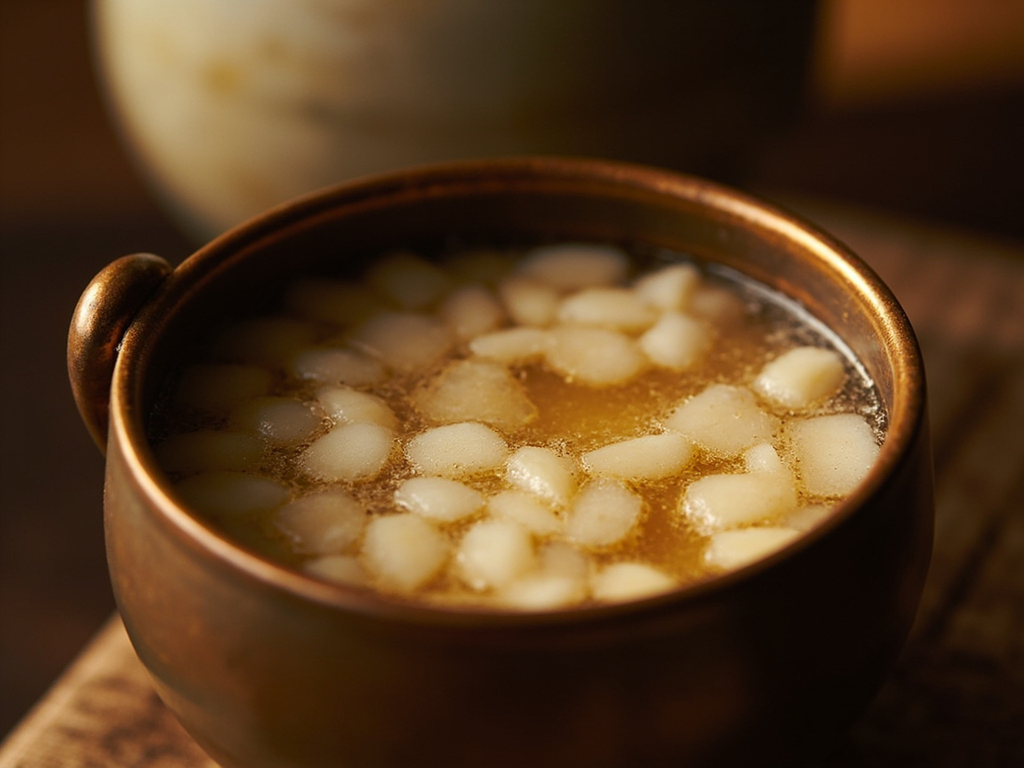 Drink
DrinkCloudy Rice Wine (lǎo, 醪)
Table and offering beverage — Han grain wine
🫙 🍯· 30 min + 2 to 4 days fermentation
View the recipe
 Remedy
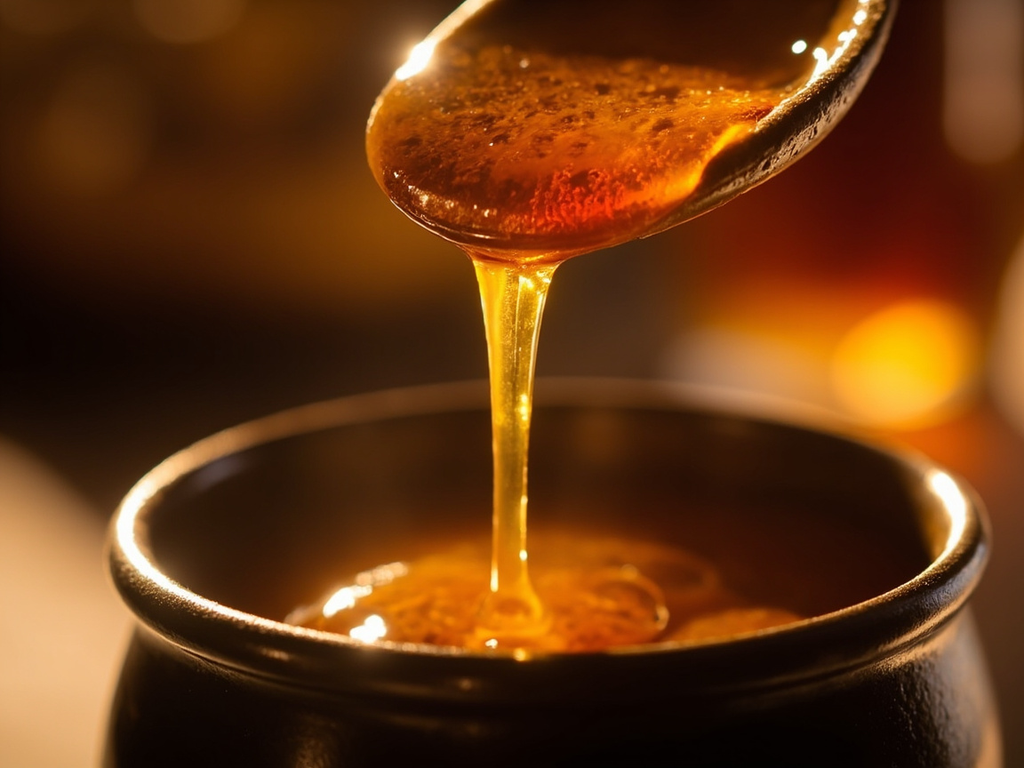
Barley Malt Sugar (yí, 飴)
Sweetness and remedy — the yí, fortifying malt syrup
🍯· 6 h (including 4-6 h saccharification)
View the recipe