 flip
flipCloudy Rice Wine (lǎo, 醪)
Cloudy Rice Wine (lǎo, 醪)
Why this dish? Cai Lun's anchor mentions rice wine as an accompaniment to his table. An omnipresent drink at banquets and court ceremonies, cloudy rice wine sealed the rituals and libations with which an imperial officer was familiar.
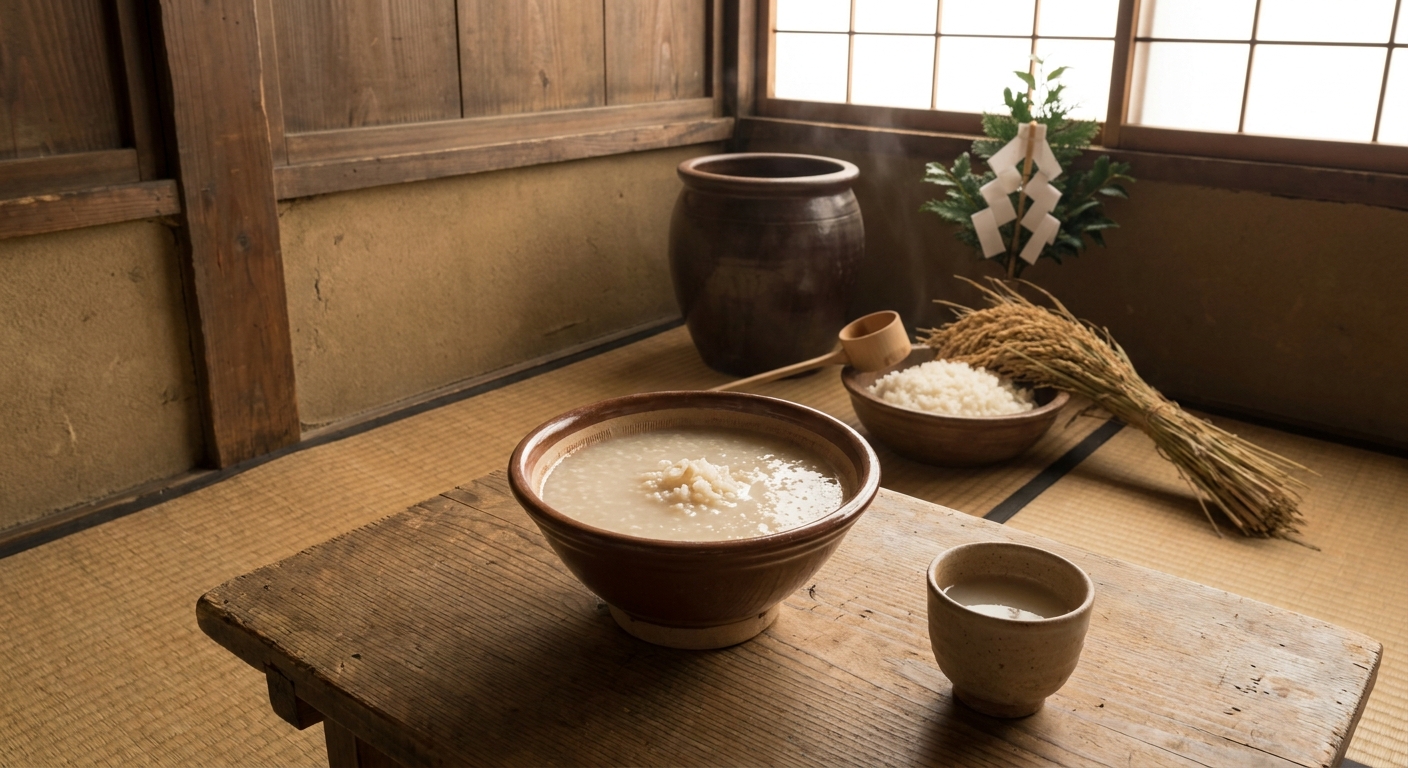
A milky, sweet, slightly effervescent drink made by fermenting cooked glutinous rice with a starter (qū). Sweet and low-alcohol at this stage, it is the ancestor of Chinese jiuniang and unfiltered sake — drunk young and cloudy, or left to mature.
No table worthy of the name, no offering to the ancestors goes without its wine. Steam the glutinous rice, let it cool until just warm — never hot, or you kill the ferment — then mix it with the qū, that leaven which awakens the hidden sweetness of the grain. Cover, and be patient: in a few days, the rice begins to exhale a sweet fragrance and the juice rises by itself. Drink it cloudy and cool; it rejoices the heart and honors the spirits.
- •Glutinous rice — one measure (sweet fermentable base)
- •Qū (cereal ferment) — in proportion (fermentation starter)
- •Spring water — a little (moisture)
Cloudy Rice Wine (lǎo, 醪)
A milky, sweet, slightly effervescent drink made by fermenting cooked glutinous rice with a starter (qū). Sweet and low-alcohol at this stage, it is the ancestor of Chinese jiuniang and unfiltered sake — drunk young and cloudy, or left to mature.
Why this dish? Cai Lun's anchor mentions rice wine as an accompaniment to his table. An omnipresent drink at banquets and court ceremonies, cloudy rice wine sealed the rituals and libations with which an imperial officer was familiar.
No table worthy of the name, no offering to the ancestors goes without its wine. Steam the glutinous rice, let it cool until just warm — never hot, or you kill the ferment — then mix it with the qū, that leaven which awakens the hidden sweetness of the grain. Cover, and be patient: in a few days, the rice begins to exhale a sweet fragrance and the juice rises by itself. Drink it cloudy and cool; it rejoices the heart and honors the spirits.
Ingredients (period version)
- Glutinous rice — one measure (sweet fermentable base)
- Qū (cereal ferment) — in proportion (fermentation starter)
- Spring water — a little (moisture)
Ingredients
- Glutinous rice — 500 g (fermentation base)
- Jiuniang starter / koji (qū ball, jiuqu) — 1 ball (or according to package dosage) (ferment)
- Filtered water (non-chlorinated) — 50 ml (activates the ferment)
Method
- Soak the glutinous rice for several hours, then steam until tender.
- Let the rice cool to about 30°C (warm to the touch) to avoid killing the ferment.
- Crumble the qū/starter and mix it evenly into the rice with a little filtered water.
- Pack into a clean container, making a well in the center; cover without sealing airtight.
- Let ferment for 2 to 4 days at 25-30°C: sweet liquid appears in the well. Taste, then store in a cool place and drink young and cloudy (or strain).
How it was made : Fermented grain wine has been central to Chinese culture since the Neolithic. Under the Han, lǎo (醪), unfiltered cloudy wine, and clarified wines accompanied banquets, ritual libations, and ancestral offerings. Fermentation relied on qū (麴), a mold and yeast culture grown on cereals — a sophisticated technology that distinguishes Chinese alcoholic fermentation from that of the West.
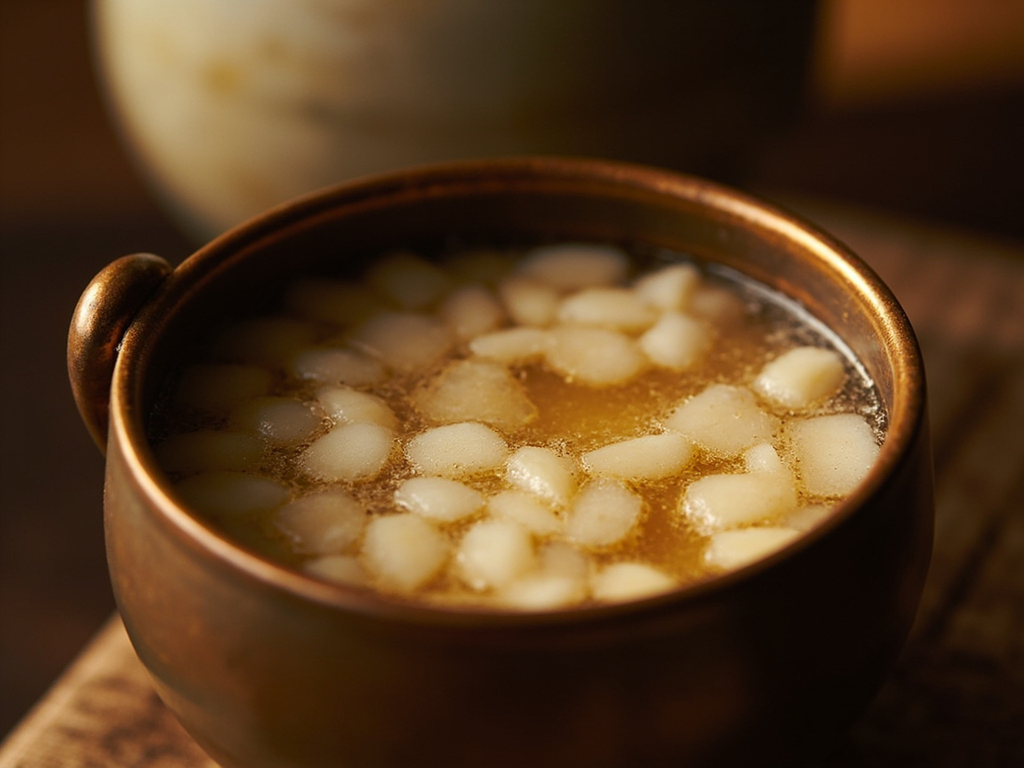
The contemporary twist : Serve the young fermented rice (jiuniang) warm in a cup, with a spoon, as a dessert-drink: a few drops of sweet juice and the soft grains, like an ancestral non-alcoholic 'rice milk' if consumed very young.
Cai Lun · Charactorium