 flip
flipBrined Radish and Cabbage (zū, 菹)
Brined Radish and Cabbage (zū, 菹)
Why this dish? Working long seasons in the imperial workshops (Shang Fang), Cai Lun drew on stores of brined vegetables kept from one harvest to the next — direct ancestors of Asian pickles, essential when fresh vegetables were scarce.
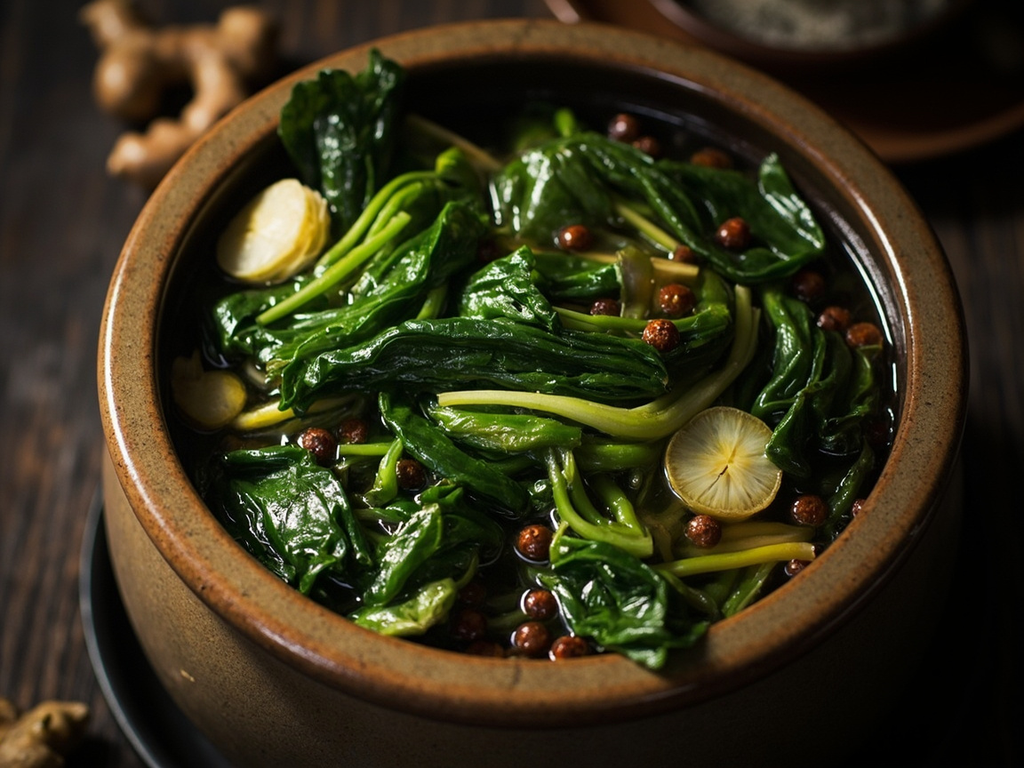
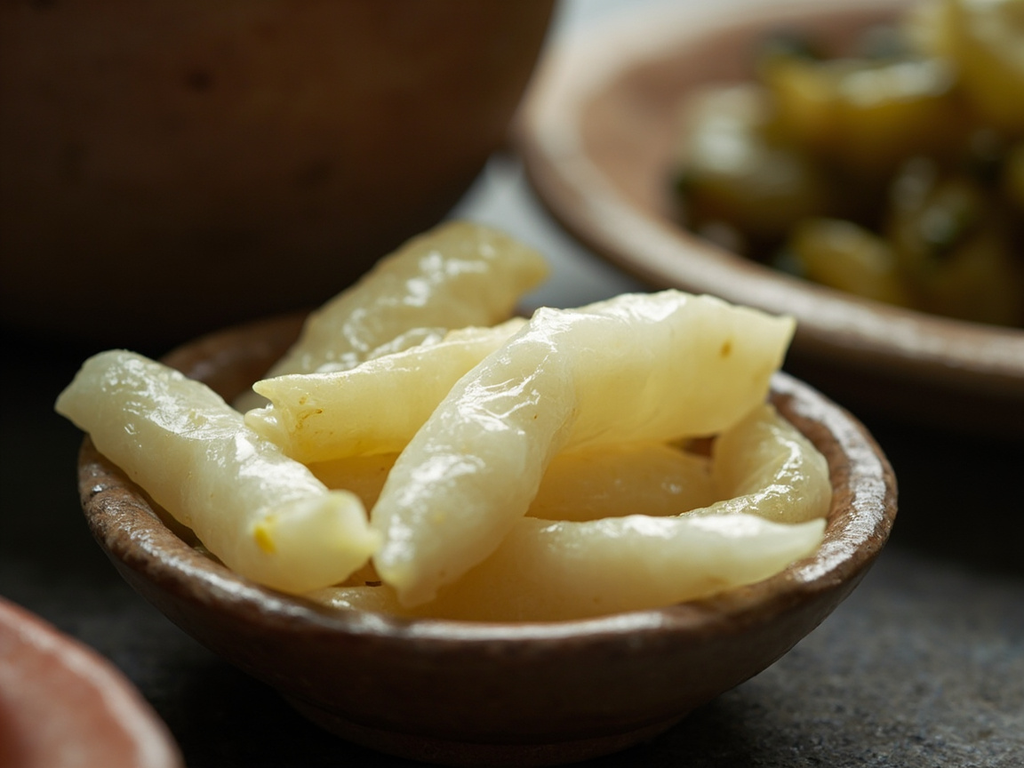
Thin slices of radish and cabbage pressed in salt and left to ferment for a few days, until crunchy, tangy, and deeply flavorful. The zū allowed one to survive the winter and accompanied the bland grain with a lively, sharp note of acidity.
A foresighted man never lets his storehouse run empty. When radish and cabbage abound, I advise you not to eat it all: slice them fine, rub them with salt until they release their water, and pack them tightly in an earthenware jar. A few days pass, the sour develops by itself, and you are provisioned for the lean months. On a bowl of millet, this tangy flavor wakes the palate better than anything.
- •White radish — two roots (vegetable to brine)
- •Cabbage (Chinese cabbage) — one head (vegetable to brine)
- •Salt — by hand, generously (preservation and fermentation agent)
- •Ginger — one piece (aromatic)
Brined Radish and Cabbage (zū, 菹)
Thin slices of radish and cabbage pressed in salt and left to ferment for a few days, until crunchy, tangy, and deeply flavorful. The zū allowed one to survive the winter and accompanied the bland grain with a lively, sharp note of acidity.
Why this dish? Working long seasons in the imperial workshops (Shang Fang), Cai Lun drew on stores of brined vegetables kept from one harvest to the next — direct ancestors of Asian pickles, essential when fresh vegetables were scarce.
A foresighted man never lets his storehouse run empty. When radish and cabbage abound, I advise you not to eat it all: slice them fine, rub them with salt until they release their water, and pack them tightly in an earthenware jar. A few days pass, the sour develops by itself, and you are provisioned for the lean months. On a bowl of millet, this tangy flavor wakes the palate better than anything.
Ingredients (period version)
- White radish — two roots (vegetable to brine)
- Cabbage (Chinese cabbage) — one head (vegetable to brine)
- Salt — by hand, generously (preservation and fermentation agent)
- Ginger — one piece (aromatic)
Ingredients
- White radish (daikon) — 300 g (vegetable)
- Chinese cabbage (napa cabbage) — 300 g (vegetable)
- Non-iodized salt — 2 tbsp (≈3% of weight) (brine)
- Fresh ginger — 1 piece, grated (aromatic)
Method
- Slice the radish and cabbage into thin strips.
- Mix with salt and grated ginger, massage for a few minutes until the vegetables release their water.
- Pack tightly into a clean jar, pressing so that the vegetables are submerged in their salty juice.
- Cover without sealing airtight, let ferment at room temperature (18-22°C) for 3 to 5 days, tasting daily.
- When the acidity pleases you, seal and store in a cool place. Serve in small amounts with the grain.
How it was made : The zū (菹), brined-fermented vegetable, is attested in China since antiquity and appears as early as the *Classic of Poetry* (Shijing). In Han times, radish, cabbage, mustard greens, and other vegetables were preserved in salt in earthenware jars, a lacto-fermentation technique that ensured winter supplies — the same family of processes that later gave rise to pao cai and kimchi.
The contemporary twist : Present these ancestral pickles in a small unglazed stoneware dish alongside a bowl of steamed rice, with a twist of ground Sichuan pepper on top for a peppery freshness today.
Cai Lun · Charactorium