 flip
flipSteamed Millet with Radish and Jiāng
Steamed Millet with Radish and Jiāng
Why this dish? A court official born into a modest family in Hunan, Cai Lun daily ate steamed grain with seasonal vegetables like radish, seasoned with a touch of jiāng — the ordinary fare of functionaries lodged near the imperial workshops of Luoyang.
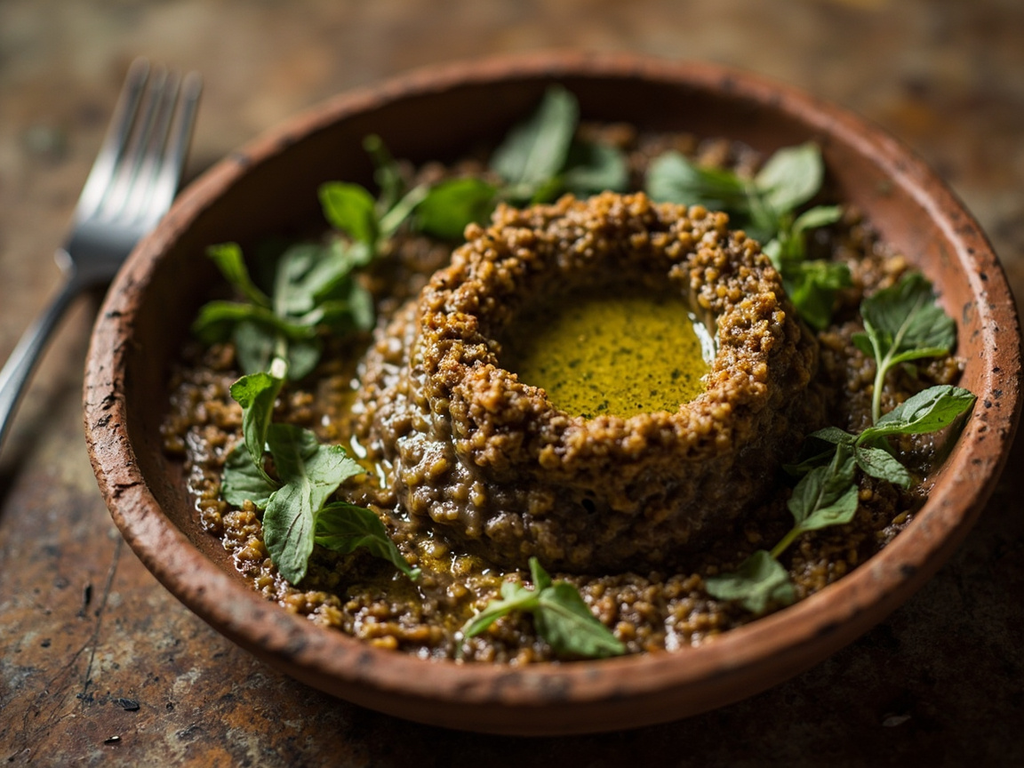
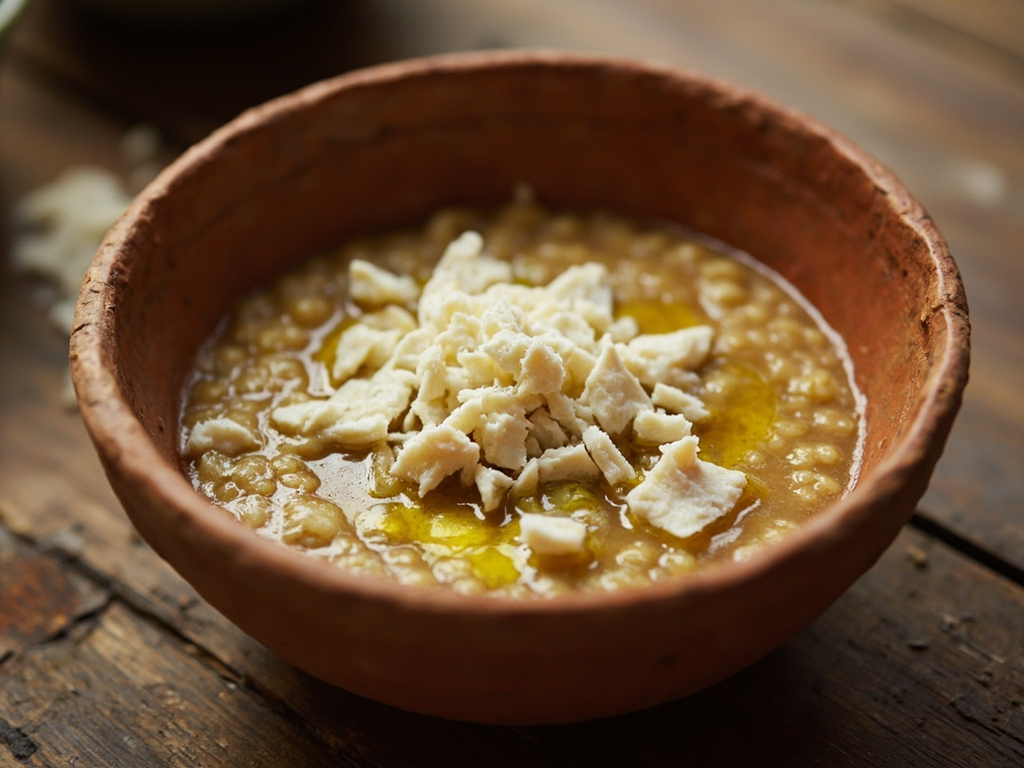
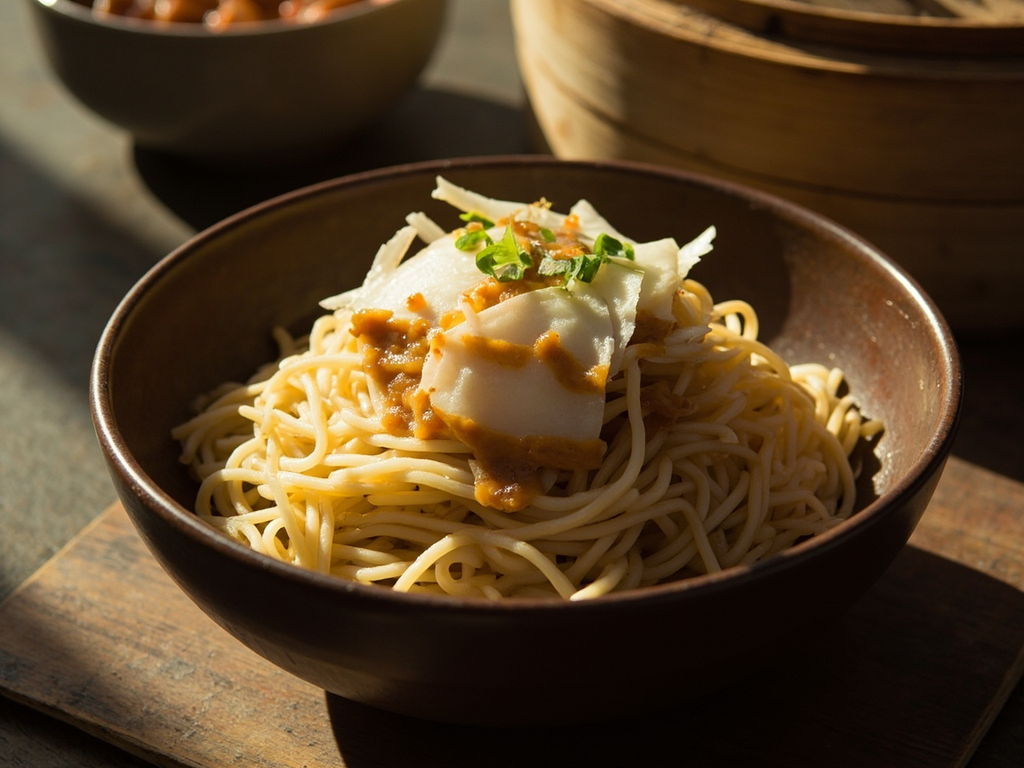
A bowl of yellow millet, steamed until fluffy and slightly sticky, topped with thin slices of sautéed radish bound with a spoonful of fermented soybean paste. The neutral grain soaks up the salty-umami sauce: it is the most humble and comforting bite of Han China.
Come closer, and do not be fooled by the simplicity of this bowl. I who have served so many years in the imperial workshops have learned that well-cooked grain is worth more than a thousand pretentious dishes. Wash the millet until the water runs clear, set it on the bamboo steamer over boiling water — yes, the same bamboo mat I used to drain the fibers of my paper — and let the steam do the rest. A lick of jiāng, a few slices of crunchy radish, and you hold the meal of a man who works from dawn to dusk.
- •Hulled millet (粟, sù) — one measure for two diners (base grain, the fàn)
- •White winter radish — one root (crunchy cài vegetable)
- •Jiāng (fermented soybean paste) — one spoonful (umami-salty condiment)
- •Sesame oil — a drizzle (fat for searing)
Steamed Millet with Radish and Jiāng
A bowl of yellow millet, steamed until fluffy and slightly sticky, topped with thin slices of sautéed radish bound with a spoonful of fermented soybean paste. The neutral grain soaks up the salty-umami sauce: it is the most humble and comforting bite of Han China.
Why this dish? A court official born into a modest family in Hunan, Cai Lun daily ate steamed grain with seasonal vegetables like radish, seasoned with a touch of jiāng — the ordinary fare of functionaries lodged near the imperial workshops of Luoyang.
Come closer, and do not be fooled by the simplicity of this bowl. I who have served so many years in the imperial workshops have learned that well-cooked grain is worth more than a thousand pretentious dishes. Wash the millet until the water runs clear, set it on the bamboo steamer over boiling water — yes, the same bamboo mat I used to drain the fibers of my paper — and let the steam do the rest. A lick of jiāng, a few slices of crunchy radish, and you hold the meal of a man who works from dawn to dusk.
Ingredients (period version)
- Hulled millet (粟, sù) — one measure for two diners (base grain, the fàn)
- White winter radish — one root (crunchy cài vegetable)
- Jiāng (fermented soybean paste) — one spoonful (umami-salty condiment)
- Sesame oil — a drizzle (fat for searing)
Ingredients
- Golden millet — 150 g (base grain)
- White radish (daikon) — 200 g (crunchy vegetable)
- Soybean paste (miso or mild doubanjiang) — 1 tbsp (umami condiment)
- Sesame oil — 1 tbsp (cooking)
- Green onion (scallion) — 1 stalk (freshness for finishing)
Method
- Rinse the millet several times in clear water until the water is no longer cloudy.
- Steam the millet in a steamer basket (or boil with 2 volumes of water to 1 of millet, covered, 15-20 min) until tender and fluffy.
- Slice the radish into thin strips. Heat the sesame oil and sauté the radish for 3-4 minutes, keeping it crunchy.
- Dilute the soybean paste in a spoonful of hot water, pour over the radish, and mix off the heat.
- Serve the millet in a bowl, top with the radish in jiāng, and sprinkle with chopped scallion.
How it was made : Under the Eastern Han, millet (sù) was the daily grain in the north, steamed on bamboo mats (zèng, 甑) placed over a pot of boiling water. Rice, rarer and more prestigious, was reserved for wealthy tables and the south. The fermented paste jiāng accompanied nearly every dish — dozens of varieties were distinguished in contemporary texts.
The contemporary twist : Serve the bowl like a contemporary donburi, the miso-glazed radish arranged in a fan on the millet, with a pinch of toasted sesame seeds to recall the drying mat of the paper inventor.
Cai Lun · Charactorium