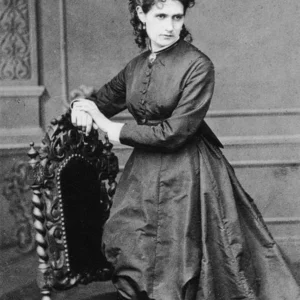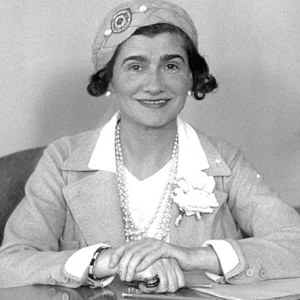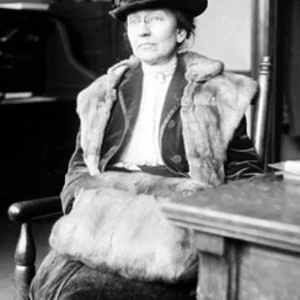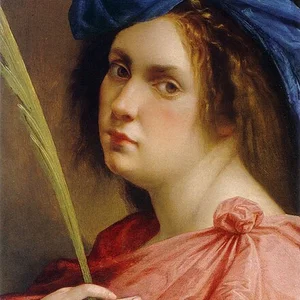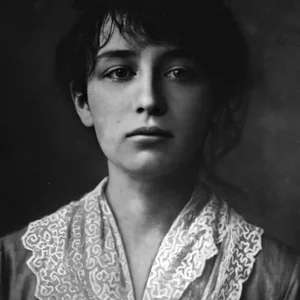

French sculptor and painter (1864–1943), she is one of the great artists of the late 19th century. A student and collaborator of Auguste Rodin, she developed her own artistic language before being gradually forgotten and committed to an asylum in 1913.
Frequently asked questions
Key Facts
- 1882: Enters the Académie Colarossi in Paris, one of the few institutions accepting women artists
- 1884–1892: Intensive collaboration with Auguste Rodin, who recognizes her talent and profoundly influences her
- 1895: Exhibits major works at the Paris Salon, including 'The Age of Maturity' and 'Clotho'
- 1913: Committed to the Montdevergues asylum due to mental illness, remains institutionalized until her death
- 1951: Posthumous retrospective rediscovers her work and her major artistic significance
Works & Achievements
Plaster then marble group depicting an embracing couple, inspired by an Indian legend. This work earned her an honorable mention at the Salon and affirmed her talent as an independent sculptor.
Sculpture depicting a couple embracing in a swirling dance movement. A masterpiece of grace and movement, this piece was deemed too sensual by the administration, which refused the marble commission.
Small group in onyx and bronze depicting four women in intimate conversation. A remarkable work for its innovative use of onyx and its intimate treatment of the subject.
Sculpture in onyx and bronze showing three small bathers beneath an immense wave. This work bears witness to the influence of Japanese art and Camille's ability to create a personal poetic universe.
Autobiographical sculptural group showing a man torn between a young supplicating woman and an old woman dragging him away. A powerful work evoking her break with Rodin.
Marble sculpture depicting the mythological hero brandishing the head of Medusa. One of her last major works, showcasing her technical mastery of marble.
Anecdotes
From the age of 12, Camille Claudel modeled clay with a skill that impressed those around her. She convinced her father to enroll her at the Académie Colarossi in Paris, one of the few art schools that accepted women, at a time when the École des Beaux-Arts was still closed to them.
When sculptor Alfred Boucher, who was teaching Camille and her fellow students, had to leave for Rome, he asked Auguste Rodin to take his place. This encounter, around 1884, would upend the artistic and personal life of Camille Claudel, who became Rodin's student, collaborator, and model all at once.
For her sculpture "Sakountala" (also known as "Vertumnus and Pomona" or "The Abandonment"), Camille Claudel received an honorable mention at the Salon of 1888. The work, depicting an embracing couple, was praised by critics as a piece of remarkable sensitivity, asserting her own talent, distinct from that of Rodin.
Camille Claudel created "The Wave", a bold sculpture in onyx and bronze depicting three small bathers beneath an enormous wave. This work reflects the influence of Japanese art — particularly Hokusai's woodblock prints — on her practice, which was highly innovative for the time.
After her commitment to the Ville-Évrard asylum in 1913, followed by her transfer to Montdevergues near Avignon, Camille Claudel never sculpted again. She spent thirty years there, until her death in 1943, despite the opinions of doctors who felt her institutionalization was no longer warranted.
Primary Sources
There is always something absent that torments me. I work relentlessly on my bust, but I cannot manage to finish it.
I live in such a curious, such a strange world. Of the dream that was my life, this is the nightmare.
A woman of genius, and this in an art where genius seems reserved for men alone. Mademoiselle Claudel is a great sculptor.
Madame Claudel does not present any systematic delusional disorders. She suffers mainly from unfounded ideas of persecution, but her condition does not necessarily require prolonged institutionalisation.
Key Places
Camille Claudel's studio and residence on the Île Saint-Louis from 1899. It was here that she worked in growing isolation and destroyed some of her works.
The workplace where Camille collaborated with Rodin for nearly ten years, contributing notably to the "Burghers of Calais" and the "Gates of Hell".
The psychiatric institution where Camille was committed from 1914 until her death in 1943. She spent thirty years there without ever returning to sculpture.
Museum inaugurated in 2017 in the town where Camille spent part of her childhood and began sculpting. It houses the world's largest collection of her works.
Camille Claudel's birthplace, where she grew up close to nature and began modelling clay from a very young age.
Typical Objects

A sculptor's wooden or metal tool used to shape clay. Camille Claudel used it daily in her studio to give form to her figures.

A translucent semi-precious stone that Camille used for some of her most original sculptures, such as "The Wave" and "The Gossips".

A rotating wooden support on which the sculptor rests their work in progress. Camille would work standing around this stand for long hours.

A metal wire stretched between two handles, used to slice through clay or separate a sculpture from its support. An indispensable tool in Camille's studio.

Camille created molds to reproduce her sculptures in bronze or plaster. The molding process was a crucial and technical step in her work.

A thick canvas apron protecting clothing from clay, plaster, and dust. Camille wore it constantly in her studio.
School Curriculum
Vocabulary & Tags
Key Vocabulary
Daily Life
Morning
Camille rose early in her studio on the Quai de Bourbon, on the Île Saint-Louis. She prepared her clay, moistened her works in progress, and organized her tools. The northern morning light, ideal for sculpture, was precious, and she began working in the earliest hours.
Afternoon
The afternoon was dedicated to intensive sculpting work, sometimes for hours without interruption. Camille occasionally received visitors, patrons, or art critics in her studio. She also visited foundries and mold-makers to oversee the production of her bronze pieces.
Evening
In the evenings, Camille could continue working by the light of oil lamps and later gas lamps. In her early Parisian years, she frequented artistic circles and salons. Over time, she became increasingly isolated, spending her evenings alone in her cluttered studio.
Food
Camille ate simply and sometimes frugally, especially during her years of financial hardship. Her diet consisted of bread, soups, vegetables, and cheese, typical of modest Parisian cuisine of the era. She often neglected her meals when absorbed in her work.
Clothing
Camille wore simple, practical dresses suited to studio work, covered by a canvas apron. For outings and vernissages, she dressed more elegantly in keeping with Belle Époque fashion. Her hands often bore traces of clay and plaster.
Housing
Camille lived in several Parisian studios, the most well-known being the one at 19 Quai de Bourbon on the Île Saint-Louis. It was a space that served as both home and workplace, cluttered with sculptures, molds, and materials. Conditions grew increasingly precarious over the years, the studio falling into disrepair for lack of upkeep.
Historical Timeline
Period Vocabulary
Visual Style
Un style visuel inspiré du réalisme sculptural de la fin du XIXe siècle, mêlant les tons terreux de l'atelier aux éclairages dramatiques des ateliers parisiens, entre classicisme et modernité naissante.
Sound Ambience
L'atmosphère sonore d'un atelier de sculpture parisien de la fin du XIXe siècle, entre le travail minutieux de la pierre et de la terre et les bruits lointains de la ville.
Liens externes & ressources
Références
Œuvres
Sakountala (L'Abandon)
1888
Les Causeuses (Les Bavardes)
1897
L'Âge mûr
1899