 flip
flipDamper with Wattleseed
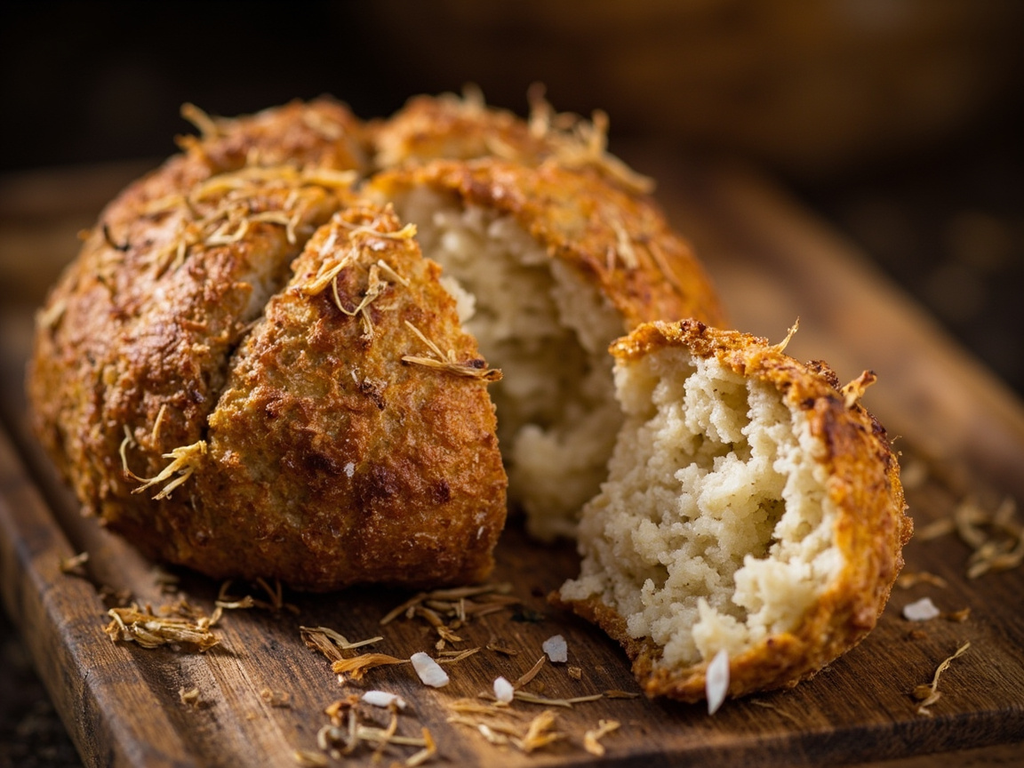
Damper with Wattleseed
Why this dish? Before wheat bread, desert peoples ground acacia seeds (wattleseed) into flour to bake nourishing cakes that could be carried long distances. The damper known in Australia is its descendant. For Cathy Freeman, constantly traveling between competitions (Sydney, Athens, Canada), this dense, energy-rich bread is the perfect travel companion.
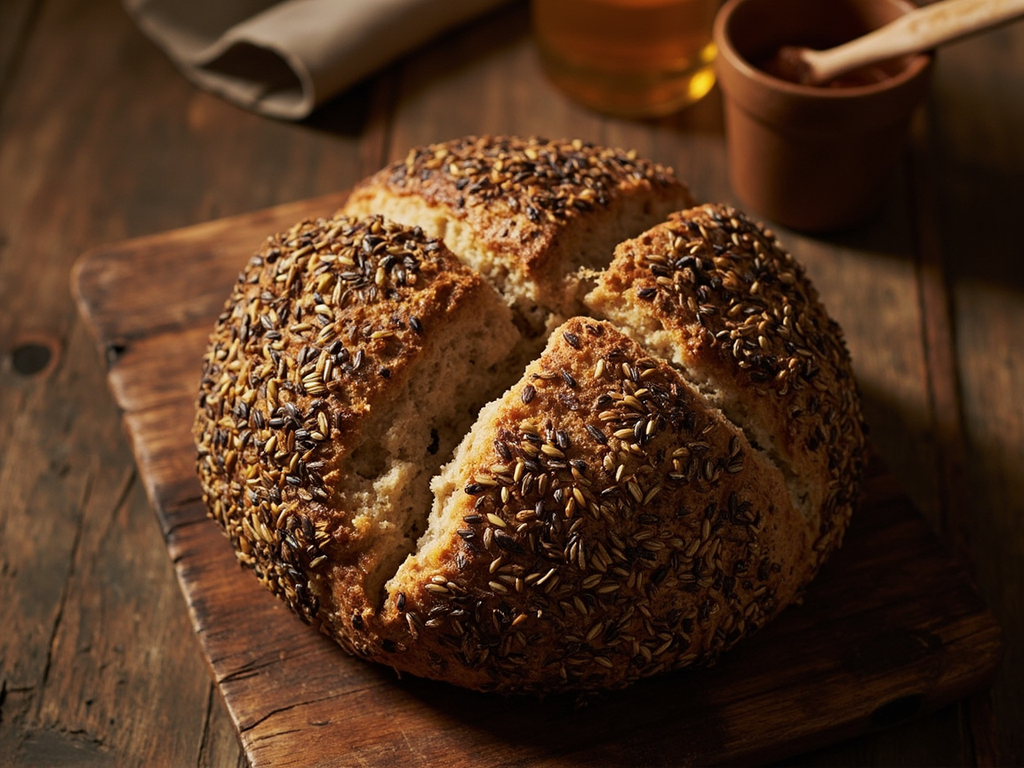
A rustic no-knead bread studded with roasted wattleseed, which tastes of coffee, hazelnut, and chocolate (without cocoa!). Dense, slightly sweet, it keeps and travels well.
When you spend your life on planes and in hotel rooms, you look for a taste that brings you home. Wattleseed is that for me: those little roasted seeds that smell like coffee and hazelnut, which my people have ground since time immemorial. You mix the dough without fuss, put it in the ashes or the oven, and the next day it keeps you going all morning. I used to slip a piece of this bread into my bag before a big event: a bit of country to take to the starting line.
- •Roasted and ground wattleseed — a good handful (aromatic native flour)
- •Crushed native seeds / fern flour — as gathered (base of the cake)
- •Water — as needed (binder)
- •Hot ashes — the hearth (cooking)
Damper with Wattleseed
A rustic no-knead bread studded with roasted wattleseed, which tastes of coffee, hazelnut, and chocolate (without cocoa!). Dense, slightly sweet, it keeps and travels well.
Why this dish? Before wheat bread, desert peoples ground acacia seeds (wattleseed) into flour to bake nourishing cakes that could be carried long distances. The damper known in Australia is its descendant. For Cathy Freeman, constantly traveling between competitions (Sydney, Athens, Canada), this dense, energy-rich bread is the perfect travel companion.
When you spend your life on planes and in hotel rooms, you look for a taste that brings you home. Wattleseed is that for me: those little roasted seeds that smell like coffee and hazelnut, which my people have ground since time immemorial. You mix the dough without fuss, put it in the ashes or the oven, and the next day it keeps you going all morning. I used to slip a piece of this bread into my bag before a big event: a bit of country to take to the starting line.
Ingredients (period version)
- Roasted and ground wattleseed — a good handful (aromatic native flour)
- Crushed native seeds / fern flour — as gathered (base of the cake)
- Water — as needed (binder)
- Hot ashes — the hearth (cooking)
Ingredients
- Wheat flour (or half wheat/half spelt) — 400 g (bread structure)
- Roasted ground wattleseed (or substitute very finely ground coffee + hazelnut powder) — 2 tbsp (signature flavor)
- Baking powder — 2 tsp (leavening)
- Cold butter — 60 g (tenderness)
- Milk — about 250 ml (binder)
- Honey (ideally native bee honey) — 1 tbsp (sweetness)
- Salt — 1 tsp (balance)
Method
- Preheat the oven to 200°C.
- Mix flour, ground wattleseed, baking powder, and salt; rub in the cold butter with your fingertips until crumbly.
- Add the honey, then gradually add the milk until you have a soft dough, without overworking it.
- Shape into a ball, place on a baking sheet, and cut a cross on top.
- Bake for 30 to 35 minutes: the bread sounds hollow when tapped on the bottom.
- Let cool slightly before cutting; it keeps for several days and travels very well.
How it was made : Desert women gathered acacia seeds, roasted and ground them between stones to make flour, then baked cakes in the ashes — one of the world's oldest breads. The wheat "damper" is the colonial adaptation of this tradition, here reconnected to its original ingredient.
The contemporary twist : Cut into thick wedges and spread with native bee honey (sugarbag): a pre-race snack that smells of the bush.
Sources : Bruce Pascoe, Dark Emu, Magabala Books, 2014 · Vic Cherikoff, The Bushfood Handbook, 1989
Cathy Freeman · Charactorium