 flip
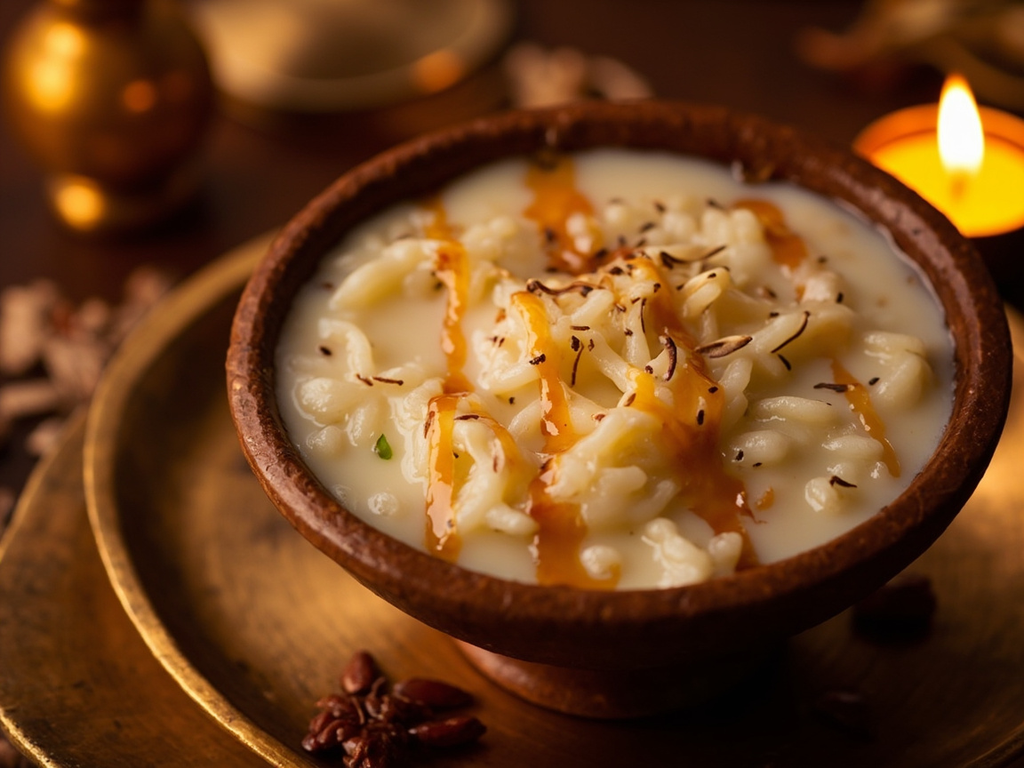
flipPāyasa — rice pudding with jaggery and cardamom
Pāyasa — rice pudding with jaggery and cardamom
Why this dish? Pāyasa was the dish of auspicious days and offerings, served to Brahmins and at grand ceremonies of the Mauryan court. For a king's advisor like Chanakya, it was the dish of coronations and sealed treaties — the sweetness that marks a state occasion.
Rice slowly cooked in milk, sweetened with jaggery (unrefined cane sugar) and perfumed with cardamom. Creamy, golden, fragrant: the ancestral sweet of India, ancestor of kheer.
That day, the king had sealed a pact; a sweetness worthy of the moment was needed. I reduced the milk over a low flame, patiently, for haste spoils milk as it spoils kingdoms. I drowned the rice in it, melted the cane sugar, crushed the cardamom between two fingers. Taste: sweetness is the reward, but remember — he who abandons himself to it loses his rigor. One portion suffices the wise; the rest, we offer.
- •Cow's milk (kṣīra) — abundant (creamy base)
- •Rice (śāli) — a handful (grain)
- •Jaggery / cane sugar (guḍa) — to taste (sweetener)
- •Cardamom (elā) — a few pods (fragrance)
- •Ghee (ghṛta) — a little (richness, sheen)
Pāyasa — rice pudding with jaggery and cardamom
Rice slowly cooked in milk, sweetened with jaggery (unrefined cane sugar) and perfumed with cardamom. Creamy, golden, fragrant: the ancestral sweet of India, ancestor of kheer.
Why this dish? Pāyasa was the dish of auspicious days and offerings, served to Brahmins and at grand ceremonies of the Mauryan court. For a king's advisor like Chanakya, it was the dish of coronations and sealed treaties — the sweetness that marks a state occasion.
That day, the king had sealed a pact; a sweetness worthy of the moment was needed. I reduced the milk over a low flame, patiently, for haste spoils milk as it spoils kingdoms. I drowned the rice in it, melted the cane sugar, crushed the cardamom between two fingers. Taste: sweetness is the reward, but remember — he who abandons himself to it loses his rigor. One portion suffices the wise; the rest, we offer.
Ingredients (period version)
- Cow's milk (kṣīra) — abundant (creamy base)
- Rice (śāli) — a handful (grain)
- Jaggery / cane sugar (guḍa) — to taste (sweetener)
- Cardamom (elā) — a few pods (fragrance)
- Ghee (ghṛta) — a little (richness, sheen)
Ingredients
- Whole milk — 1 liter (base)
- Basmati rice — 60 g (grain)
- Jaggery (gur) or whole cane sugar — 80 g (sweetener)
- Ground green cardamom — 1/2 tsp (fragrance)
- Ghee — 1 tsp (richness)
- Slivered almonds (optional, attested in ancient India) — 1 tbsp (garnish)
Method
- Rinse the rice and sauté in ghee for 1 minute.
- Pour in the milk, bring to a gentle simmer, then reduce heat.
- Simmer for 35–45 minutes, stirring regularly, until the rice is tender and the milk has thickened.
- Off the heat, stir in crumbled jaggery (do not boil after adding, as milk may curdle) and cardamom.
- Stir until the jaggery is fully dissolved.
- Serve warm or chilled, sprinkled with almonds.
How it was made : Pāyasa (from payas, meaning 'milk') is one of the best-attested sweet preparations of ancient India, appearing in Vedic and Buddhist texts — it is the dish that Sujātā is said to have offered to the Buddha. It was sweetened with jaggery or honey, as refined white sugar did not exist; cardamom and sometimes saffron provided fragrance.
The contemporary twist : Served in verrines with a fine mango gelée on top — 'coronation pāyasa', a festive dessert that travels from the 4th century BCE to your table.
Chanakya · Charactorium