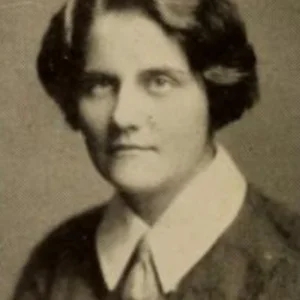

Cheryl Crawford was an American theatre producer and a major figure of the 20th-century New York stage. A co-founder of the Group Theatre and later the Actors Studio, she helped spread the acting “Method” across the United States.
Cheryl Crawford(1902 — 1986)
Cheryl Crawford
États-Unis
5 min read
Frequently asked questions
Key Facts
- Born in 1902 in Akron, Ohio (United States)
- Co-founded the Group Theatre in 1931 alongside Harold Clurman and Lee Strasberg
- Co-founded the Actors Studio in 1947 with Elia Kazan and Robert Lewis, the cradle of the “Method”
- Produced numerous Broadway shows, including works by Tennessee Williams
- Died in 1986 in New York
Works & Achievements
A collective troupe of socially engaged theatre that she co-founded, revolutionizing acting in the United States.
A production that rescued Gershwin's opera from obscurity and carried it to national success.
A repertory company she co-founded with Eva Le Gallienne and Margaret Webster.
The legendary workshop where the greatest actors of the American Method trained.
An acclaimed production of a major Williams play, honored with a Tony Award.
A Broadway hit she produced, blending Scottish fantasy with popular music.
A memoir recounting her fifty years in American theatre.
Anecdotes
In 1931, Cheryl Crawford left the comfort of the Theatre Guild, where she worked as a casting assistant, to co-found the Group Theatre with Harold Clurman and Lee Strasberg. They wanted a troupe of actors living and working together like a family, far from the individual stars of Broadway.
In 1947, together with Elia Kazan and Robert Lewis, Cheryl Crawford helped create the Actors Studio in New York. This place, later led by Lee Strasberg, would become the temple of the “Method” and would train actors such as Marlon Brando, James Dean, and Marilyn Monroe.
In 1945, Crawford produced a revival of George Gershwin's opera “Porgy and Bess” that met with far greater success than the original 1935 production. Her pared-down version toured the entire country and restored the work's prestige.
As a woman producer in a world dominated by men, she also ran her own company, the American Repertory Theatre, in the late 1940s. She remained active on Broadway for nearly half a century, a rare feat for a producer of her era.
In 1950, she produced “The Rose Tattoo” by Tennessee Williams; she maintained a long collaboration with the playwright, helping to bring several of his major plays to the stage.
Primary Sources
Autobiographical account in which Crawford recounts her fifty years spent in American theatre, from her early days at the Theatre Guild to the founding of the Group Theatre and the Actors Studio.
Clurman, co-founder of the Group Theatre alongside Crawford and Strasberg, describes the troupe's collective venture and the central organizational role played by Cheryl Crawford.
Document from the premiere of George Gershwin's opera, a work that Crawford would later revive and turn into a triumph with her 1942-1945 production.
Key Places
Industrial city where Cheryl Crawford was born in 1902, into a middle-class family.
Women's college where Crawford studied and developed a passion for theater before heading to New York.
New York's theater district where Crawford produced dozens of shows over half a century.
Actors' workshop co-founded by Crawford in 1947, which became the home of the American "Method".
City where Cheryl Crawford died in 1986, after a long career at the heart of American theatrical life.
Typical Objects

A working copy of a play, covered with staging notes, cuts, and acting cues. The producer's everyday tool for preparing a show.

A printed placard announcing a play, its title, its cast, and its theater. An essential element in promoting a New York production.

A booklet handed to audience members detailing the cast, the crew, and the acts of the play. A keepsake and a guide during the performance.

An indispensable device for a producer to negotiate contracts, rights, and financing. Crawford spent much of her days organizing her shows.

A legal document binding the producer, the authors, the actors, and the theaters. The cornerstone of the producer's trade, committing the money and the rights of the show.

The musical notebook of Gershwin's opera, which Crawford led to triumph in her 1940s revival. The basis for the work of the singers and the orchestra.
School Curriculum
Vocabulary & Tags
Key Vocabulary
Tags
Daily Life
Morning
Cheryl Crawford's morning often began with reading manuscripts and plays that authors submitted to her. On the phone, she checked in on her ongoing projects and scheduled the day's appointments.
Afternoon
The afternoon was devoted to meetings: negotiations with authors, fundraising from investors, casting actors. She also spent time in rehearsal rooms to follow the progress of the shows.
Evening
In the evening, she attended performances, whether her own productions or those of fellow producers, to spot new talent. Opening nights were decisive moments when a show's financial fate was at stake.
Food
An active New York producer, she often took her meals in the restaurants of the theater district, places for professional gatherings. Business lunches and dinners were an integral part of her profession.
Clothing
A woman of power in a man's world, she adopted a sober, professional look, far from the flashiness of the stars. Elegant suits and practical outfits suited her long working days.
Housing
She lived in New York, close to the theater district where her entire professional life unfolded. Her urban home reflected that of a woman wholly devoted to her profession.
Historical Timeline
Period Vocabulary
Liens externes & ressources
Références
Œuvres
Fondation du Group Theatre
1931
American Repertory Theatre
1946
Fondation de l'Actors Studio
1947
The Rose Tattoo (Tennessee Williams)
1950
Brigadoon (comédie musicale de Lerner et Loewe)
1947
One Naked Individual (autobiographie)
1977