 Flip the card
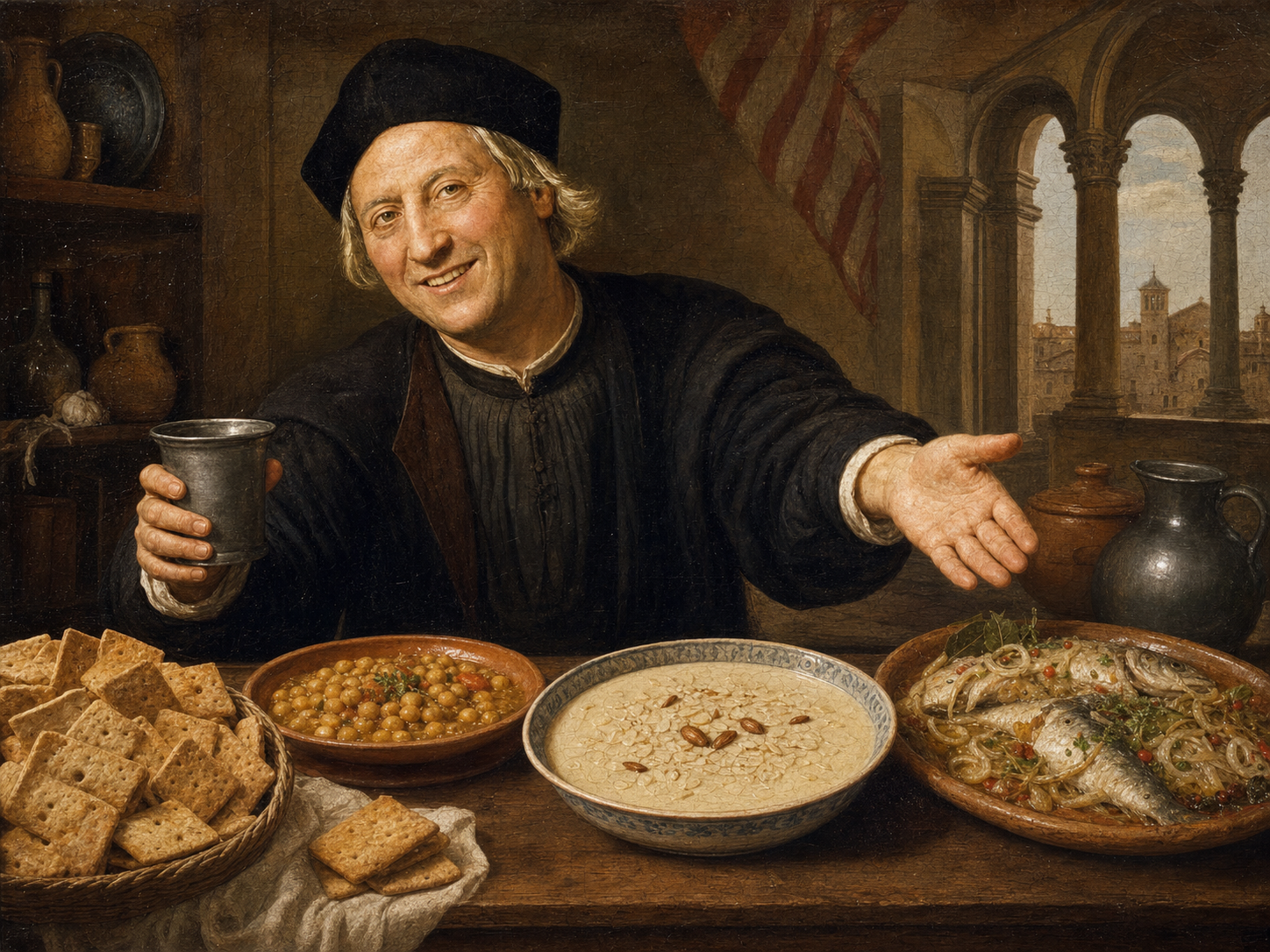
Christopher Columbus at the table
1451 — 1506
On the menu
The Mediterranean Sea Table: from Ship to Shore
For a Genoese sailor in the service of Castile, meals follow not the starter-main-dessert pattern but two opposing worlds. On board, there is the ración: a frugal, regulated portion distributed at fixed hours — hardtack, salt meat, dried legumes, wine mixed with water, eaten from a single wooden bowl around the mainmast. On land, in the ports of Genoa, Palos, or Seville, one finds the Christian merchant table of the late 15th century: a pottage to begin, meats or fish heightened with costly spices, and almond-and-honey sweets to close a banquet or religious feast. To understand Columbus is to hold these two tables together: the ordered scarcity of the open sea and the spiced abundance of the return.
Signature : The Spice Chest: Cinnamon, Ginger, and Saffron
The dream that launched Columbus across the Atlantic was precisely spice: to reach the Indies and bring back cinnamon, ginger, pepper, and cloves without passing through Muslim merchants. These Eastern aromatics, already present in the rich cooking of Genoa and Castile, perfume his festive dishes and drinks. Spain's saffron gilds the pottages of fine houses. It is the very flavor of his ambition: to sail toward taste.
click to flip back
Christopher Columbus at the table
1451 — 1506
5 period recipes
 Travel
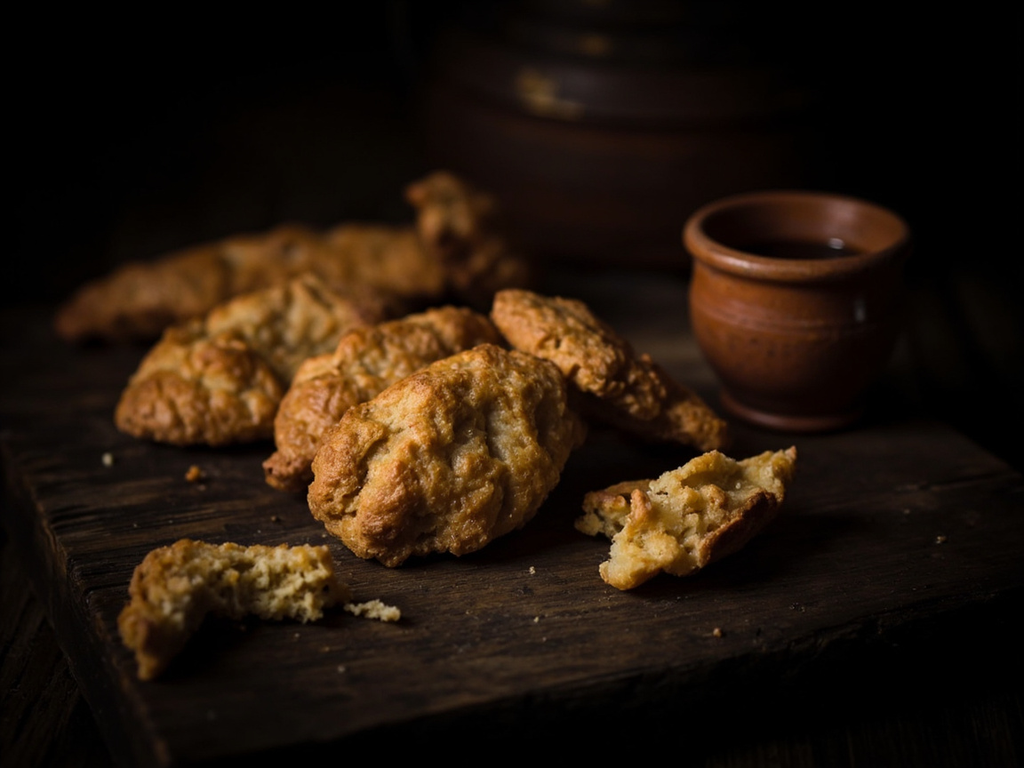
Galleta de mar (Sea Biscuit)
Ración of the open sea — sea bread from the daily ración distributed on board
🧂· 2 h
View the recipe
 Everyday
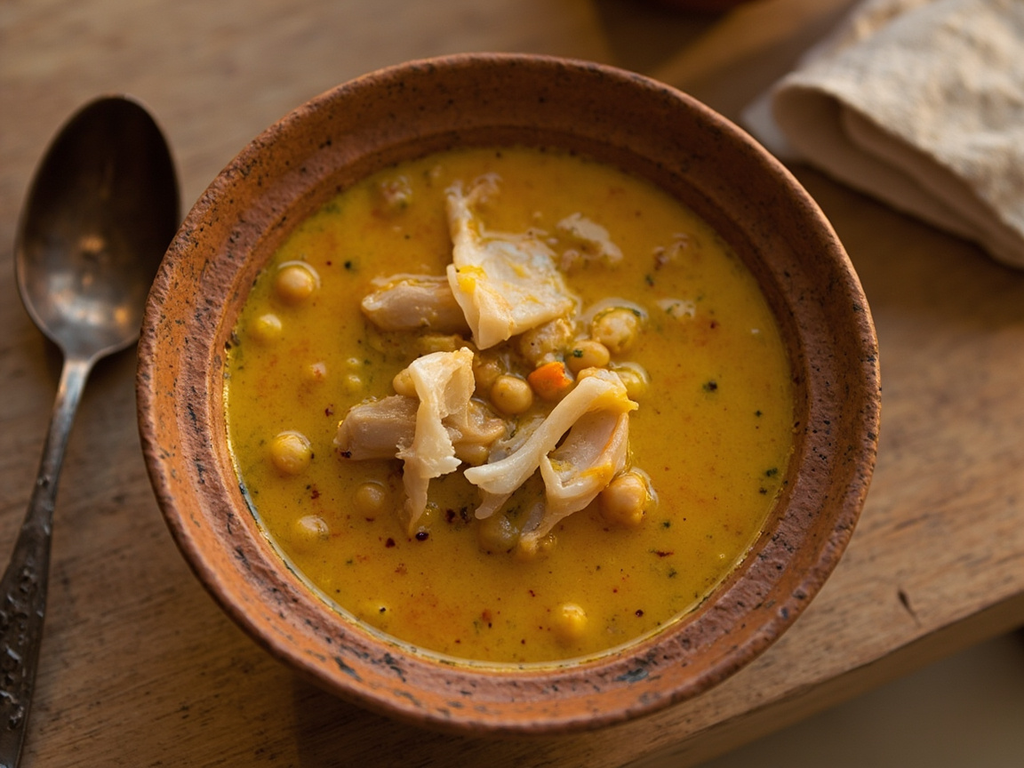
Potaje de garbanzos (Chickpea Pottage)
Daily olla — the base pottage that opens and constitutes the ordinary meal of sailors and common folk
🧂 🍄· 2 h (plus soaking)
View the recipe
 Festive
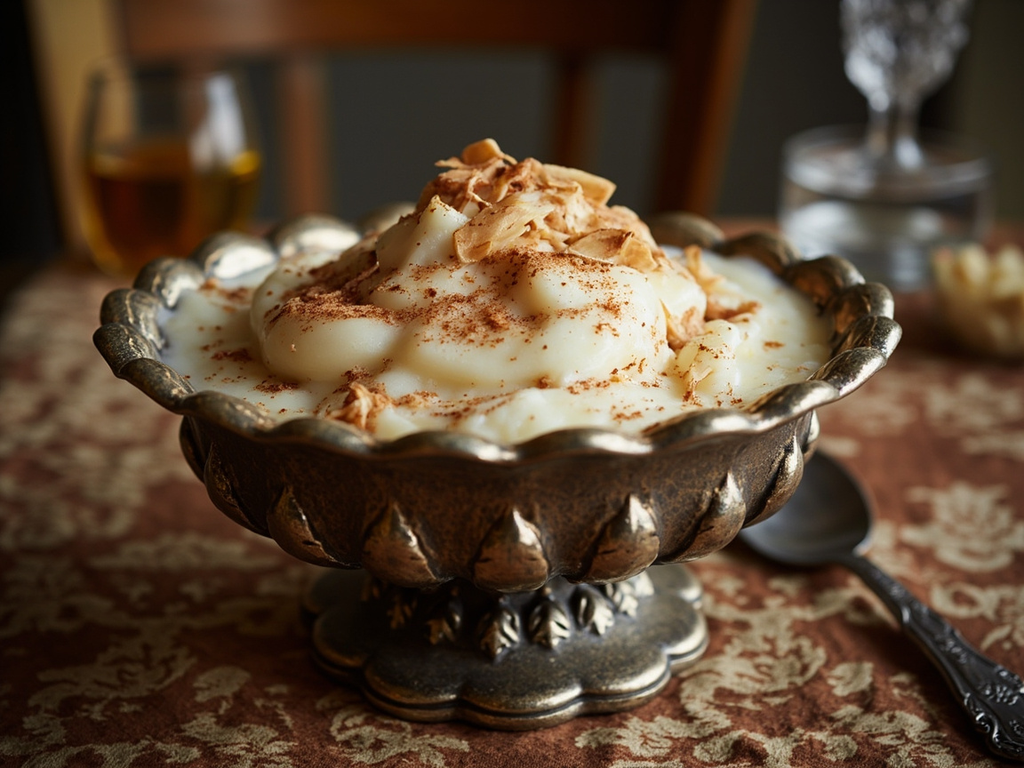
Manjar blanco (Almond and Chicken Blancmange)
Dish of honor at the banquet — prestigious dish served at noble tables during feasts and grand court meals
🍯 🌶️· 45 min
View the recipe
 Preserving
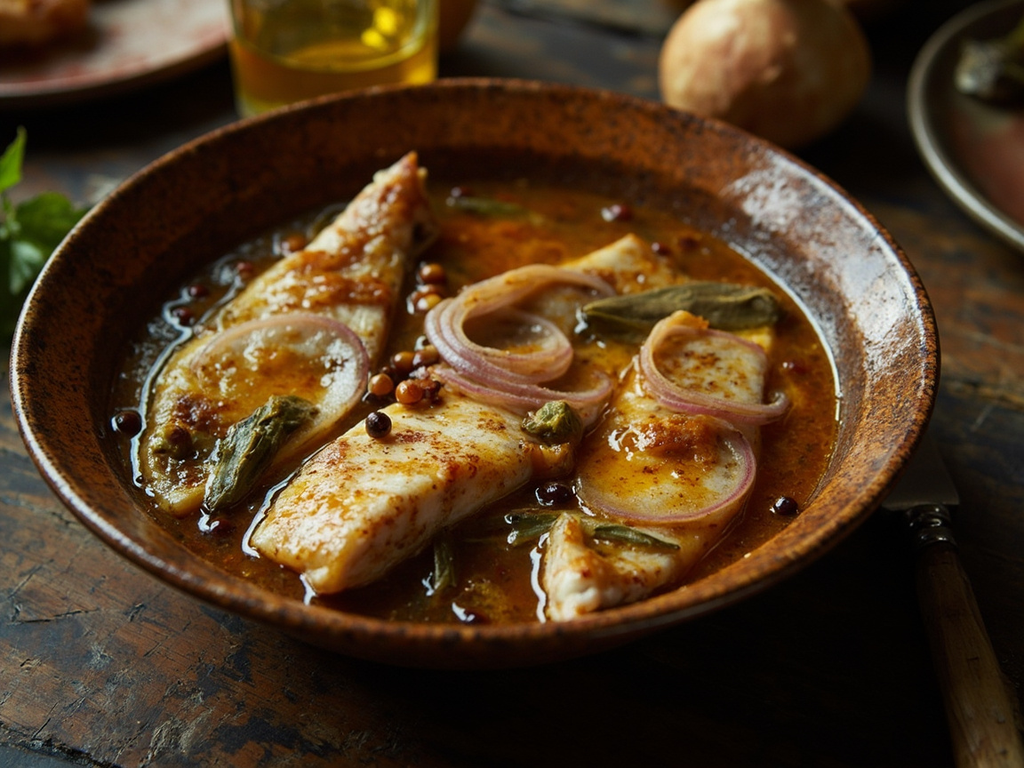
Escabeche de pescado (Fish in Escabeche)
Preserved reserve — a preparation that turns the day's catch into a tangy provision lasting several days
🍋 🧂· 40 min (+ 12 h rest)
View the recipe
 Drink
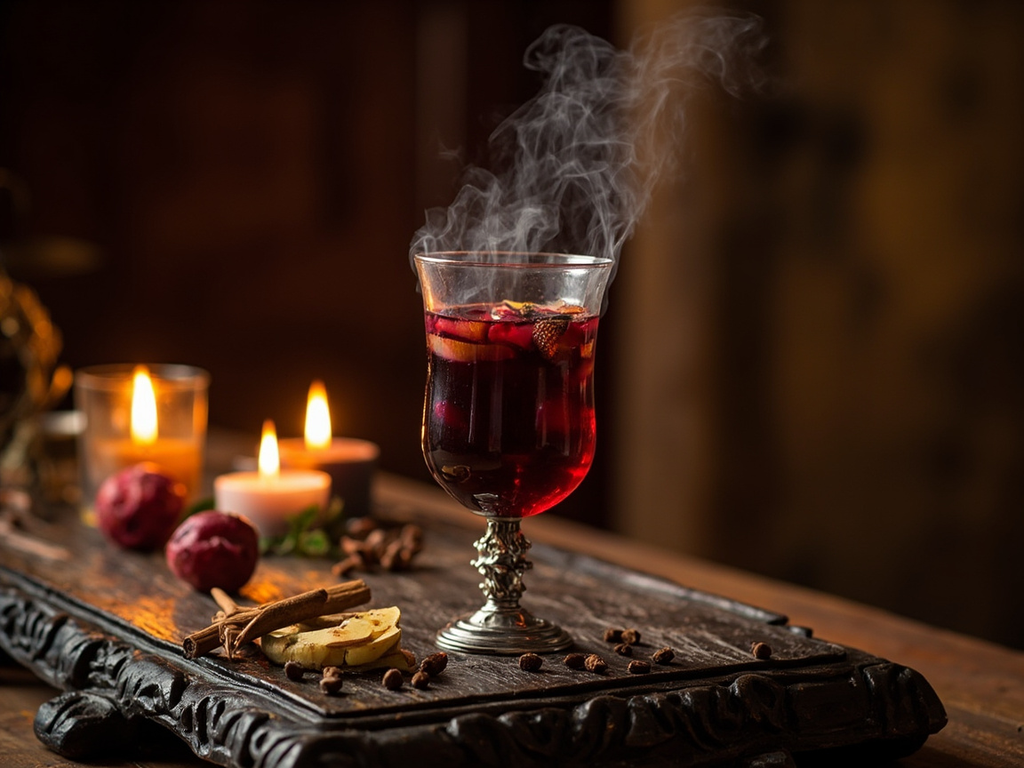
DrinkHipocrás (Spiced Honeyed Wine)
Table drink and cordial — aromatized wine served at the end of a banquet or taken as a strengthening cordial
🌶️ 🍯· 30 min
View the recipe