 flip
flipPotaje de garbanzos (Chickpea Pottage)
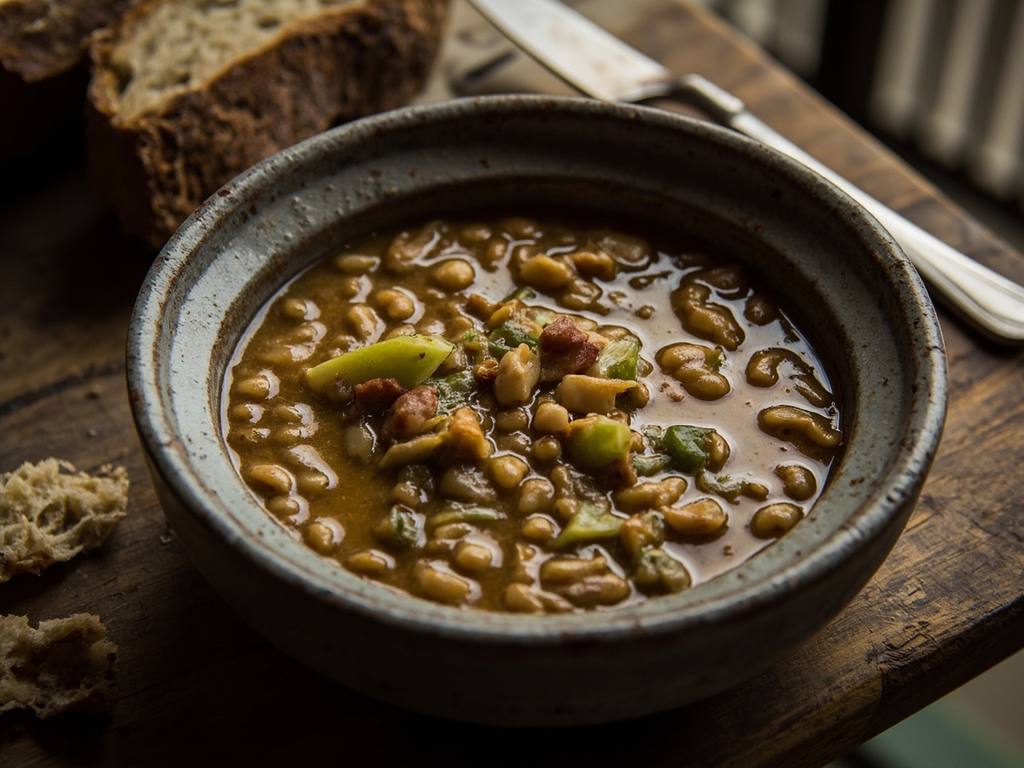
Potaje de garbanzos (Chickpea Pottage)
Why this dish? Dried legumes — chickpeas and broad beans — were part of Columbus's ship provisions because they kept indefinitely. Simmered with a little salt meat and olive oil, they provided the only hot, nourishing dish possible in the pot set on the sand hearth of the forecastle.
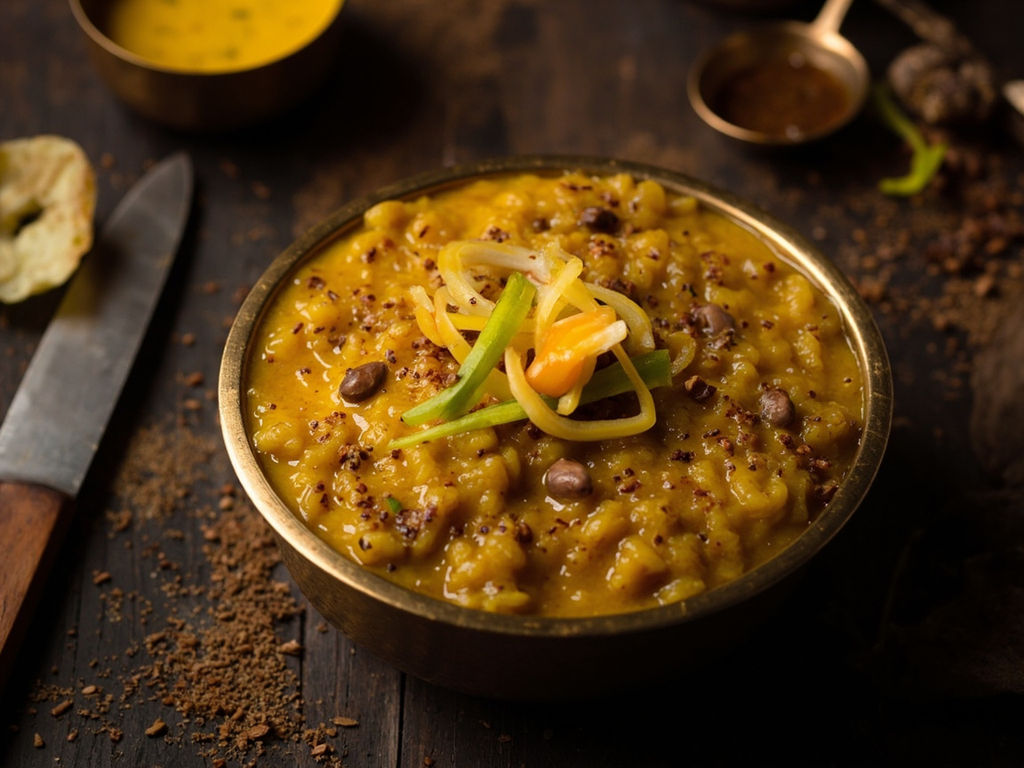
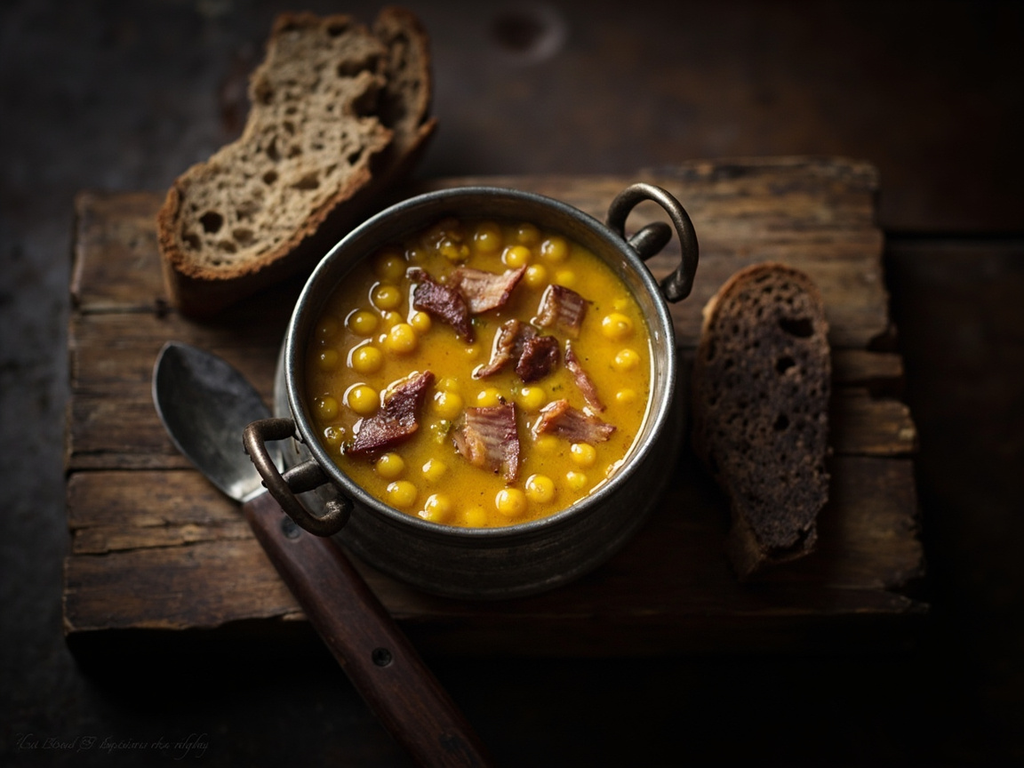
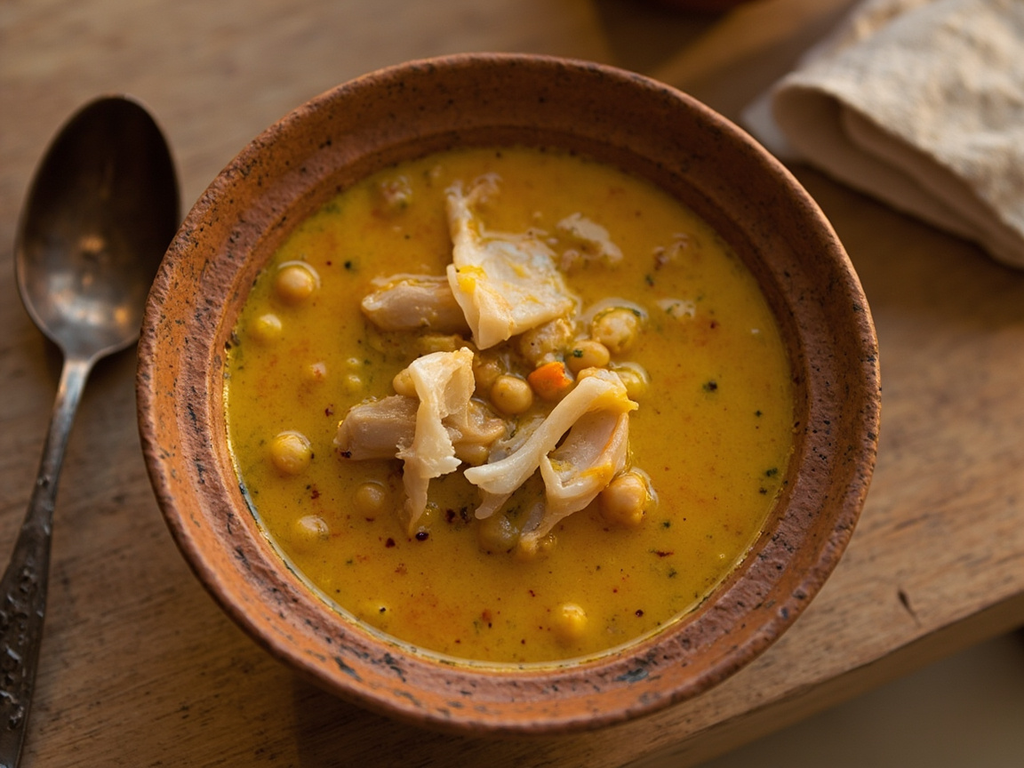
A slow stew of soaked chickpeas, flavored with garlic, olive oil, and a piece of salted meat or fish. Comforting and economical, it is the pillar dish of popular Iberian cuisine of the late 15th century, both ashore and at sea when the weather allowed lighting a fire.
On board, when the sea is kind and we can make fire on the sand, my cook sets the chickpeas to soften at dawn in the great pot. He throws in a piece of bacon or salt fish, garlic, and that good Andalusian olive oil that never leaves us. Believe me, after a watch in the cold wind, this hot pottage is worth a prince's feast. We ate it in turn from the same wooden bowl, blessing the Lord for the flame and the full belly.
- •Dried chickpeas — a good measure (base)
- •Olive oil — generous (fat and binder)
- •Garlic — several cloves (aromatic)
- •Salt pork or salt cod — a piece (umami and salt)
- •Onion — one (base)
- •Saffron — a few threads (wealthy table) (color and perfume)
Potaje de garbanzos (Chickpea Pottage)
A slow stew of soaked chickpeas, flavored with garlic, olive oil, and a piece of salted meat or fish. Comforting and economical, it is the pillar dish of popular Iberian cuisine of the late 15th century, both ashore and at sea when the weather allowed lighting a fire.
Why this dish? Dried legumes — chickpeas and broad beans — were part of Columbus's ship provisions because they kept indefinitely. Simmered with a little salt meat and olive oil, they provided the only hot, nourishing dish possible in the pot set on the sand hearth of the forecastle.
On board, when the sea is kind and we can make fire on the sand, my cook sets the chickpeas to soften at dawn in the great pot. He throws in a piece of bacon or salt fish, garlic, and that good Andalusian olive oil that never leaves us. Believe me, after a watch in the cold wind, this hot pottage is worth a prince's feast. We ate it in turn from the same wooden bowl, blessing the Lord for the flame and the full belly.
Ingredients (period version)
- Dried chickpeas — a good measure (base)
- Olive oil — generous (fat and binder)
- Garlic — several cloves (aromatic)
- Salt pork or salt cod — a piece (umami and salt)
- Onion — one (base)
- Saffron — a few threads (wealthy table) (color and perfume)
Ingredients
- Dried chickpeas — 300 g (soaked 12 h) (base)
- Extra virgin olive oil — 4 tbsp (fat and binder)
- Garlic — 4 cloves (aromatic)
- Desalted salt cod (or smoked bacon) — 150 g (umami and salt)
- Onion — 1 large (base)
- Saffron — 1 pinch (color and perfume)
- Bay leaf — 1 (aromatic)
Method
- The night before, soak the chickpeas in plenty of cold water.
- Sauté the onion and garlic in olive oil until tender.
- Add the drained chickpeas, bay leaf, and salt meat or fish, cover with water.
- Bring to a simmer and cook for 1½ to 2 hours, until the chickpeas are tender.
- Dissolve the saffron in a ladle of hot broth and stir in at the end of cooking.
- Adjust salt (watch the saltiness from the cured meat) and serve hot, drizzled with raw oil.
How it was made : Pottage of dried legumes is the heart of medieval Mediterranean popular food. On board, cooking was done in a fogón: a sandbox placed on the forward deck, the only place where fire was allowed. In heavy weather, fire was forbidden and the crew returned to hardtack and cold salt meat. Saffron, a luxury from Spain, appeared only on the best tables.
The contemporary twist : A spoonful of smoked olive oil and a few cilantro sprigs for a nod to Mediterranean trading posts — the sailor's pottage awakened.
Sources : Ruperto de Nola, Libro de Cozina (c. 1520, recipes of Iberian cuisine of the period) · Carla Rahn Phillips, Six Galleons for the King of Spain (1986)
Christopher Columbus · Charactorium