 flip
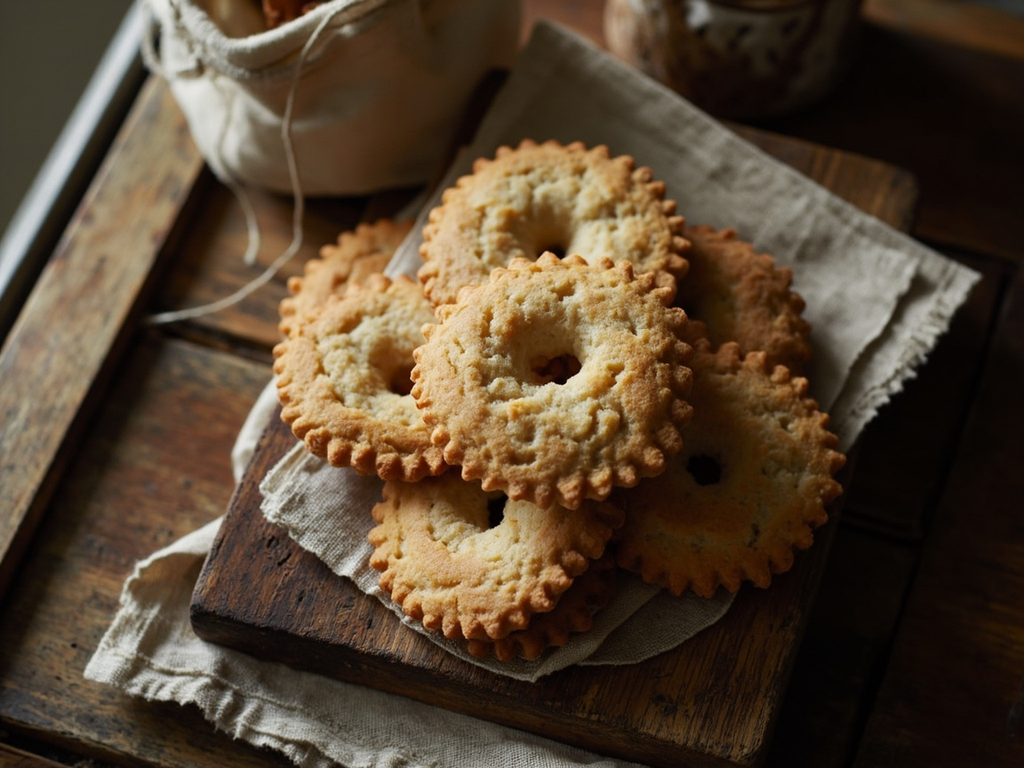
flipGalleta de mar (Sea Biscuit)
Galleta de mar (Sea Biscuit)
Why this dish? Bizcocho was the central food of every crossing: baked twice to become hard as stone and resist the dampness of the holds for months. During the 33 days of the 1492 crossing, it sustained the crews of all three ships, soaked in wine or water to be chewable.
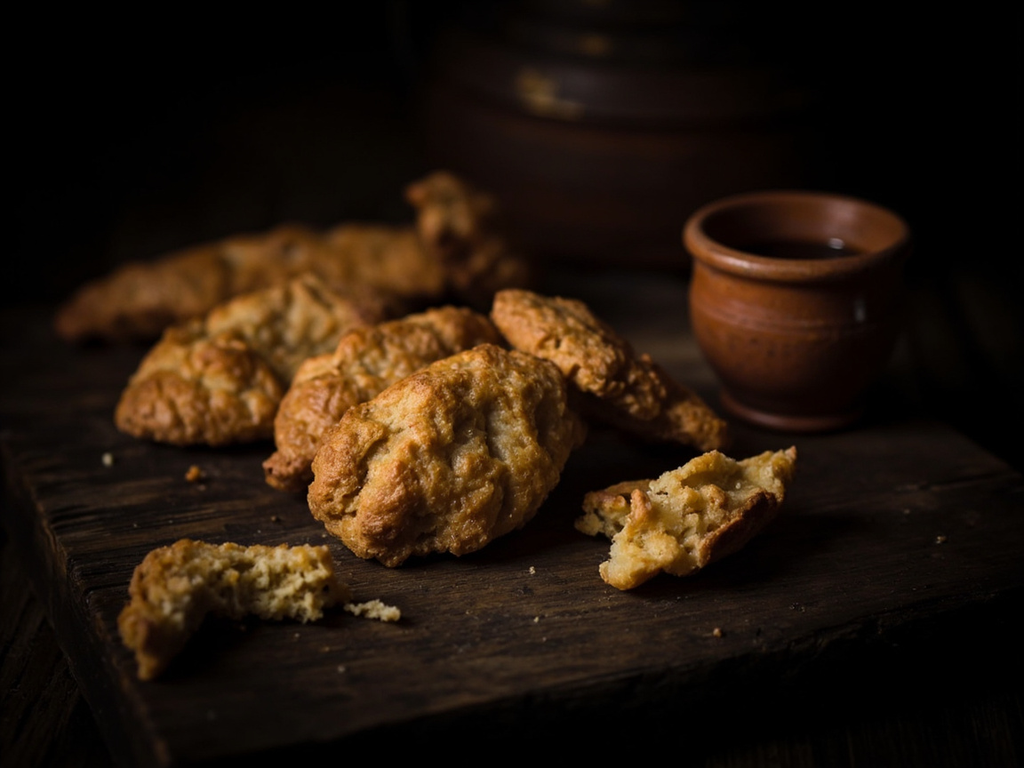
A very dry wheat flour cake, baked twice, nearly without salt or leavening, designed never to mold. Tasteless and hard by design: that is the price of its longevity. You broke it, soaked it, scraped off the weevils, and it fed the working man.
Know, you who read me warm on dry land, that on my caravels no soft bread can keep at sea. We bake it twice, until it is as hard as the deck planks, for only thus does it cross months without rotting. When the tooth can do no more, we break it into wine mixed with water and thank God for still having something to chew. More than one of my men, on that great crossing of the year 1492, lived on nothing but this and the hope of land.
- •Wheat flour — in abundance (base)
- •Water — just enough to bind (binding)
- •Salt — a pinch (sometimes omitted) (very light seasoning and preservation)
Galleta de mar (Sea Biscuit)
A very dry wheat flour cake, baked twice, nearly without salt or leavening, designed never to mold. Tasteless and hard by design: that is the price of its longevity. You broke it, soaked it, scraped off the weevils, and it fed the working man.
Why this dish? Bizcocho was the central food of every crossing: baked twice to become hard as stone and resist the dampness of the holds for months. During the 33 days of the 1492 crossing, it sustained the crews of all three ships, soaked in wine or water to be chewable.
Know, you who read me warm on dry land, that on my caravels no soft bread can keep at sea. We bake it twice, until it is as hard as the deck planks, for only thus does it cross months without rotting. When the tooth can do no more, we break it into wine mixed with water and thank God for still having something to chew. More than one of my men, on that great crossing of the year 1492, lived on nothing but this and the hope of land.
Ingredients (period version)
- Wheat flour — in abundance (base)
- Water — just enough to bind (binding)
- Salt — a pinch (sometimes omitted) (very light seasoning and preservation)
Ingredients
- Whole wheat flour (T110) — 250 g (base)
- Water — about 120 ml (binding)
- Fine salt — 3 g (light seasoning)
Method
- Mix the flour and salt, add the water little by little to obtain a very firm, barely workable dough.
- Knead at length, then roll out to 1 cm and cut round cakes about 8 cm in diameter.
- Prick thoroughly with a fork to prevent them from puffing up.
- First baking: oven at 180 °C, 20 minutes, until pale golden.
- Lower the oven to 120 °C and dry the cakes for 1 to 1½ hours, turning them, until completely hard.
- Let cool completely: they should sound hollow and keep for weeks in a dry place.
How it was made : The word "biscuit" comes from Latin bis coctus, "twice cooked." The arsenals of Seville and Genoa produced this sea bread in large quantities in dedicated ovens. Its hardness was a quality: a soft biscuit would have molded at sea. Sailors soaked it in water, wine, or soup, and tapped it to dislodge the weevils that inevitably came to inhabit it.
The contemporary twist : Served on a "caravel hold" appetizer board: broken galettes, new olive oil, rubbed garlic, and shavings of sheep's cheese — like an ancestral panzanella, but without the tomato that did not yet exist in Europe.
Sources : Carla Rahn Phillips, Six Galleons for the King of Spain (1986), chap. on victualling · Journal de bord de Christophe Colomb (relation de Las Casas)
Christopher Columbus · Charactorium